
Last updated November 20, 2026
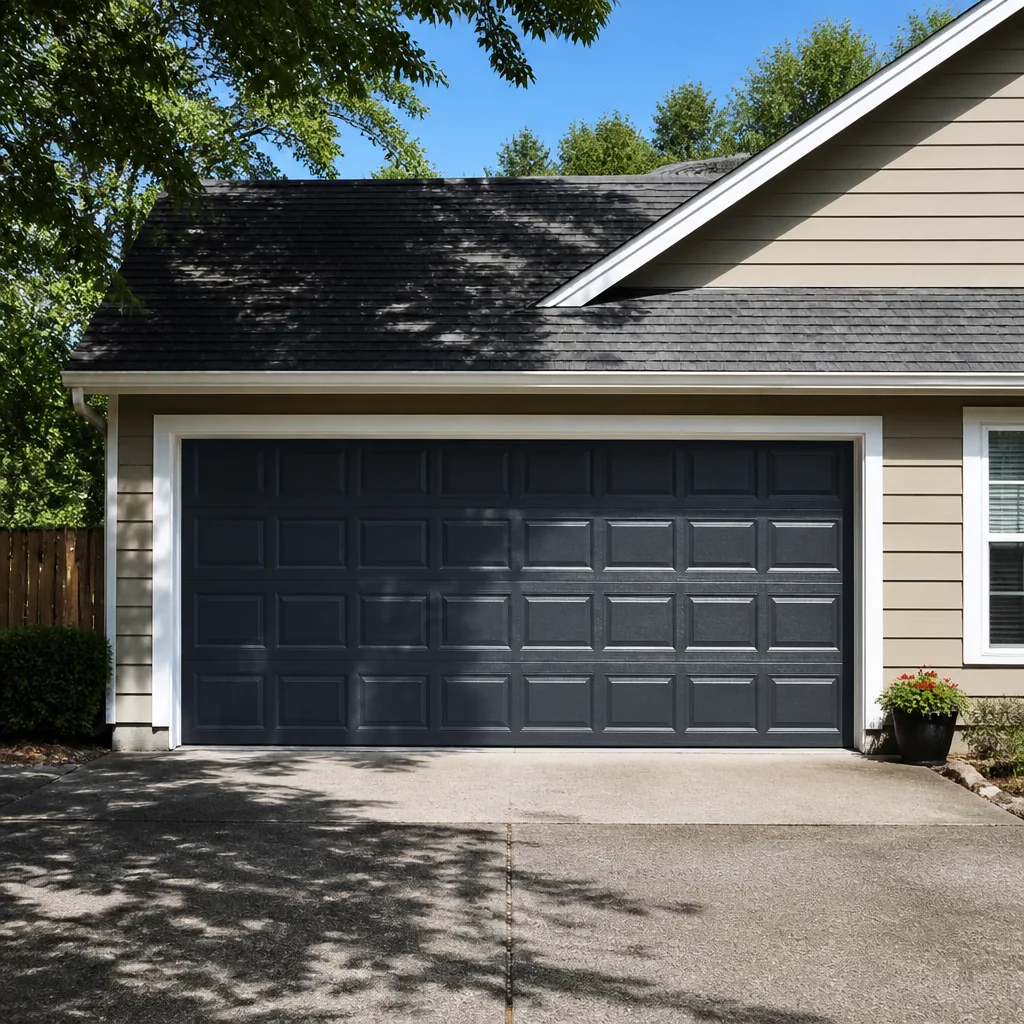 Raised-panel steel
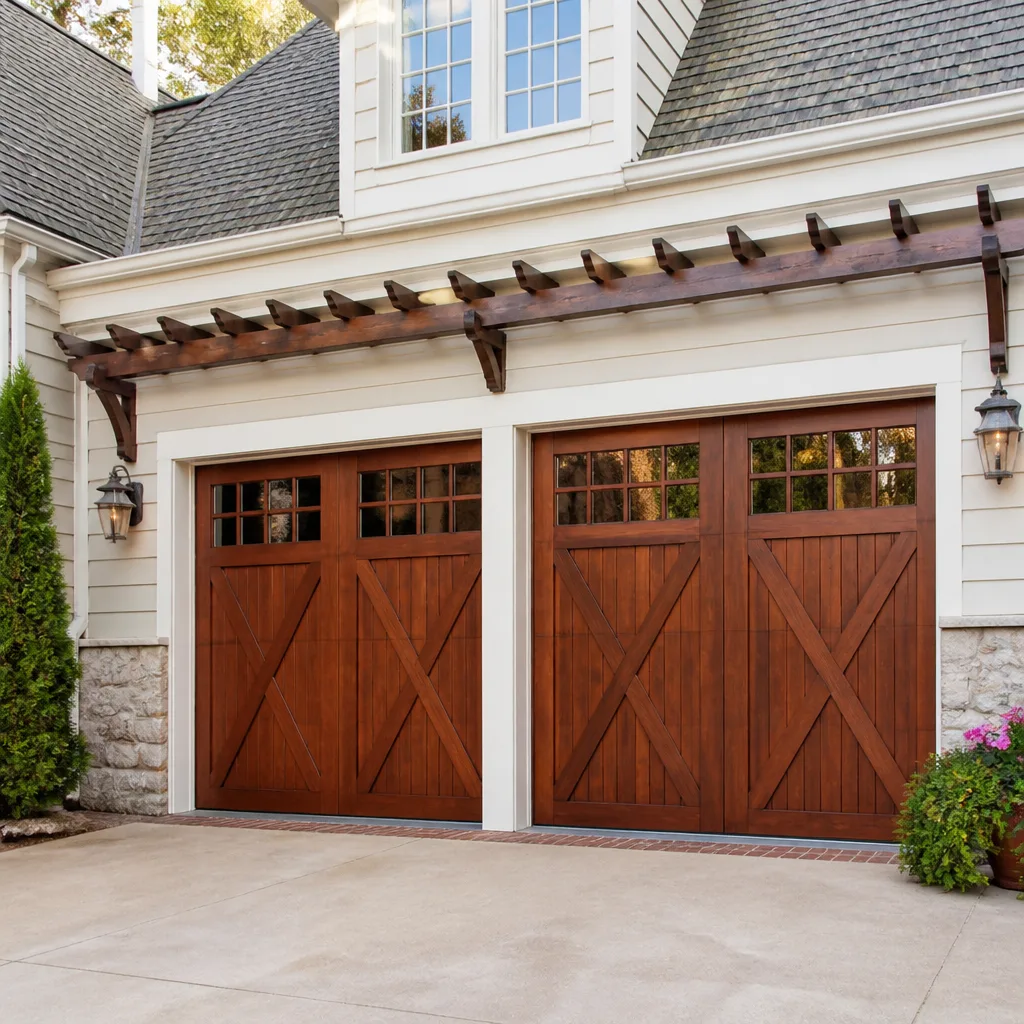 Carriage house
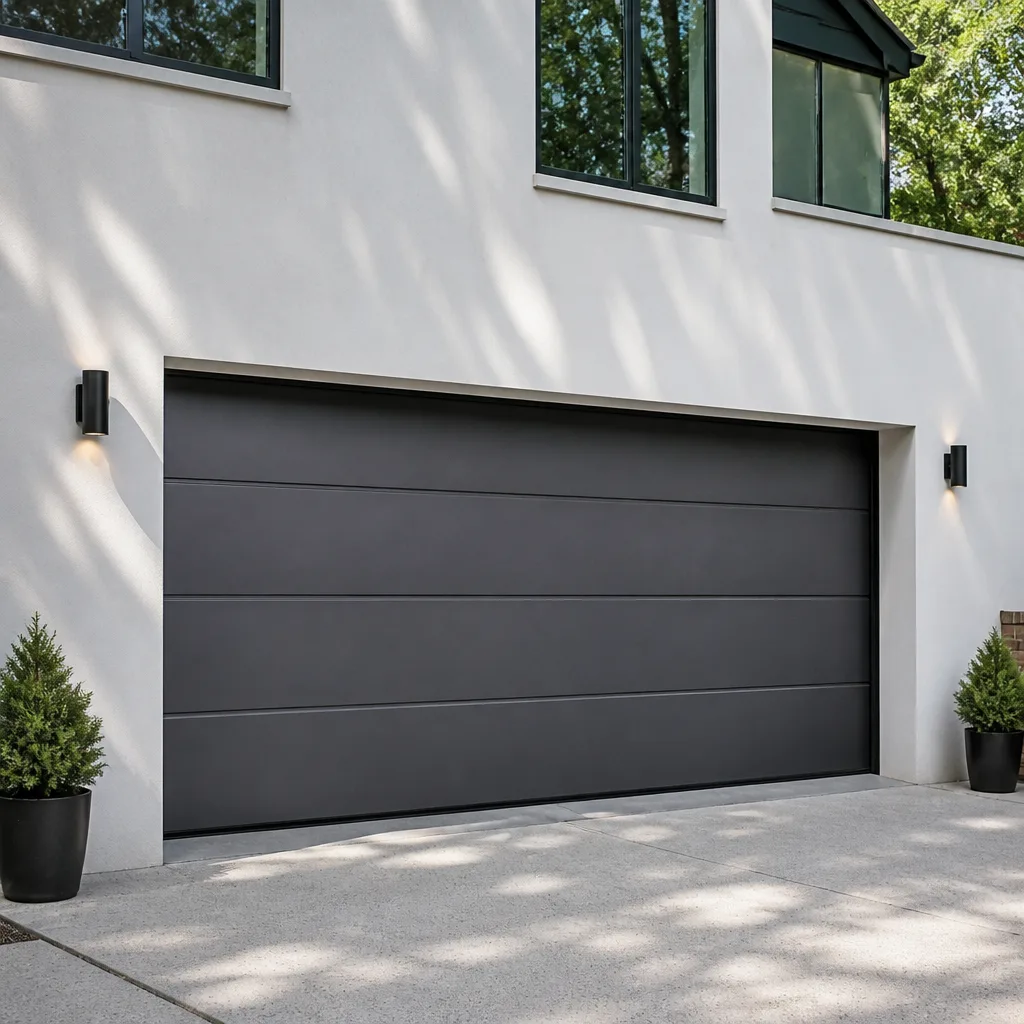 Modern flush
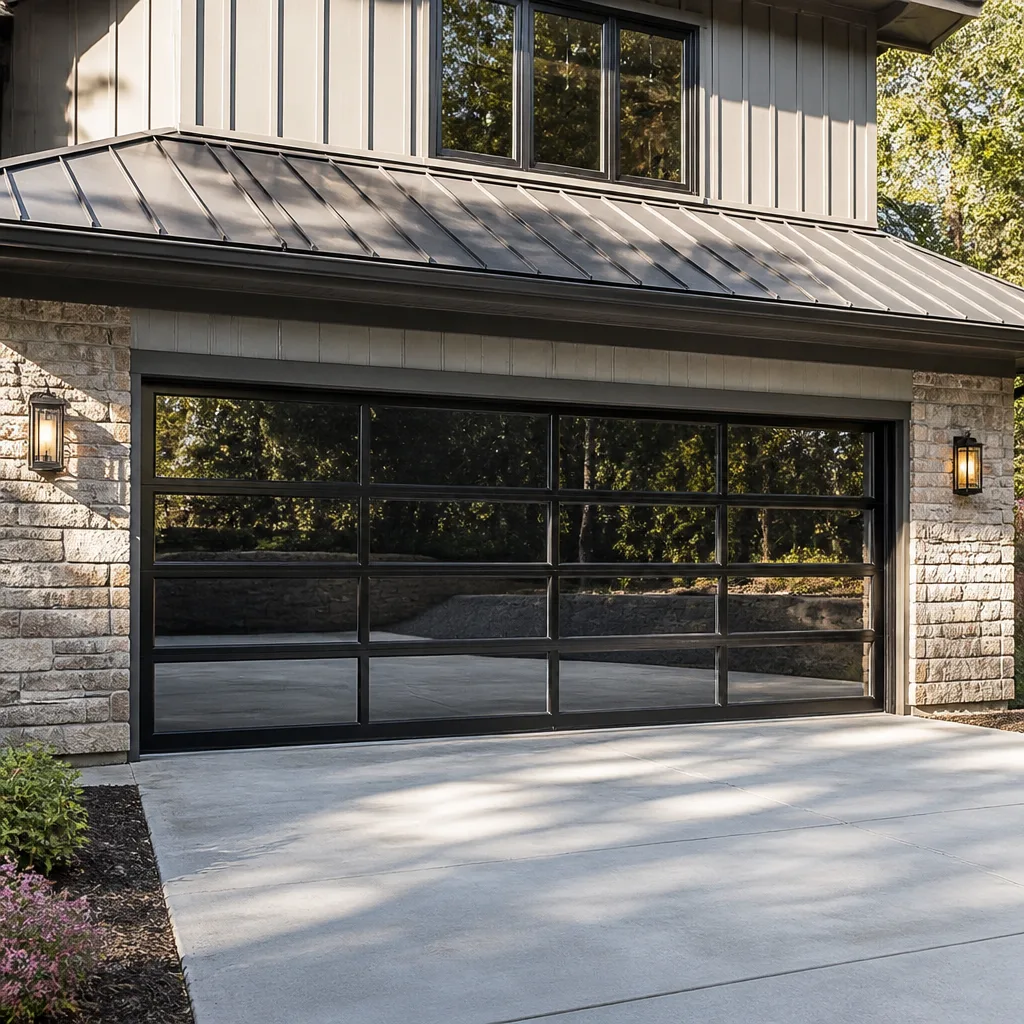 Full-view glass
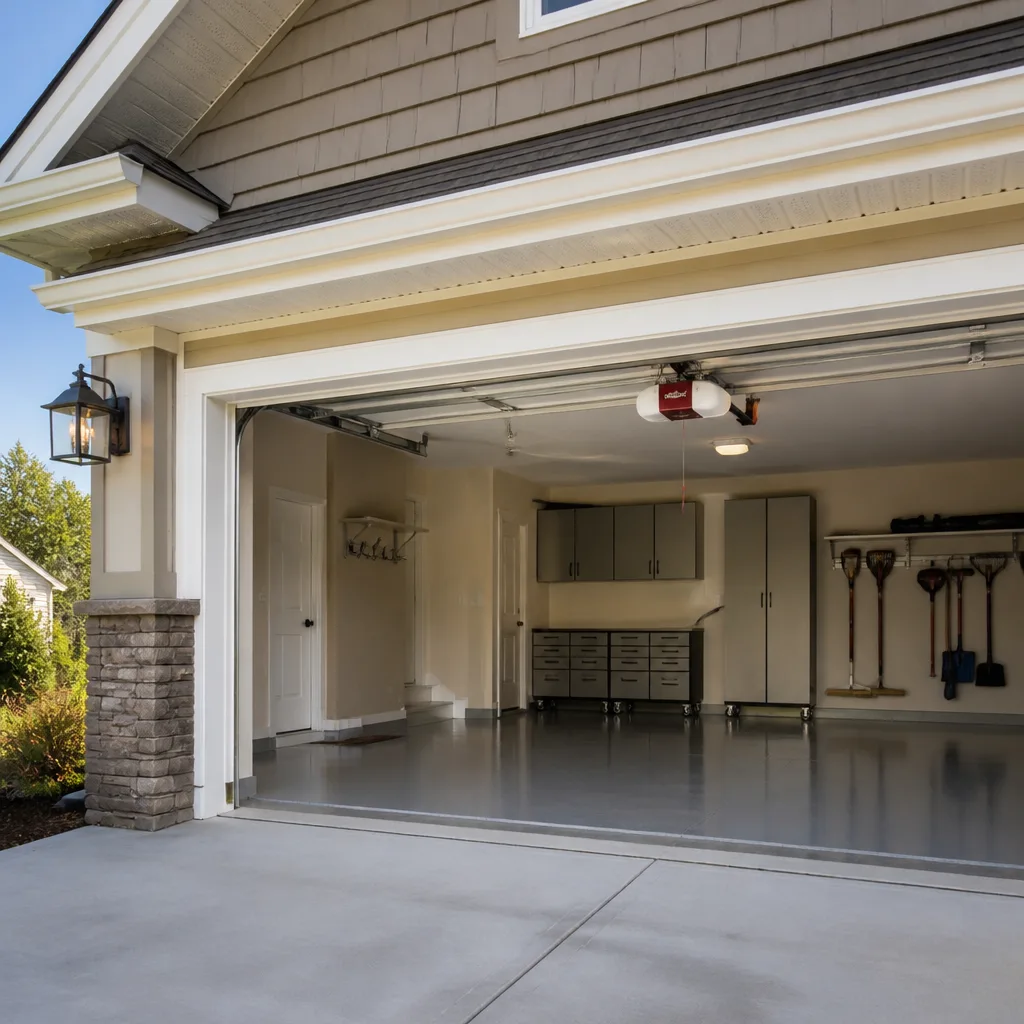 LiftMaster openers
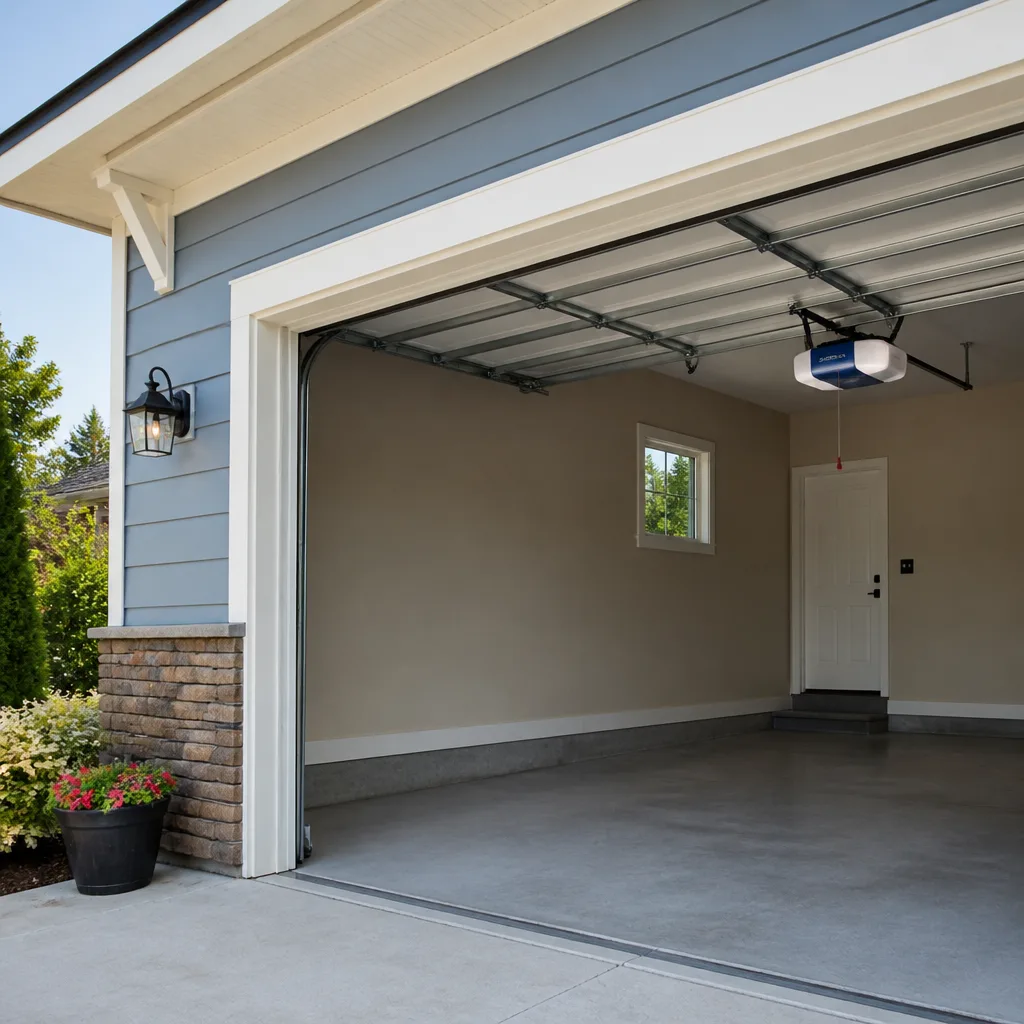 Chamberlain openers
Full 25-point door and opener safety check with every visit - springs, cables, rollers, tracks, and your LiftMaster or Chamberlain opener included
You get a price before we start. It does not change when the pro arrives.
Get your free estimateSeasonal Garage Door Care for Roland Park: Year-Round Homeowner’s Guide
Most homeowners treat the garage door as a single appliance that either works or doesn’t. In practice, it’s a system of moving parts that responds to temperature swings, humidity, and how often it runs. The common assumption is that a door failing in January is bad luck. More often, something was already changing slowly through the fall and nobody looked. Roland Park’s four distinct seasons give that system a real workout every year. This guide walks through what to check each season, what fails first, what genuinely needs a specialist, and how to keep the door and opener running without a surprise breakdown.
Quick Answer
Seasonal garage door care in Roland Park means checking the balance, springs, rollers, and weather seals at the start of each season, lubricating the moving metal parts twice a year, and testing the opener’s safety reverse monthly. Spring repair and any balance work above the door should always go to a trained technician, because the torsion and extension springs carry dangerous tension.
Styles & brands we work with
- Raised-panel steel
- Carriage house
- Modern flush
- Full-view glass
- LiftMaster openers
- Chamberlain openers
Table of Contents
- Why garage doors fail by season in Roland Park
- Spring checks: the part that fails first
- Summer: heat, expansion, and the opener’s workload
- Fall: rollers, hinges, and the long run into winter
- Winter: cold metal, shrinkage, and condensation
- The seasonal checklist we use
- Opener care across the seasons
- When seasonal checks turn into a specialist’s call
Why Garage Doors Fail by Season in Roland Park
The single biggest factor in seasonal garage door wear in Roland Park is thermal expansion and contraction. The door panels, tracks, and hardware are mostly steel and aluminum. Those materials move with temperature. A door that sits quietly through a mild October week can bind slightly in a cold snap or rattle loose in a hot July. The parts don’t fail overnight. They loosen, settle, and drift, and the door copes with the drift until one day it doesn’t.
Humidity plays a role too. Roland Park gets humid summers and a long shoulder season of damp, cool weather in spring and fall. Wooden interior doors and older wooden garage doors absorb that moisture and swell. Steel stays dimensionally stable but rusts at every scratch and unpainted edge. Rollers, hinges, and the torsion bar rust at the points where they move, and rusted moving parts need more force from the motor.
If your home has an overhead line, there’s another local reality worth checking. Older Roland Park properties with mature trees drop leaves, twigs, and sap into the tracks and debris can build up fast in fall. The overhead line can also sag after a storm or in heavy ice. A sagging line drops branches onto the driveway and into the path of the door. That’s worth talking to a utility arborist about; we handle the door, not the trees. But keep the space above the track clear of overhanging growth where you can.
The good news is that a door rarely fails without warning. The symptoms show up as sound, speed, or movement. A seasonal look catches them early.
Spring Checks: The Part That Fails First
The springs are the most loaded part of the entire system and the part most likely to break as the seasons turn. A torsion spring above the door, or a pair of extension springs alongside the tracks, carries the full weight of the door. When the temperature drops, cold metal loses a little of its ability to flex, and the spring is under the most stress. When the door is left half-open and the spring is already fatigued, that’s when a snap happens.
A spring check is one of the few things a homeowner should look at but not touch. Here’s what you can observe without getting near the hardware:
- Does the door open smoothly or lurch at one point?
- Does it stay half-open without sliding down?
- Is there a visible gap or kink in a spring coil?
- Does the opener strain or make a high-pitched whine near the top of travel?
- Does the motor seem to work harder on cold days than it should?
If any of those feels off, the door is telling you something. A trained technician can measure spring tension and balance and replace a fatigued spring before it snaps. Spring repair performed as a dedicated specialty is safer and cheaper than the emergency call after a snap, because a snapped spring can bend the track, twist the door, or strand a car inside.
Our technicians have up to 10 years of experience, and springs are one of the repairs we take most seriously. A spring under tension can release with enough force to cause serious injury. Please don’t attempt to loosen, adjust, or replace the springs, torsion or extension, yourself. That’s a job for someone trained to work the tension down safely. For Roland Park homeowners with a stiff or noisy door, a spring check is a solid first step, and our garage door repair in Roland Park team can take it from there.
Summer: Heat, Expansion, and the Opener’s Workload
Summer in Roland Park is the season of expansion. Sun heats one side of the door more than the other, panels bow slightly, and the tracks shift by a fraction of an inch. The door is designed to absorb that, but it also means the opener is doing slightly more work than in spring. It’s the season when a tired opener is most likely to start skipping or reversing on its own.
Summer is a good time for two checks that don’t cost anything and pay off all year:
- Test the safety reverse. Place a piece of wood across the threshold and close the door. It should reverse on contact. If it doesn’t, stop using the door and get the opener checked. That’s a safety issue before it’s a repair issue.
- Check the seal across the bottom. A dried, curling seal lets in heat, humidity, and insects. A new seal is one of the cheapest things you can do and it protects the threshold too.
If your opener is a LiftMaster or a Chamberlain unit with a battery backup, this is also the season to test the battery, not just the plugged-in operation. A battery that sat unused through the cooler months can be flat by summer. Test it by tripping the opener with the power off.
Check the rollers and hinges too. On older doors, nylon rollers can crack in summer heat, and steel rollers on a door that was never serviced become noisy. A light application of a proper garage door lubricant on the rollers, hinges, and springs is worth doing once in summer and once in fall. Don’t use WD-40 on the tracks; it attracts dust. Tracks should be cleaned, not lubricated.
Fall: Rollers, Hinges, and the Long Run into Winter
Fall is the season that matters most for Roland Park doors, because it’s the last clear window to fix small problems before cold weather makes them bigger. The moisture comes back, the temperature drops, and the door that ran fine in August starts to feel heavy. Fall is when we see the most balance and tension issues.
Here’s the fall routine we’d want on any home before the cold sets in:
- Balance test. Disconnect the opener if you can do it safely, lift the door halfway, and let go. A balanced door stays put. A door that slides down is losing spring tension.
- Listen and look. Squeaks, grinding, and rattles get worse in cold. If the hardware is loose, tighten the bolts by hand and check them again in a week.
- Rollers and hinges. Check for flat spots on the rollers or cracks in the wheels. Replace them as a set rather than one at a time.
- Weather seal. Inspect the bottom seal and the side and top seals. Cold air gets in through gaps, and that shows up on the utility bill long before it shows up as a repair.
- Opener force setting. The opener has a force adjustment that compensates for the weight of the door. If the door got heavier over the summer, the opener may be working harder than it should. That’s a technician check, not a dial to twist yourself.
Our technicians are factory-familiar with 8 major brands, so if your door or opener is a Clopay, LiftMaster, Chamberlain, Genie, Amarr, Wayne Dalton, Craftsman, or Raynor system, we’re working with the equipment as it was built.
Winter: Cold Metal, Shrinkage, and Condensation
Winter is when cold tightens everything up. The door panels contract slightly, the track grease thickens, and any looseness from the fall becomes a genuine bind. The motor tries to work through resistance and either stalls or trips the opener’s internal safety limit. If the opener won’t run at all, or runs and then reverses, that’s not a door problem. It’s a force limit reacting to a door that got heavier. Cold temperatures cost a tired motor its margin.
Two things need attention in winter:
- Moisture under the door. Melting snow and ice at the threshold can freeze the bottom seal to the floor. If you park the car inside, that freeze-up can lift the seal or rip it. A flexible seal and a clear threshold prevent it.
- Warming the mechanism before opening. A door that’s been frozen shut should be freed gently, never forced. If a door opens part-way and jams, don’t keep hitting the button. That’s how a track gets bent.
If a door is stuck in winter, that’s a real problem if the car is inside and your day depends on it. If the door won’t move and the car is stuck, that’s when the emergency response matters. We answer 24/7. Fast dispatch from 7am to 7pm, Sunday through Friday.
The Seasonal Checklist We Use
If you remember nothing else from this guide, remember that a garage door is checked at the seam between seasons. Here’s the short version, the checklist our technicians would walk through on a seasonal service call:
- Inspect the springs. Look for visible gaps, kinks, or a door that won’t balance.
- Run the balance test. Half-open, release, and see if it holds.
- Check rollers and hinges. Replace cracked or flat-spotted rollers as a set.
- Clean and inspect the tracks. Clear debris, look for dents or bends.
- Test the opener’s safety reverse. Wood on the threshold, door close, reverse expected.
- Check the bottom and side seals. Replace any that are dried, cracked, or loose.
- Listen for new sounds. A grinding or squeaking door is telling you something.
- Test the opener’s battery backup. On a LiftMaster or Chamberlain, trip the power and confirm the door still runs.
That list takes a careful homeowner maybe 20 minutes. The spring and opener force checks are the only items best left to a professional. Everything else you can look at safely. In Roland Park, the shoulder seasons, spring and fall, are the best times to catch problems. The goal isn’t to inspect every week. It’s to do it when the season changes and to fix the small things before they grow into big ones. A straightforward seasonal check is a reasonable routine to build around your home.
Opener Care Across the Seasons
The opener is often the part homeowners think of first, and it shouldn’t be. It’s the brain, but it only works if the door is balanced and the tracks are clean. An opener that runs smoothly in June can struggle in January simply because the door got heavier. The more interesting seasonal issue is the interface between the opener and the smart-home features many Roland Park homes now use.
If your opener is a LiftMaster, Chamberlain, Genie, or Craftsman system connected to an app, test the connection at the start of each season. Cold weather can knock a Wi-Fi bridge offline, and a battery in a keypad or remote can go flat without much warning. Keep a spare remote battery on hand and confirm the wall control and app match each other. If the app opens the door and the wall button doesn’t, that’s a wiring or control-panel issue, not an opener issue, and worth a call.
Our opener repair covers both legacy and current smart-home-connected systems across those major manufacturers. Because we work on the brand you have, we’re the one call for a replacement opener and integration with the door system, not a second contractor to coordinate.
When Seasonal Checks Turn into a Specialist’s Call
A seasonal inspection is genuinely useful, but some problems are a specialist’s job the moment you notice them. If you see a spring with a gap or a door that won’t balance, that’s a spring call, not a wait-and-see call. A snapped spring can bend the door, and a door out of balance can wear out the opener in weeks. When the door is off its track, bent, or won’t open at all when the car is inside, that’s the situation where fast dispatch matters. A door off track can leave a home unsecured and a vehicle trapped. We answer 24/7. Fast dispatch from 7am to 7pm, Sunday through Friday.
If you’re in Roland Park and something feels off with your door, the next call is simple. Garage Door Repair Roland Park offers free estimates in Roland Park. Call (833) 549-0245. The estimate is free, and the price is set per job by the written quote, so there’s no surprise invoice when the work is done.
Common Mistakes to Avoid
- Forcing a door that’s binding. If the door moves slowly or resists partway, don’t keep pressing the button. That’s how a track gets bent and a small repair becomes a track replacement.
- Ignoring the safety reverse. The safety reverse is not a feature, it’s the thing that stops the door on something in the way. Test it monthly; if it’s slow or absent, stop using the door and get it checked.
- Lubricating the tracks. Tracks should be clean and dry. Lubricant on the tracks collects dust and grit and makes the problem worse.
- Replacing one spring at a time. Springs tend to wear out at the same rate. Replacing a single spring of a pair leaves the other one ready to fail.
- Treating a cold-weather bind as a door problem. In winter, a door can bind because the metal contracted and the tracks shifted. Adjusting the tracks to fit summer will make the door bind in winter. Let a technician set it for the whole year.
- Skipping the seal around the sides. Homeowners fix the bottom seal and forget the sides. Air and water get in around the edges, and in Roland Park’s humid springs, that shows up as warped panels and damp interior.
- Assuming a new opener fixes an old door. A new opener on a heavy, unbalanced door just works harder and burns out sooner. The door gets fixed first, and the opener second.
See the difference
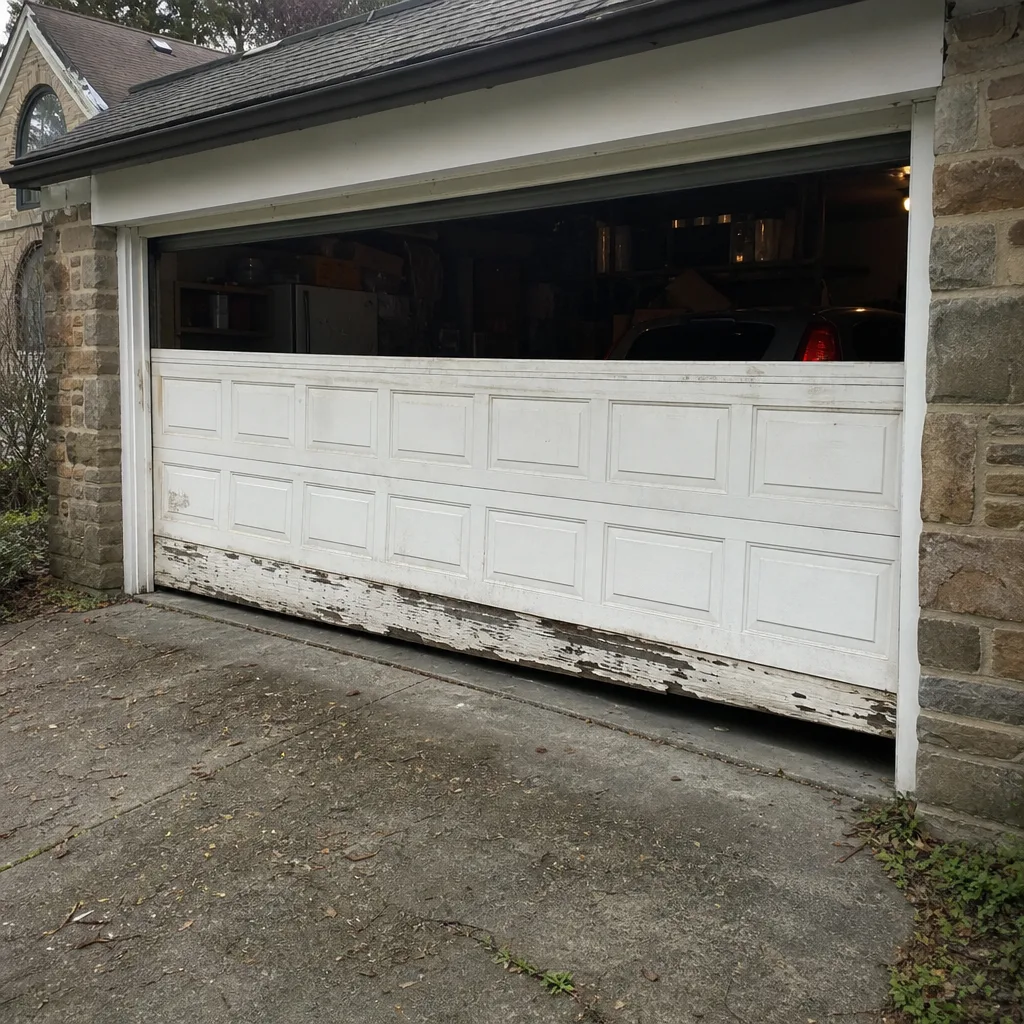 Before
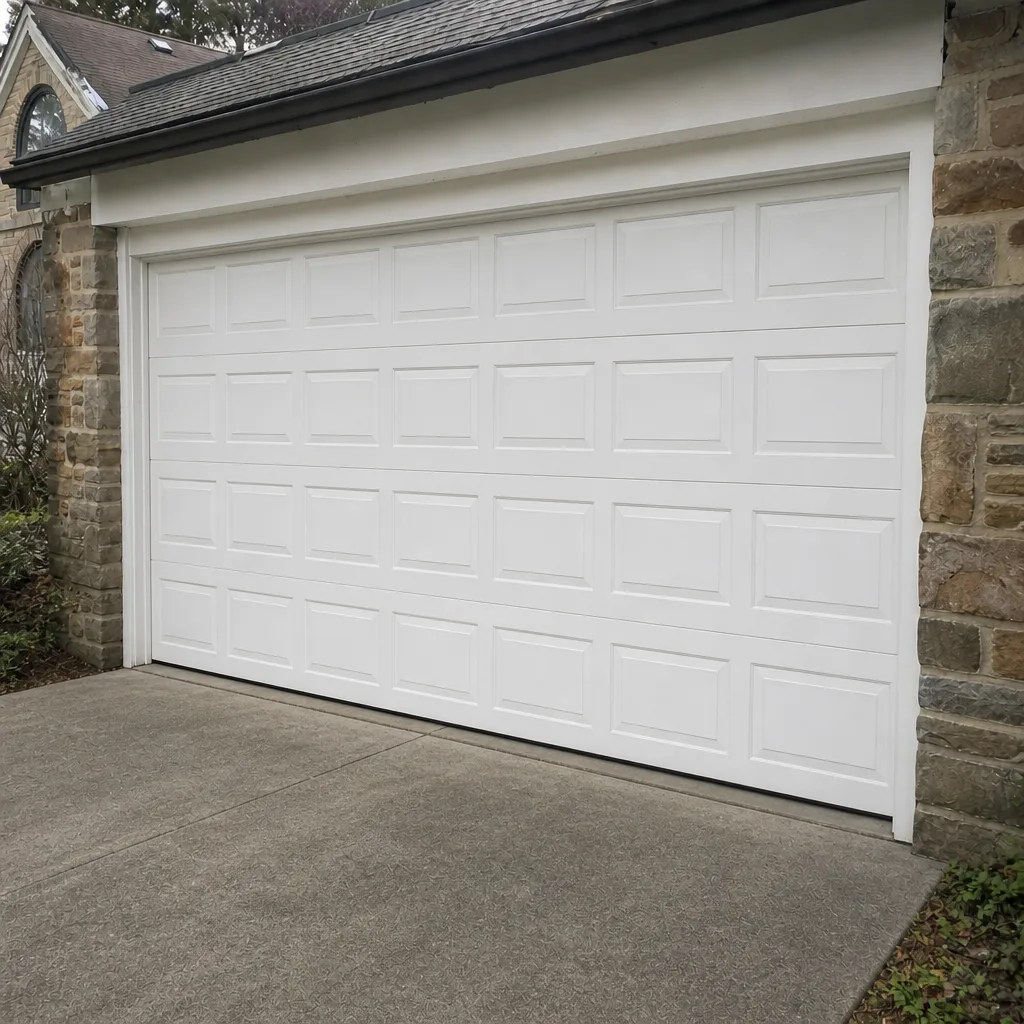 After
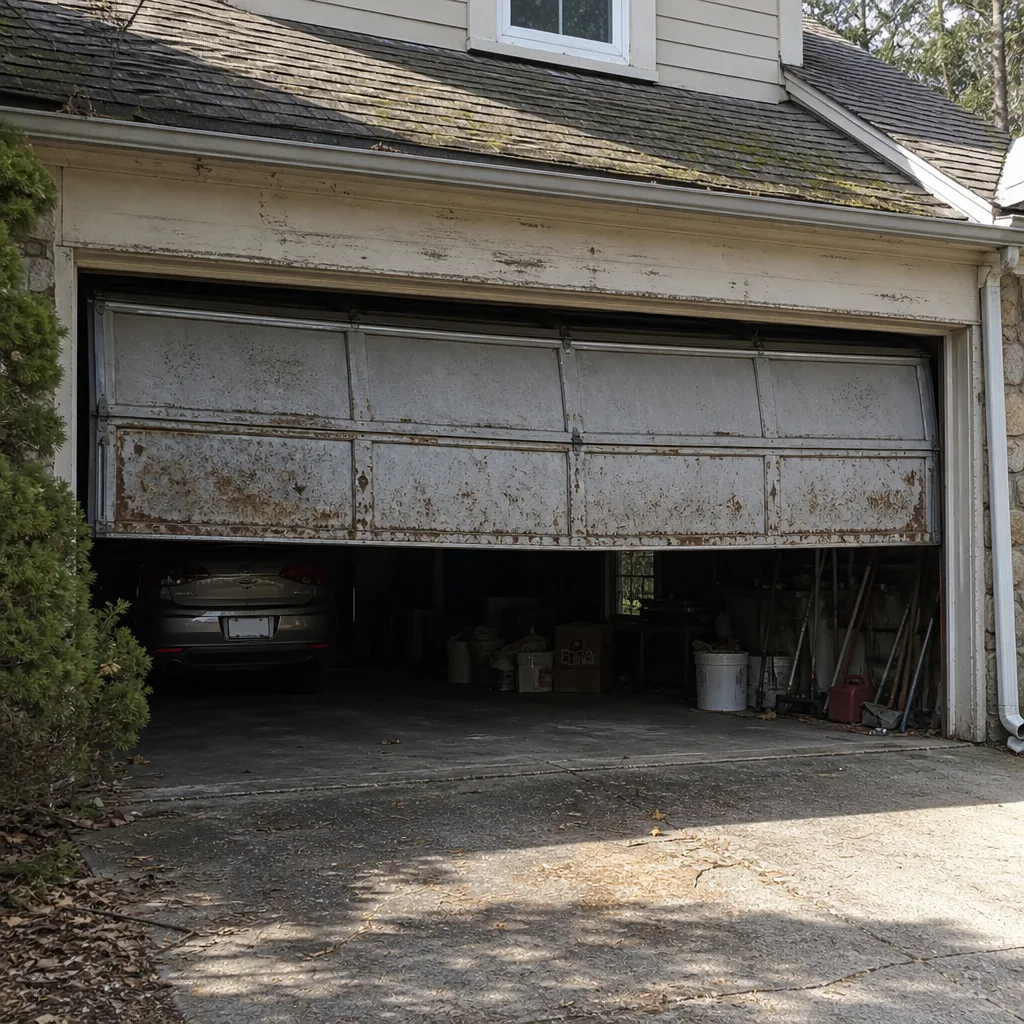 Before
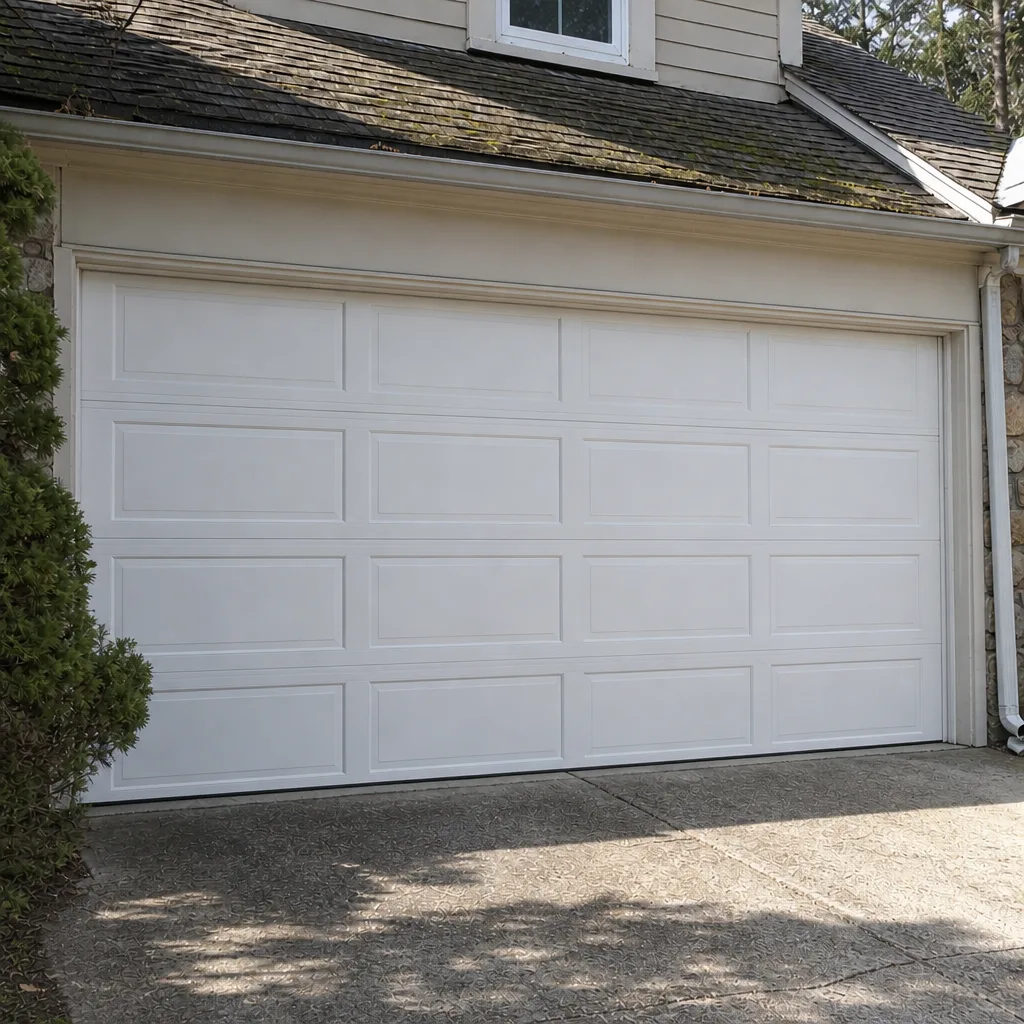 After
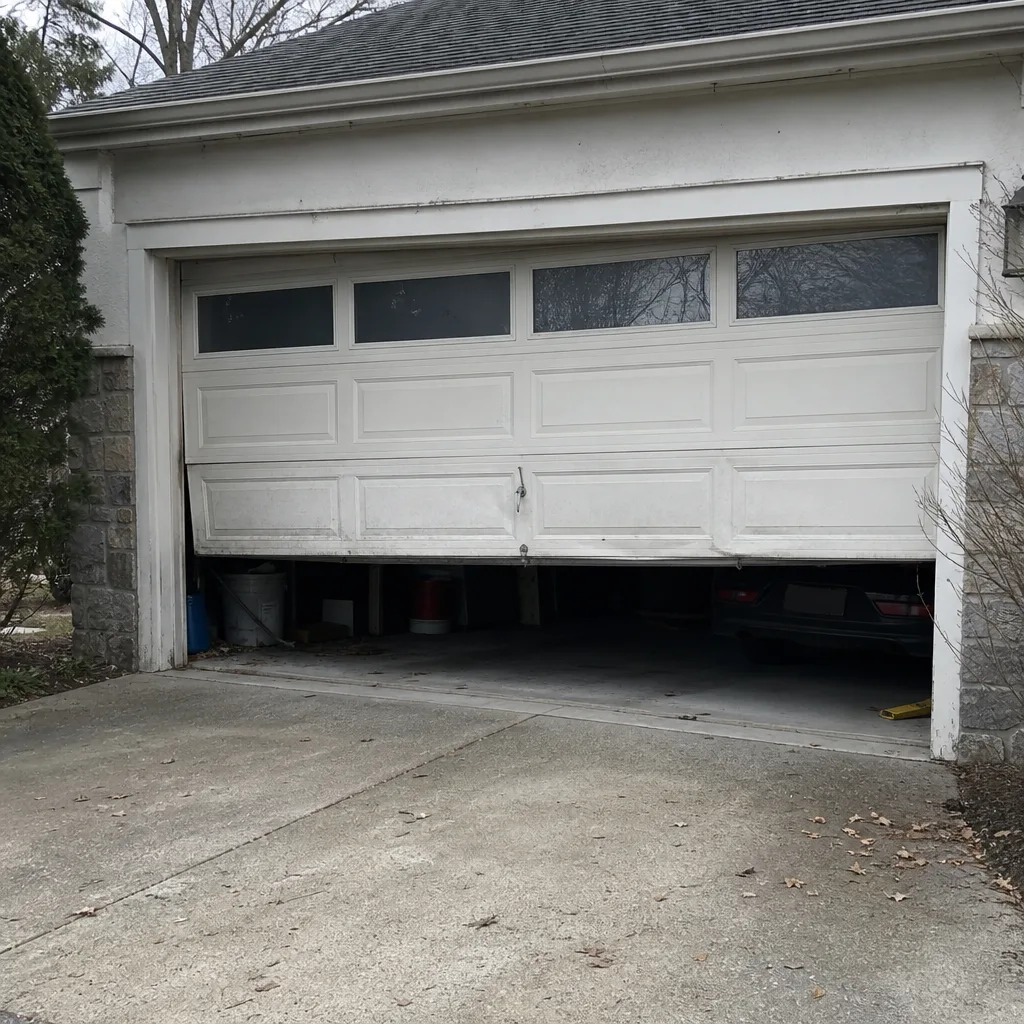 Before
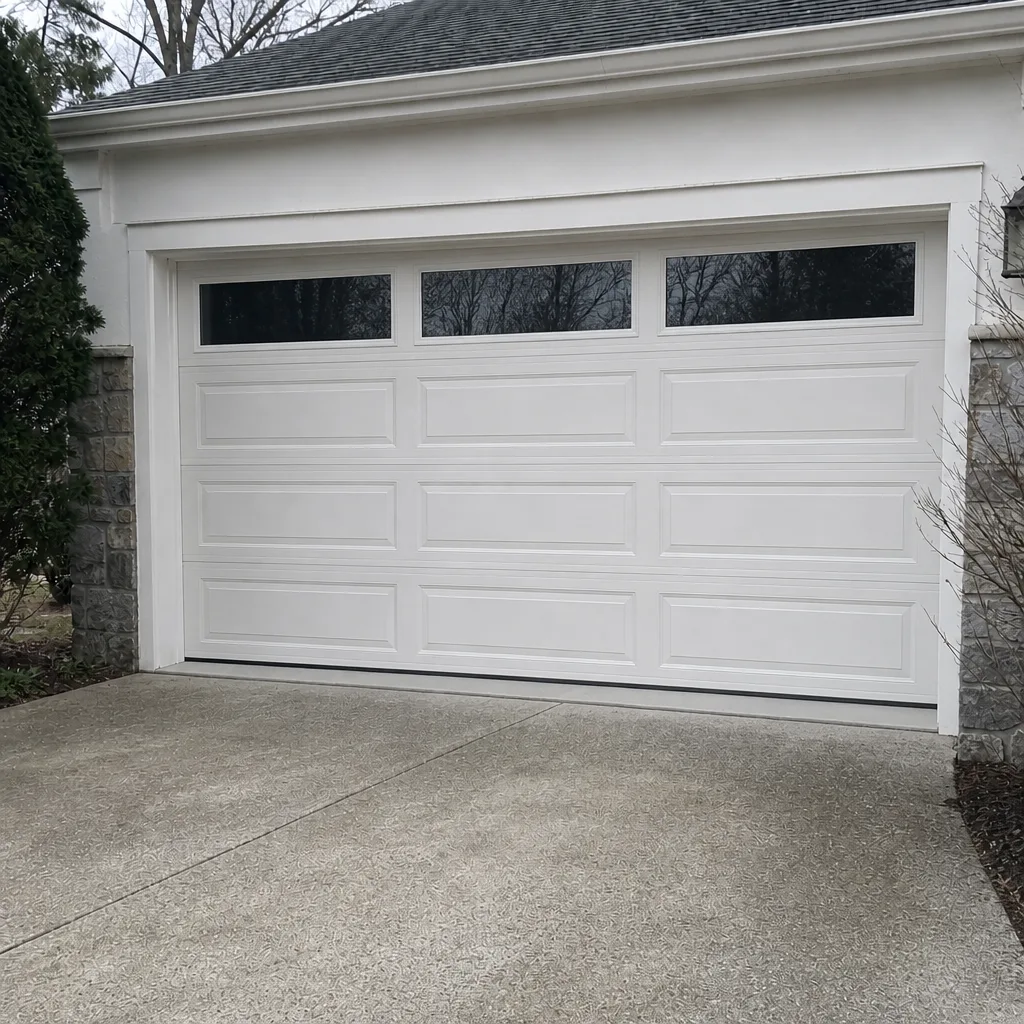 After
When to Call a Professional
Call a professional for anything involving the springs, the torsion bar, the opener’s force settings, or a door that’s off track. Those are the situations where DIY can cause real injury or secondary damage. Call sooner if the door won’t open and the car is inside, the door is visibly bent, or a panel is hanging and the home is left open. Winter binds are worth a call too. A technician can set the track and spring balance to work through the full year rather than one season. If your door is making a new sound, that alone is worth a conversation. Garage Door Repair Roland Park offers free estimates in Roland Park. Call (833) 549-0245.
Frequently Asked Questions
Two seasonal checks a year, once in spring and once in fall, cover most of what changes in Roland Park’s climate. Monthly you should test the safety reverse and listen for new sounds. Yearly service is reasonable for a lightly used door. A door that runs many times a day benefits from the spring-and-fall routine.
Some stiffness is normal in cold weather, but a door that lurches or needs two tries is not. Cold contracts metal and thickens grease; both are expected. A door that binds hard, or an opener that reverses in cold, could be a sign the springs or track need a technician’s look. Call (833) 549-0245 for an exact quote, and estimates are free.
No. Torsion and extension springs carry dangerous stored energy and can release with enough force to cause serious injury. Spring work requires the right tools and training, and spring repair is a job we handle as a dedicated specialty, not an add-on. Please don’t loosen, adjust, or replace a spring yourself. Estimates are free; call (833) 549-0245.
An opener that reverses in cold is usually hitting its force limit. The door got heavier from contraction and thickened grease, and the opener sees resistance it doesn’t like. That’s a balance or force-setting issue, not usually a dead opener. A technician can check both and reset the door for the season. Call (833) 549-0245 for an exact quote.
Spring and fall are the easiest seasons for installation, because the moderate temperatures make fitting and finishing simpler. That said, installation happens year-round with scheduling, and there’s no bad season to have a door measured and ordered. A written quote is the next step, and estimates are free. Call (833) 549-0245.
A spring that’s snapped, a door off its track, or a door that won’t move with a car trapped inside is an emergency. We answer 24/7. Fast dispatch from 7am to 7pm, Sunday through Friday. A noisy door or a slow opener is not urgent, but it’s worth scheduling. Call (833) 549-0245 either way; estimates are free.
The Bottom Line
Seasonal care is mostly about catching small things before Roland Park’s temperature swings turn them into big ones. Check the door twice a year. Test the safety reverse monthly. Keep the tracks clean and the moving parts lubricated. Leave the springs and opener force settings to a technician, because that’s where the real risk and the real skill live. If the door lurches, grinds, or stops moving when the car’s inside, call sooner. If it’s making a new sound or you want a professional check this season, we’re happy to help. Garage Door Repair Roland Park offers free estimates in Roland Park. Call (833) 549-0245. The estimate is free, and the price is set per job by the written quote.
Written by the team at Garage Door Repair Roland Park.