
Last updated November 20, 2026
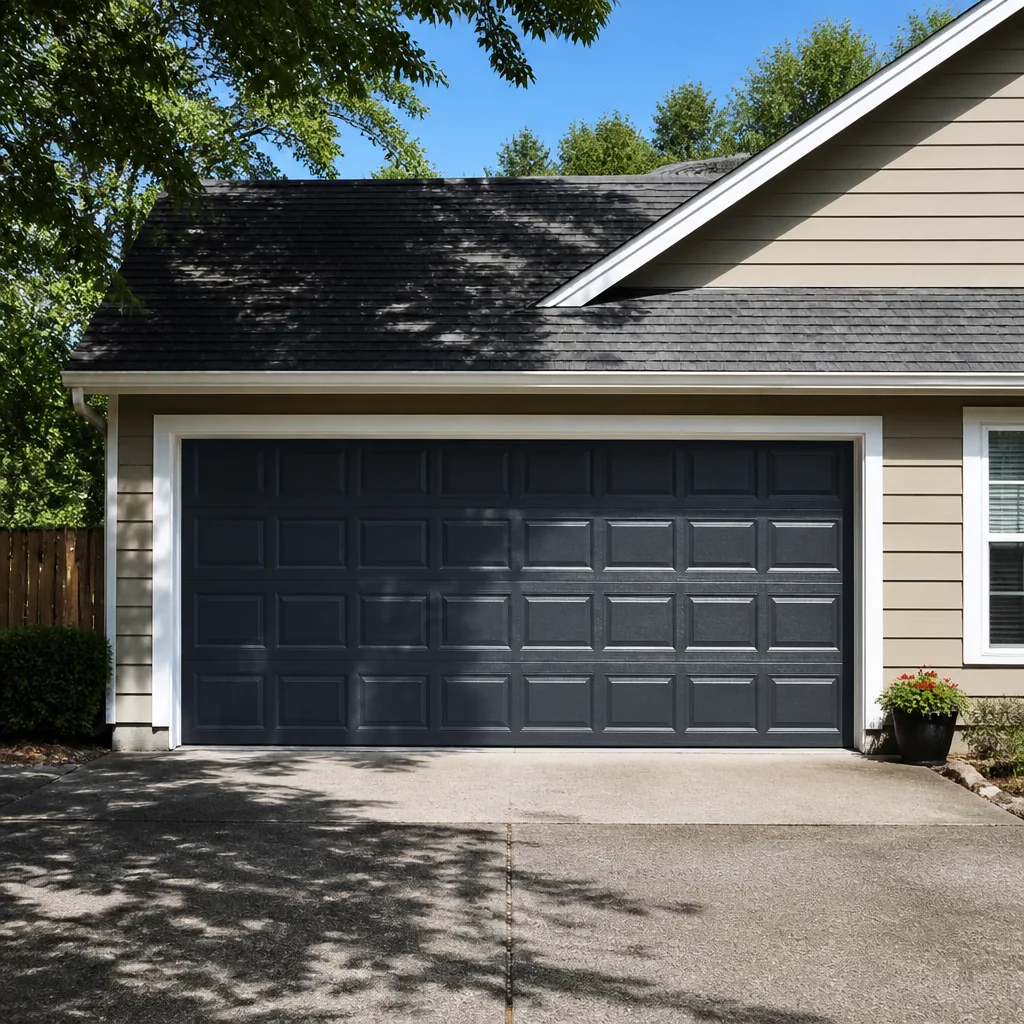 Raised-panel steel
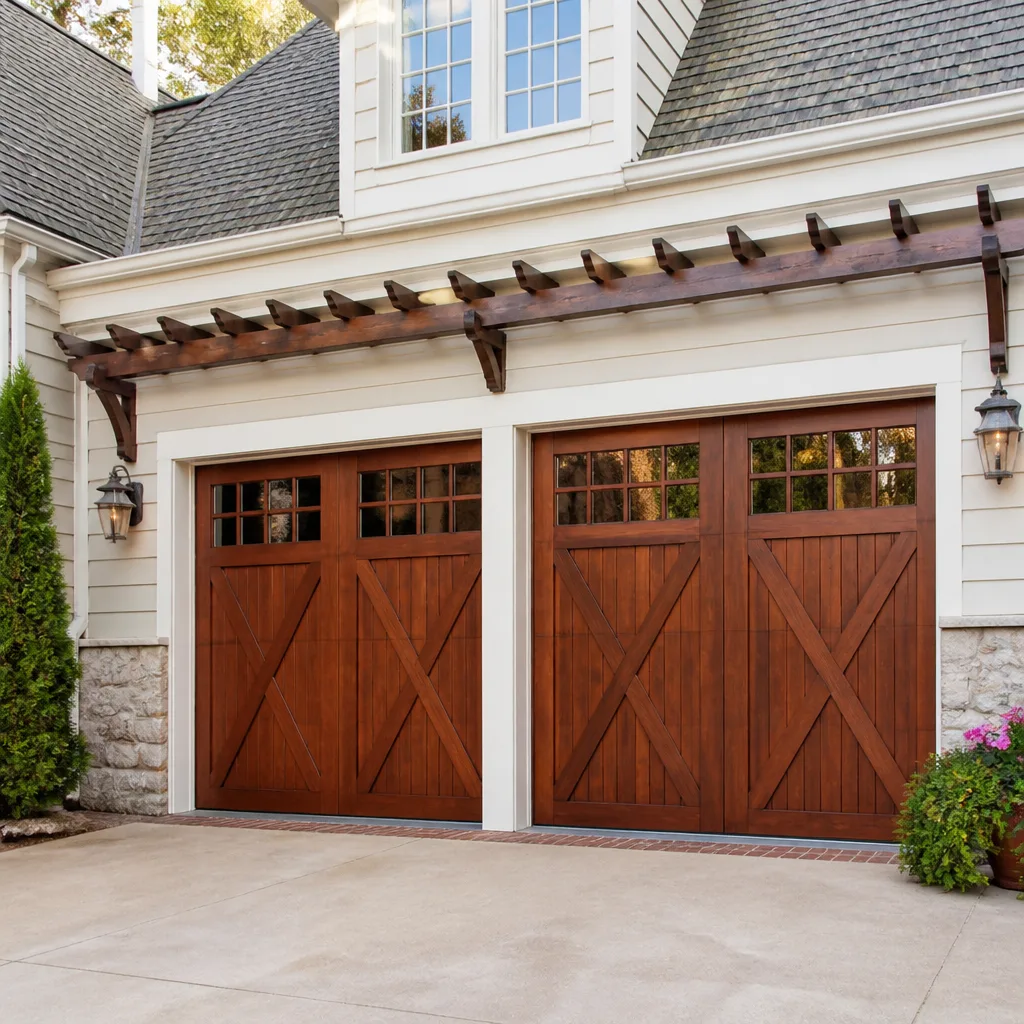 Carriage house
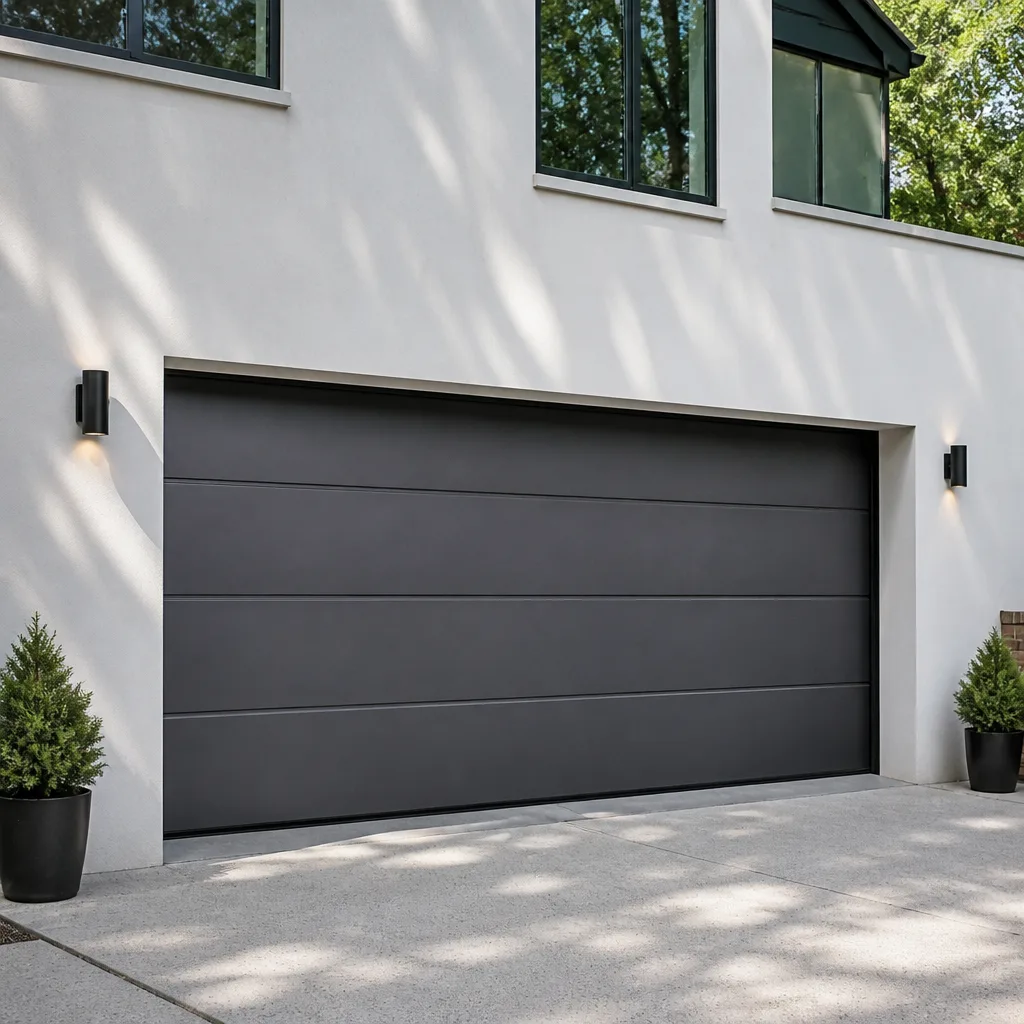 Modern flush
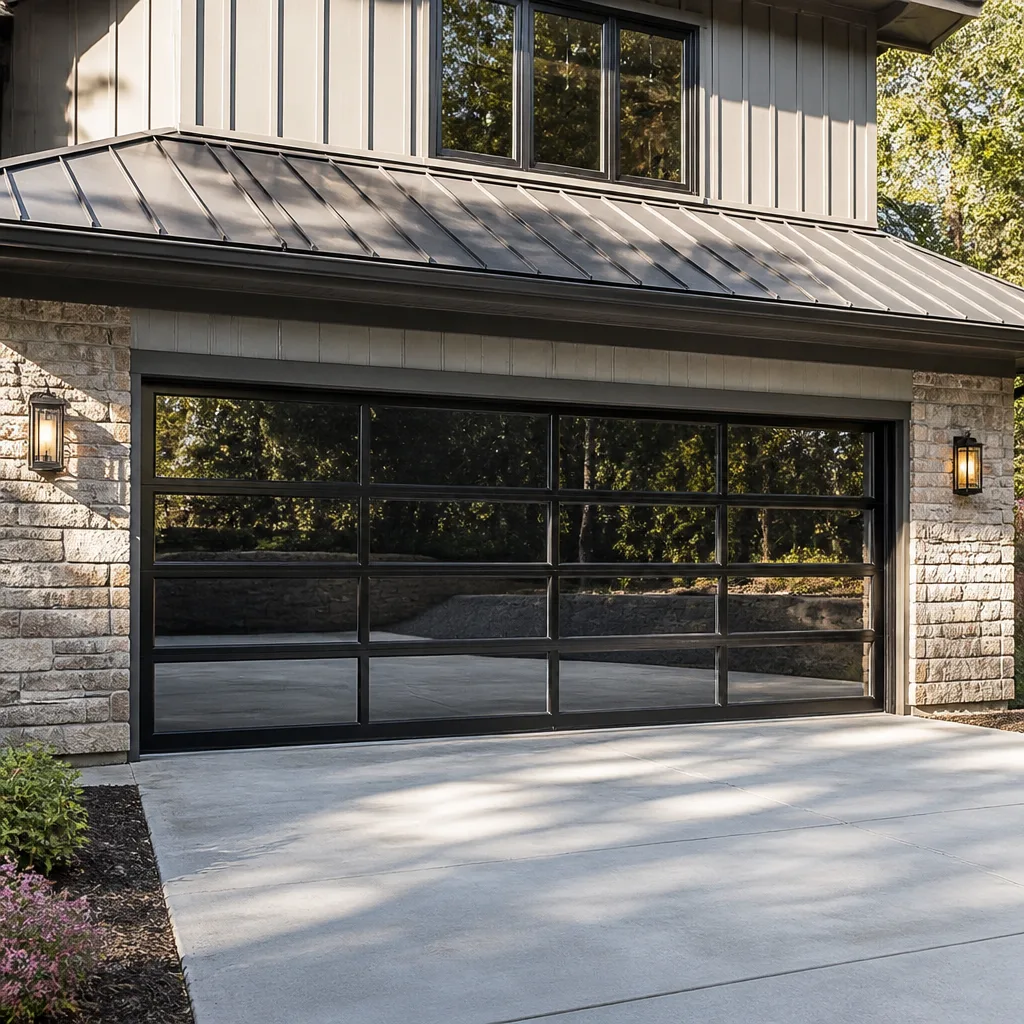 Full-view glass
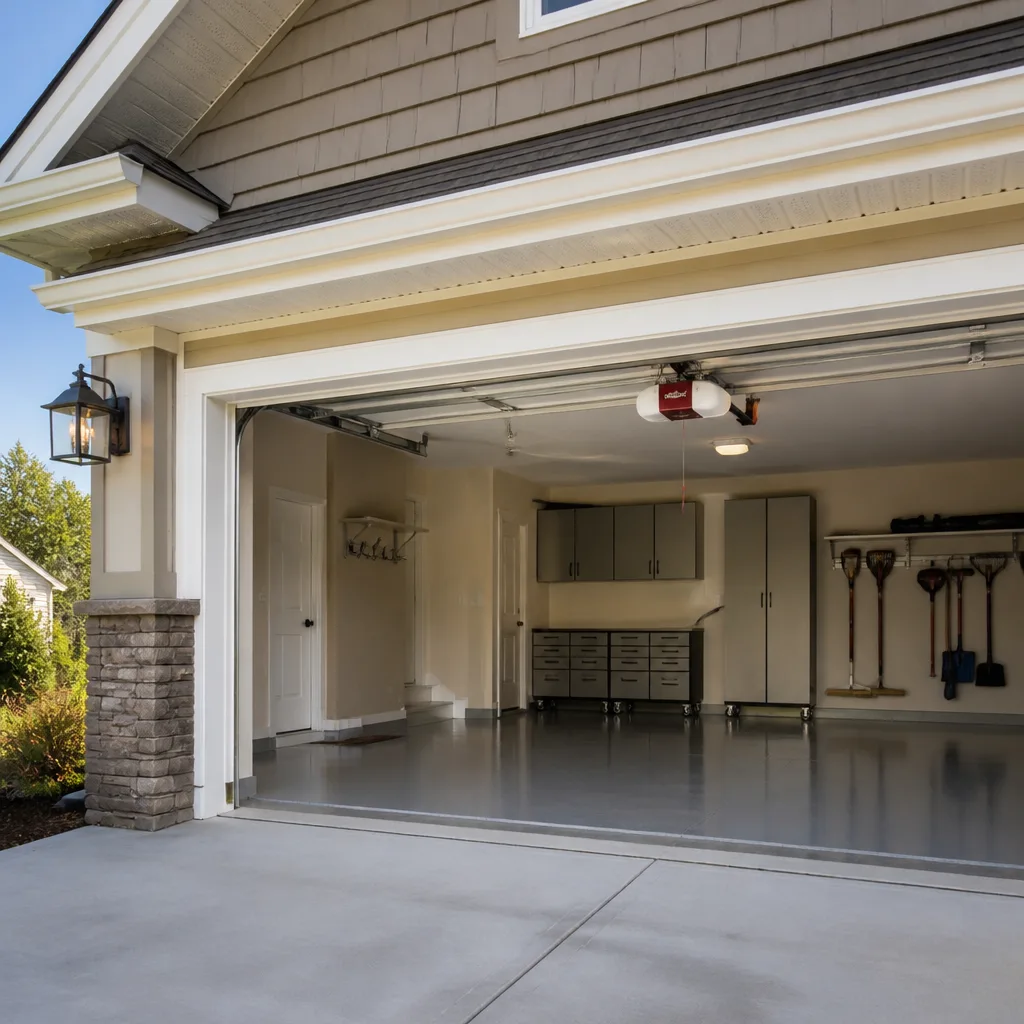 LiftMaster openers
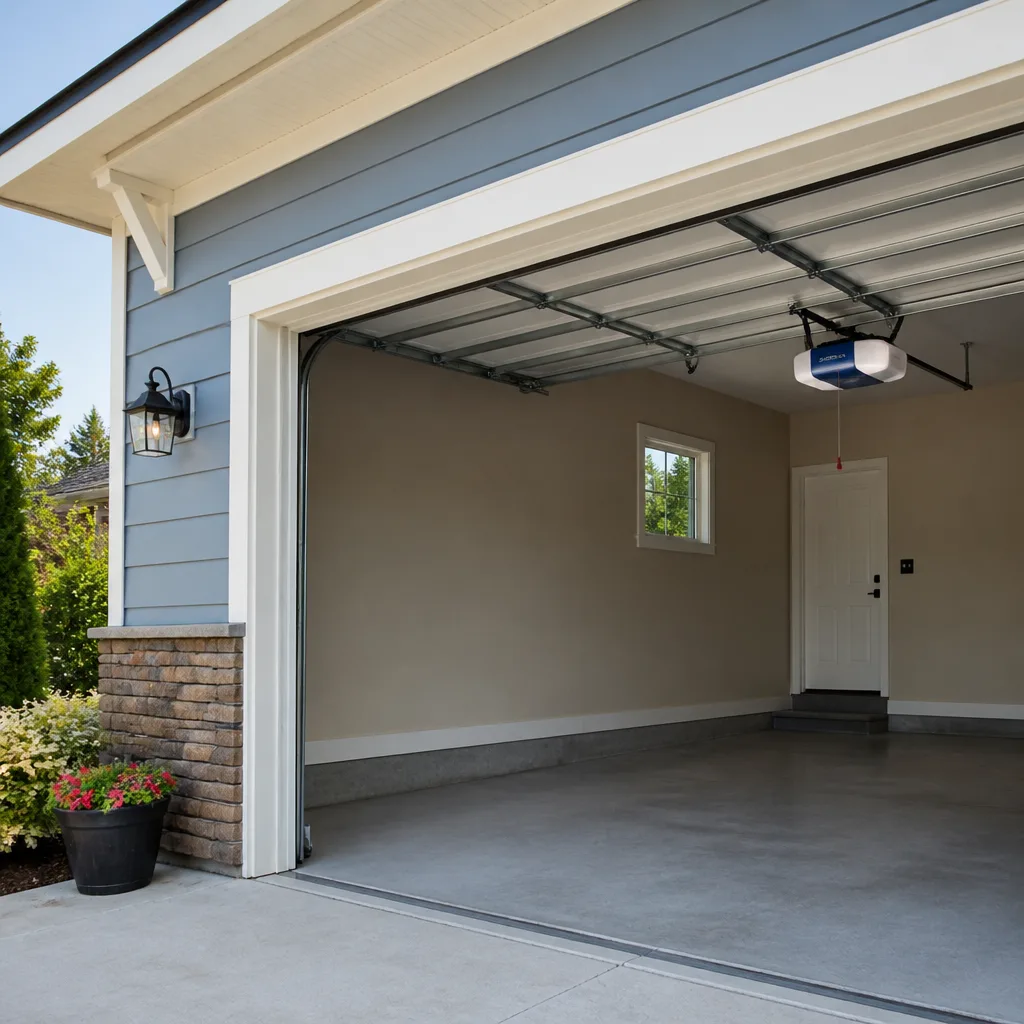 Chamberlain openers
Full 25-point door and opener safety check with every visit - springs, cables, rollers, tracks, and your LiftMaster or Chamberlain opener included
You get a price before we start. It does not change when the pro arrives.
Get your free estimateGarage Door Permits, Codes & Inspections in Roland Park, MD: What You Need to Know
Most homeowners in Roland Park assume a garage door is like a mailbox or a fence: put it up, and nobody cares. That’s backwards. A garage door is the largest moving object on a house, it’s wired to a powered opener, and it has to hold a specific fire rating when it sits between the garage and the living space. All three of those facts invite code scrutiny. This guide walks through when a permit is actually required in Roland Park, how inspections usually go, what part of the code trips people up, and where the real safety lines are drawn. It’s written for owners of the older detached and attached garages that make up so much of Roland Park.
Quick Answer
In Roland Park, MD, replacing a garage door or opener generally requires a building permit because it’s a structural and electrical change, and the work must meet current safety standards for spring containment, automatic reversal, and fire-rated separation between the garage and the house. Repairs to existing hardware – springs, cables, rollers, tracks – typically don’t need a permit, but they still need a trained technician. When in doubt, ask the city’s building department before you buy; the answer is free and takes one phone call.
Styles & brands we work with
- Raised-panel steel
- Carriage house
- Modern flush
- Full-view glass
- LiftMaster openers
- Chamberlain openers
Table of Contents
- Do You Need a Permit for a Garage Door in Roland Park?
- The Codes That Actually Apply to Roland Park Garages
- How a Garage Door Inspection Works
- Fire Separation: The Code Nobody Thinks About
- Safety Devices the Code Requires
- What’s Different About Older Roland Park Garages
- How to Vet a Garage Door Contractor in Roland Park
- Common Mistakes to Avoid
Do You Need a Permit for a Garage Door in Roland Park?
Replacing a garage door or a garage door opener in Roland Park usually requires a building permit. The exact rule depends on the scope: a straight swap of a door for one of the same size and type is sometimes handled as a minor alteration, while anything that changes the opening, adds a new opener circuit, or touches the wall between garage and house tends to require a full permit and inspection. The city’s building department is the authority, and one phone call settles it for your address.
Here’s the working rule we use when a Roland Park homeowner asks:
- New door, same opening: often a permit, sometimes not. Ask first.
- New opener with electrical work: usually a permit and an electrical inspection.
- Enlarging or moving the opening: definitely a permit. This is structural.
- Spring, cable, roller, or track repair: no permit. This is maintenance.
- Full removal and rebuild of a detached garage door: permit depending on structural changes.
Why does the permit matter beyond paperwork? Because the inspection confirms the door meets current safety requirements. A Roland Park garage door that fails an inspection because the opener lacks a working photo eye, or the panels don’t carry the right fire rating, becomes a problem at resale. Buyers’ inspectors flag it. Lenders care. Getting the permit and getting it signed off is cheaper than fixing it later.
One more reason: most homeowner insurance policies expect permitted work to be permitted. If a door you installed without a permit damages something, the claim conversation gets harder. That’s not a scare tactic – it’s the practical reality of how claims get reviewed.
The Codes That Actually Apply to Roland Park Garages
Garage door code in Roland Park, MD, comes from three sources: the state’s adoption of the International Residential Code (IRC), county and city amendments, and manufacturer requirements baked into the label on the door itself. Most homeowners never see the IRC, so here’s the practical summary of what actually applies to a residential garage door.
- Automatic reversal: an opener must reverse when it meets an obstruction. On modern openers this is done with photo eyes at the bottom of the tracks plus a force-sensing function in the motor head.
- Photo eye height: the safety beam sits about six inches above the floor on each side of the door.
- Manual release: every opener must have a red emergency release handle, reachable and functioning.
- Spring containment: extension springs over a certain length need a containment cable running through them. Torsion springs are mounted on a shaft that provides the containment.
- Fire-rated door: when a door separates an attached garage from a sleeping area, it must carry a fire rating, typically a label on the door.
- Wall control placement: fixed controls must be at least five feet above the floor and out of reach of children.
Those requirements aren’t new. They’ve been in the code for years, and most modern openers from LiftMaster, Chamberlain, and Genie ship with them built in. The trouble starts when a Roland Park homeowner keeps an old opener past its useful life, or the safety beam gets knocked out of alignment during a track repair and nobody notices.
If your opener predates the photo eye era – many Roland Park garages still have one – replacing it isn’t just about convenience. It brings the door into compliance with current safety code.
How a Garage Door Inspection Works
A garage door inspection in Roland Park takes about 30 to 60 minutes and covers the door, the hardware, the opener, and the safety devices. Whether it’s a municipal inspector signing off on a permit or a technician doing an annual check-up, the checklist is similar. Here’s what gets looked at, in the order we go through it.
- Balance test: the door is disconnected from the opener and lifted halfway. It should stay put. If it drops or rises, the springs are tired.
- Spring inspection: both torsion and extension springs are checked for gaps, rust, and elongation. Worn springs are the leading cause of door failures.
- Cable and drum check: cables are examined for fraying, kinks, or slack. A loose cable is dangerous and needs immediate attention.
- Roller and hinge wear: rollers are checked for flat spots and hinges for cracks. These are cheap to fix and prevent bigger problems.
- Track alignment: the door is run through its full cycle, and the tracks are checked for bends, loose brackets, or debris.
- Opener force and reversal: the opener is tested against a solid object. The door must reverse on contact.
- Photo eye test: the beam is broken by hand, and the door must reverse. Then the beam is checked for alignment with its indicator light.
- Emergency release: the red handle is pulled to confirm it disconnects the door from the opener.
- Weather seal and panel condition: the bottom seal is checked for gaps. Panels are examined for cracks or rot, common in older Roland Park garages.
If a permit inspection is happening, the inspector will run through a similar list but focus on code compliance: the fire rating, the photo eye height, the manual release, and the electrical work. A door that balances, reverses, and closes against a working safety beam passes almost every time.
Fire Separation: The Code Nobody Thinks About
When your garage is attached to the house, the door between the garage and the living space is a fire separation. It’s not a normal interior door. In Roland Park, where many homes have an attached garage under or beside bedrooms, this matters. That door has to slow fire long enough for occupants to get out and for the fire department to arrive.
What the code requires:
- Fire-rated door: typically a labeled door that resists fire for a set period. Most residential applications call for a door rated to resist fire, and the rating label is visible on the door edge.
- Self-closing hardware: the door has to close and latch on its own. An open garage-to-house door is one of the most common fire-code violations in any home.
- No modifications: cutting a pet door or adding glass to a fire-rated door voids the rating. Some homeowners in Roland Park have done this without realizing it.
Here’s the part that trips people up: this rule is about the door between the garage and the house, not the big overhead door itself. The overhead door is a weather barrier and a security barrier, not a fire barrier in most cases. If you’re replacing the man-door between your garage and kitchen, that’s where the fire rating lives. If you’re replacing the overhead door, that’s a different code conversation about structural loads and safety devices.
When we’re called out to garage door repair Roland Park, we sometimes find a fire-rated man-door that’s been propped open for months. That’s not a garage door problem – that’s a habit problem – but it’s worth pointing out because it’s the single easiest fire-code fix in the house.
Safety Devices the Code Requires
A modern garage door opener is required to have two safety systems: a photo eye beam and a force-sensing reversal. Both exist because a garage door weighs upward of a couple hundred pounds and shuts with enough force to injure a child or a pet. In Roland Park, these aren’t optional – they’re code.
Here’s how each one works, without telling you to go adjust anything yourself:
- Photo eye beam: two small sensors at the bottom of the tracks. When anything crosses the beam while the door is closing, the door reverses. If the beam is blocked, misaligned, or the sensor is dirty, the door won’t close.
- Force-sensing reversal: the opener monitors how much force it takes to move the door. If the door hits something on the way down and the force spikes, the motor reverses. This is the backup when the beam is defeated or blocked during a path the beam doesn’t see.
- Manual release: a red handle that disconnects the door from the opener so it can be opened by hand during a power outage. Every homeowner should know where it is.
If your Roland Park door won’t close and the opener’s light is blinking, the photo eye is usually the culprit. The fix is often alignment, but sometimes it’s a failed sensor, and that’s a job for a technician. Please don’t stand on a ladder and rewire it.
What’s Different About Older Roland Park Garages
Roland Park has a lot of old detached and semi-detached garages. That’s part of what makes the neighborhood interesting. It’s also why a garage door inspection here isn’t the same as in a newer subdivision. Older garages were often built before photo eyes existed, before torsion springs became standard, and long before the current IRC was written.
When we inspect an older Roland Park garage, we’re usually looking for these issues:
- Original extension springs without containment cables. If a spring fails, it becomes a projectile. Containment cables stop that.
- Track brackets rusted into the wall. The lag bolts can pull out over decades. The door may still run, but it isn’t secure.
- Openers from the 1980s or 1990s. They work, but they predate modern safety standards. Some don’t reverse on obstruction at all.
- Single-panel doors with wooden frames. These are common in Roland Park and heavy. The original hardware may not handle a modern opener without reinforcement.
- Unsealed man-doors. Fire-rated doors with worn weatherstripping and broken closers. Small fix, big code issue.
None of this means an old garage is a problem. It means old garages deserve an honest once-over. A door that’s been running since the 1990s with the same springs is a door that’s due for new ones.
How to Vet a Garage Door Contractor in Roland Park
Garage door work is a category where a homeowner can end up with a general handyman one day and a serious specialist the next. The difference matters when the job involves springs, openers, and code compliance. Here’s what to check before you book a Roland Park garage door contractor.
- Ask if they’re a specialist or a generalist. A garage door company handles doors and openers every day. A handyman handles hundreds of things and garage doors occasionally.
- Ask which brands they work on. Most reputable shops cover the major brands – LiftMaster, Chamberlain, Genie, Clopay, Amarr, Wayne Dalton, Craftsman, Raynor. If they only work on one, they’re a dealer, not a repair specialist.
- Ask for written pricing before work starts. A quote should list what’s being replaced and what it’ll cost. No surprises.
- Ask about spring repair as a specific service. If they hedge on spring work or subcontract it, they’re not the right call.
- Ask if permits will be pulled when required. A contractor who avoids permits to save time is a contractor who creates problems at resale.
- Ask about emergency response. A specialist should be able to say clearly what they do when a door won’t open and a car is trapped inside.
We work on the brand you have, not just the one we prefer. When a Roland Park homeowner has a Clopay door and a Genie opener, we handle both – one call, one specialist, no need for two different vendors. That’s the whole point of hiring a garage-door-only operation instead of a generalist who fits it in between other jobs.
Common Mistakes to Avoid
- Skipping the permit to save time. A door that fails a city inspection at resale is more expensive to fix than a permit would have been. Roland Park buyers’ inspectors look for unpermitted structural work, and door replacements get caught.
- Assuming old openers pass code. Pre-photo-eye openers are still in a lot of Roland Park garages. Replacing the opener is often the cheapest way back into compliance.
- Ignoring the man-door fire rating. It’s the door between the garage and the house, and it needs to close and latch. Propped-open doors with cut pet flaps are common and easy to fix.
- Removing spring containment cables. If your extension springs came with cables, leave them. Without them, a failed spring becomes a projectile.
- Patching a broken torsion spring with a second spring of a different size. Do not mix spring sizes on a door. It changes the load and can cause premature failure of the whole system.
- Hiring a general handyman for opener work. Openers tie into the safety reverse system, which is code. A generalist who “knows” how to wire one isn’t the same as someone who does it every day.
- Assuming “a permit” means “an inspection.” Some minor door swaps need the permit but skip the inspection. Ideally, ask the city’s building department which path applies at your address.
One more: don’t try to adjust a torsion spring with a couple of screwdrivers. That’s not caution – that’s the single most dangerous thing a homeowner can do on a garage door, and it’s the reason spring work exists as a specialty.
See the difference
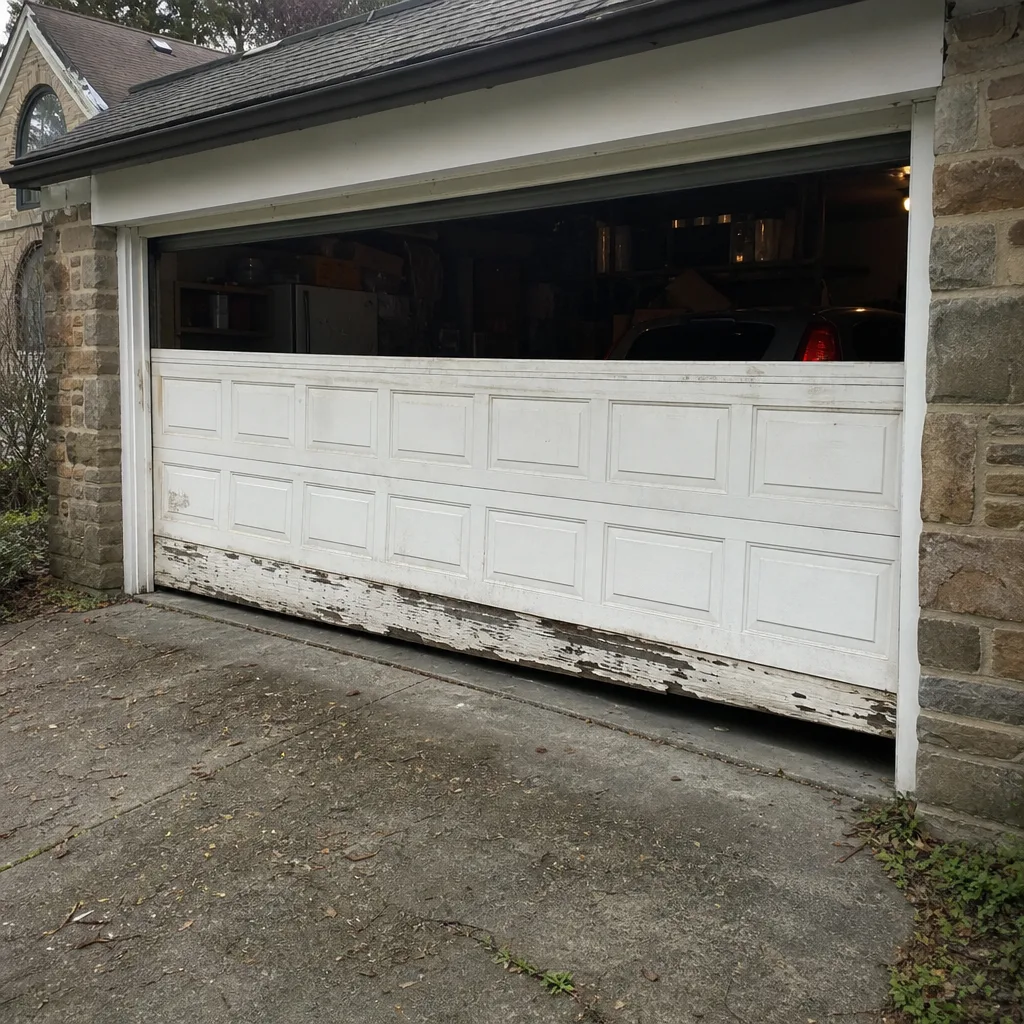 Before
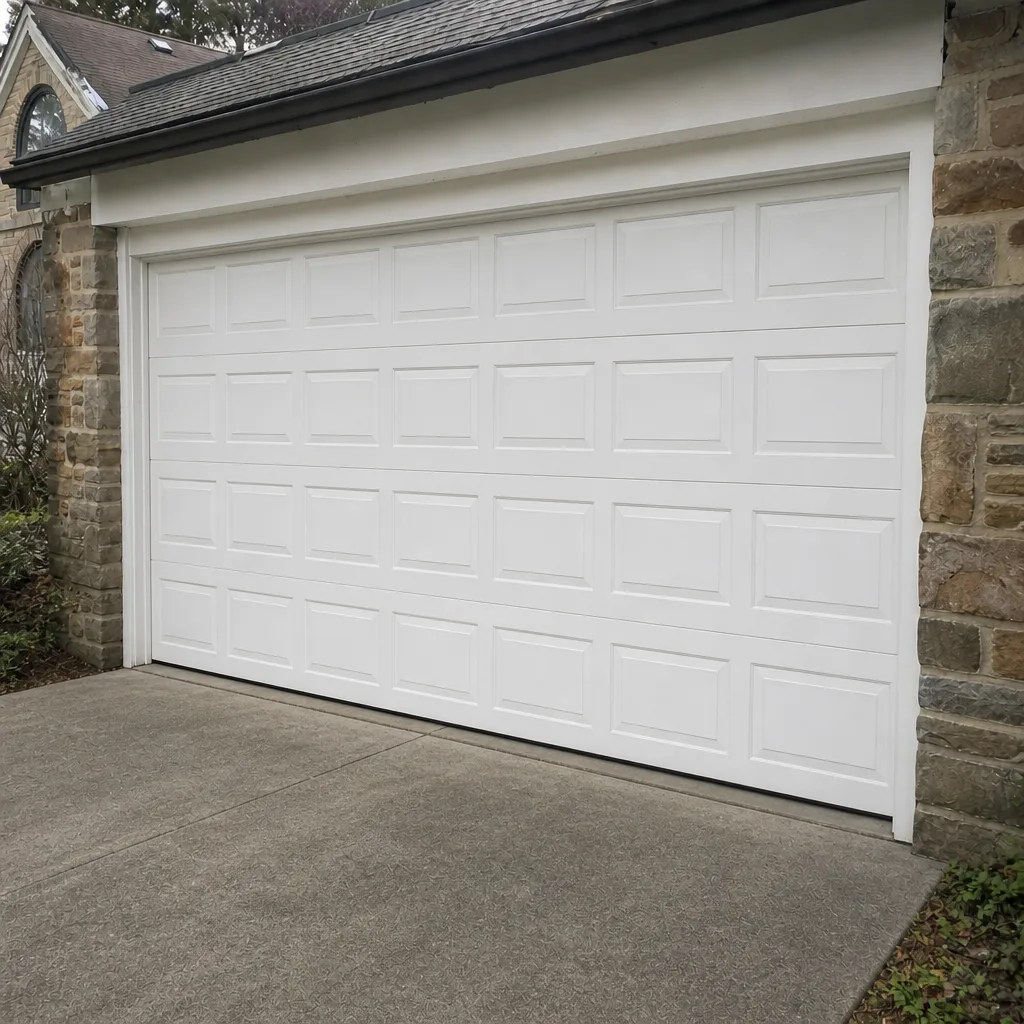 After
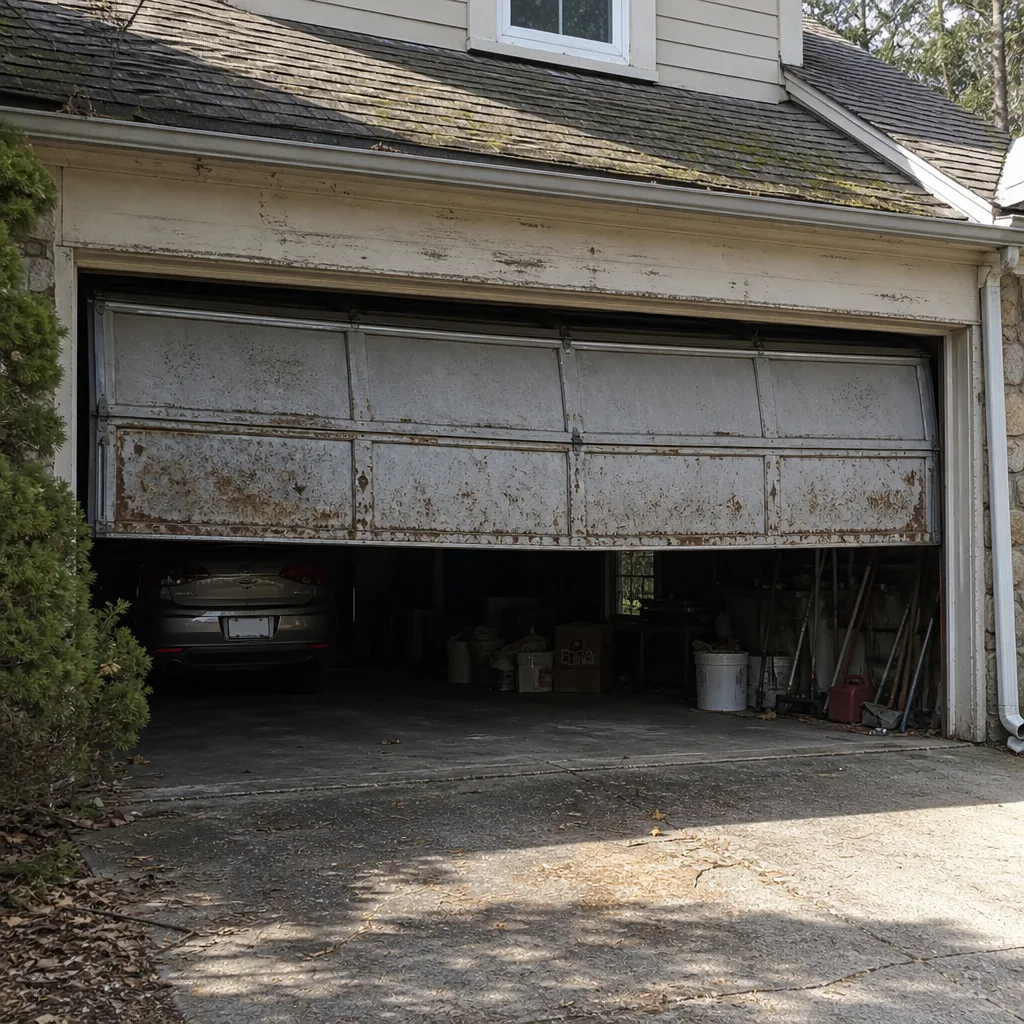 Before
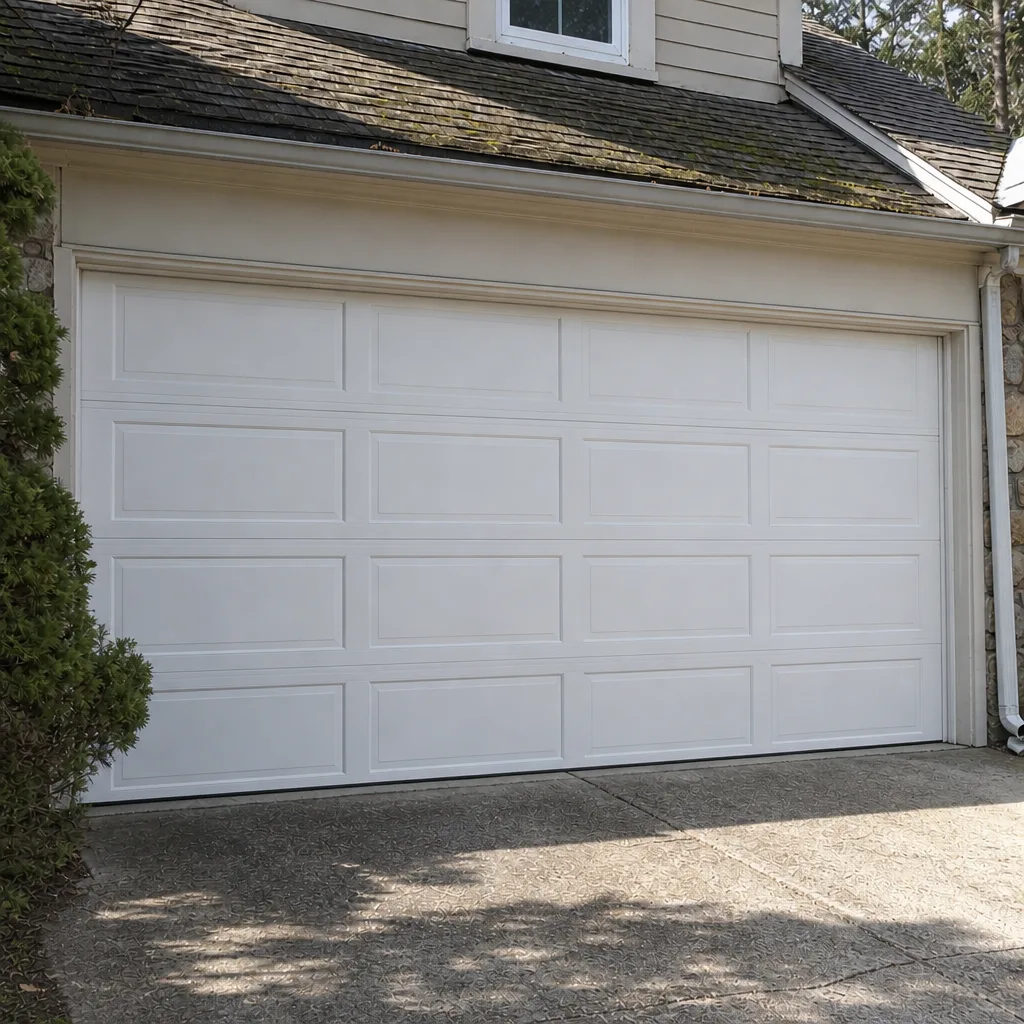 After
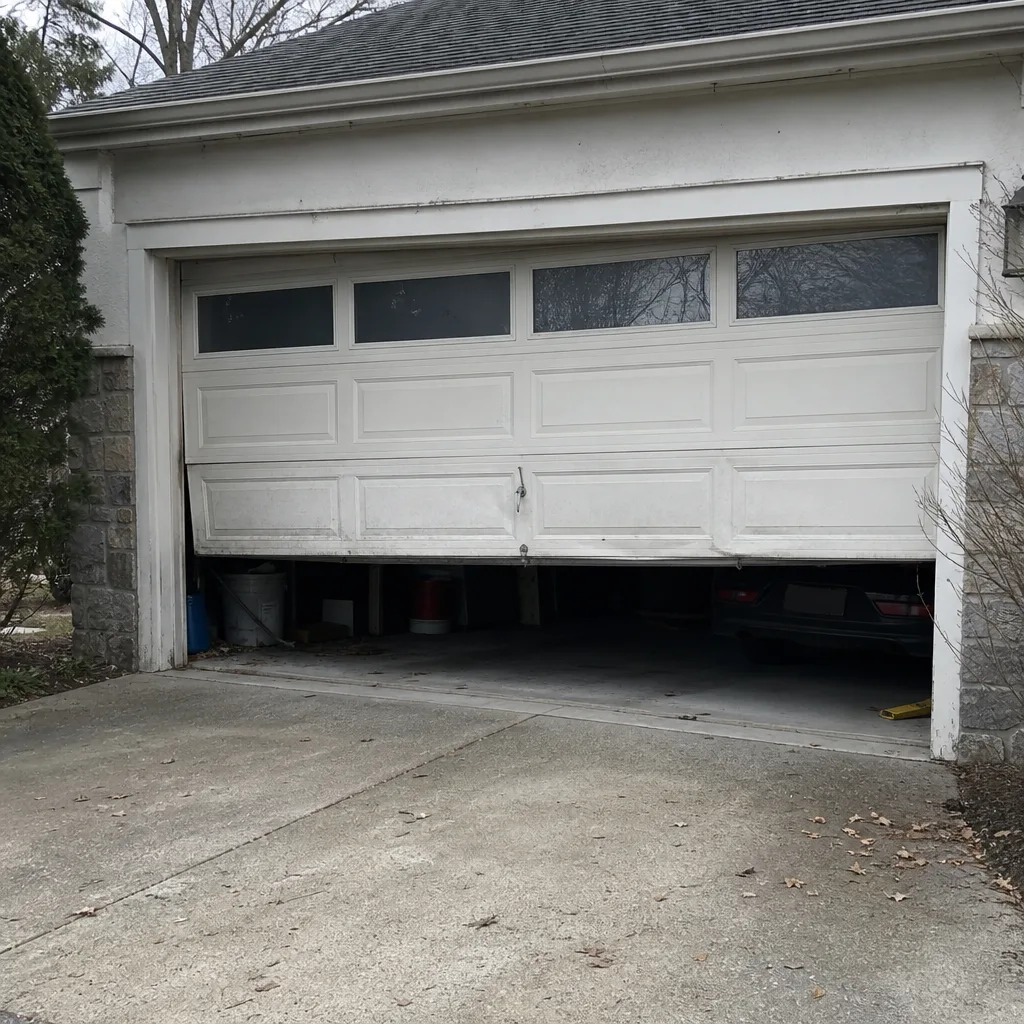 Before
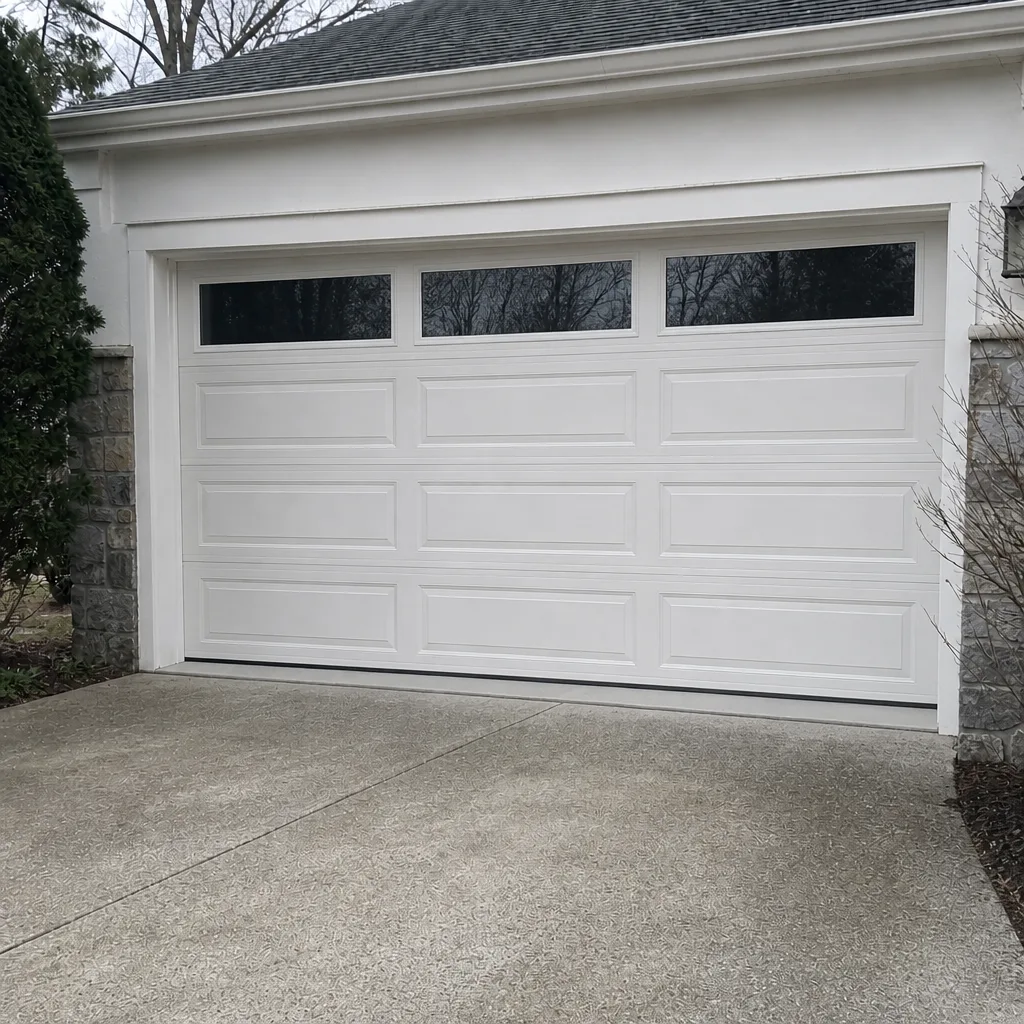 After
When to Call a Professional
Some garage door issues are fixable by any careful homeowner. Most aren’t. If the door came off the track, call. If the springs snapped or you heard a loud bang from the garage, call, and don’t run the door. If the opener is grinding, straining, or has lost the safety reverse, stop and call. If your photo eyes are misaligned and a quick wipe doesn’t fix it, call before you touch the bracket. If a door is off balance and you can lift it by hand without much effort, the springs are failing and it’s time for a technician. If your Door is Trapped because the door won’t open with a car inside, that’s the call that gets priority – Garage Door Repair Roland Park offers free estimates in Roland Park. Call (833) 549-0245. We answer 24/7, and fast dispatch is available from 7am to 7pm, Sunday through Friday.
Frequently Asked Questions
Usually yes. A full door replacement in Roland Park typically requires a building permit, though the exact rule depends on the scope of the work and the age of the existing garage. Call the city’s building department with your address to confirm before ordering a door. If we’re handling your install, we’ll walk through the permit question as part of the free estimate.
No. Repairs to springs, cables, rollers, tracks, and existing hardware don’t require a permit or inspection, because they restore the door to its current state rather than changing it. Replacing the entire door or the opener usually does require a permit. If you’re unsure which category your job falls into, call (833) 549-0245 and we’ll help you sort it out. Estimates are free.
A modern opener installed in Roland Park must have a working photo eye beam and a force-sensing reversal system. It must also have a red emergency release handle, and any fixed wall control must be at least five feet above the floor. Older openers that predate these requirements are a code problem waiting to be discovered at resale. If your opener is more than about 15 years old, it likely needs replacing regardless of whether it still runs.
Yes. Buyers’ inspectors commonly flag three things on Roland Park garages: an opener without a working safety reverse, extension springs without containment cables, and a fire-rated man-door that’s been removed or modified. All three are fixable. None of them need to sink a sale if they’re addressed early. Call (833) 549-0245 for a quote on setting any of them right.
Often yes, because a new opener involves electrical work and a safety-system change. The city’s building department is the place to confirm. If you’re choosing between repairing an old opener and replacing it, the permit question usually tips the decision toward replacement, since the new unit comes with modern safety systems already built in. We work on LiftMaster, Chamberlain, Genie, and Craftsman systems and can quote either path.
A standard garage door inspection in Roland Park takes 30 to 60 minutes, depending on the age of the door and the number of issues found. A permit inspection by the city is usually shorter – 15 to 30 minutes – because the inspector is checking code compliance rather than running a full maintenance list. For a quote on a full inspection and any needed repairs, call (833) 549-0245.
The Bottom Line
Garage door permits and code in Roland Park come down to four things: permits for door and opener replacements (not for repairs), fire-rated separation between an attached garage and living space, working safety reverse systems on every opener, and spring containment on extension spring setups. Older Roland Park garages tend to trip the code on all four, which is why an inspection before selling or remodeling is worth the call. A specialist who works on the door and the opener together handles the whole picture in one visit. We do exactly that – door, springs, track, opener – one phone call. The estimate is free, and the price is set per job before any work begins.
If you’re ready to get a straight answer on your Roland Park garage door, call (833) 549-0245 for a free estimate. We answer 24/7, with fast dispatch from 7am to 7pm, Sunday through Friday, and our technicians have up to 10 years of experience with every major brand on the market. Whether the question is a permit, a fire door, or a spring that went bang in the middle of the night, we’ll tell you what actually needs doing and what it costs before anyone touches a tool.
Written by the team at Garage Door Repair Roland Park.