
Last updated November 20, 2026
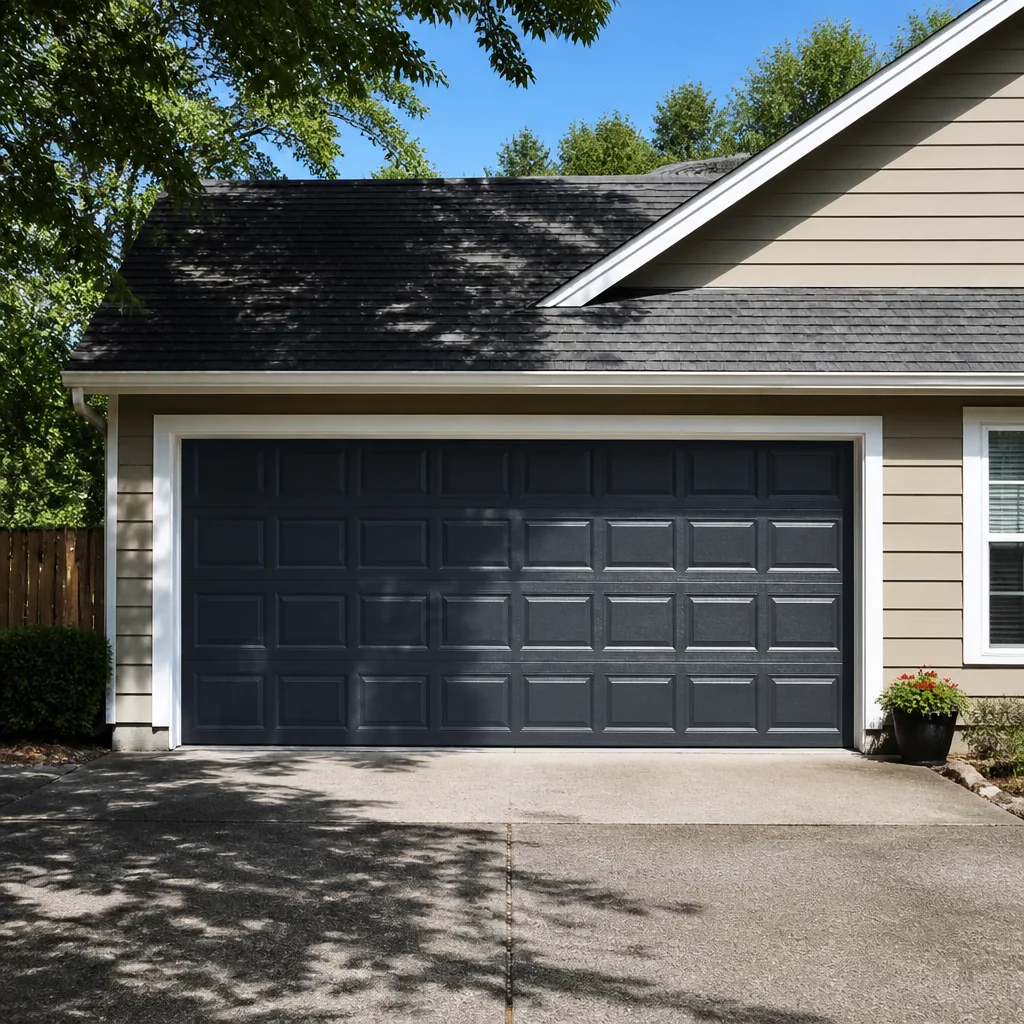 Raised-panel steel
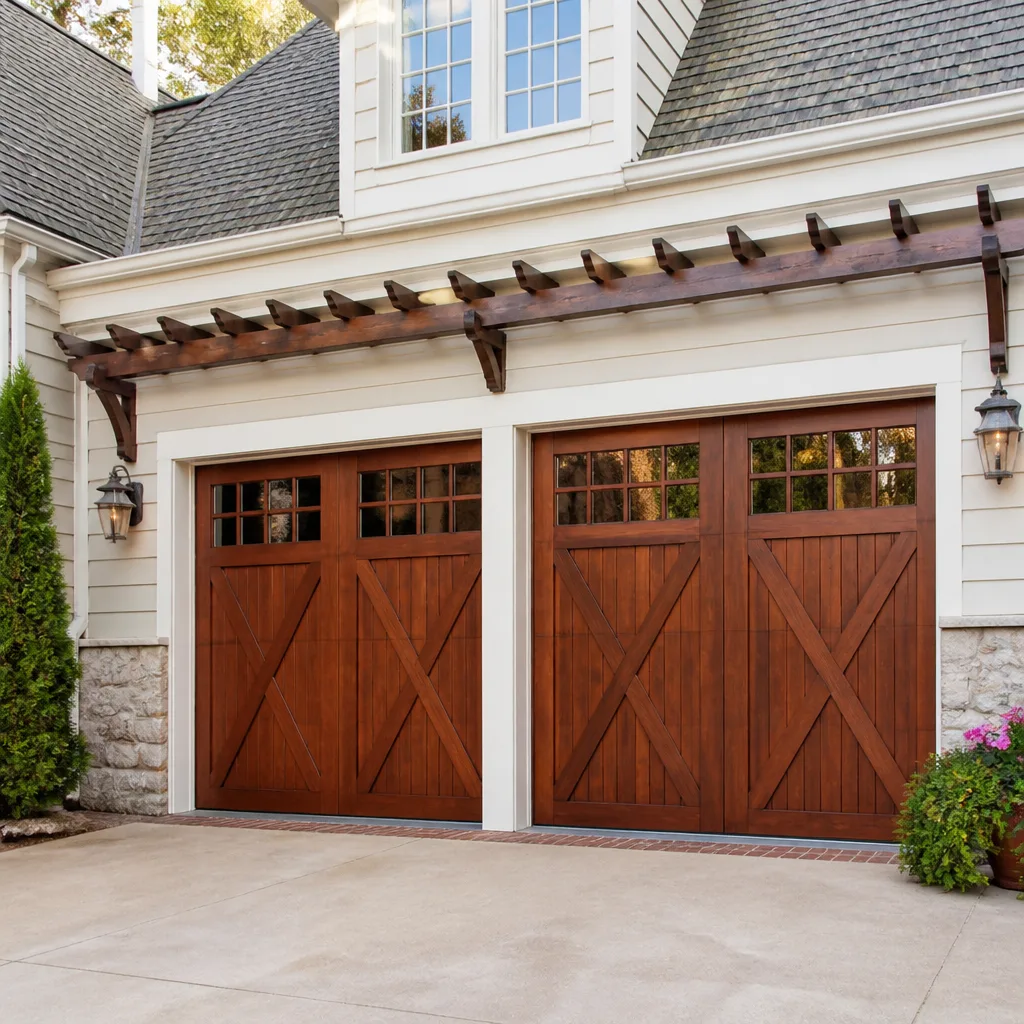 Carriage house
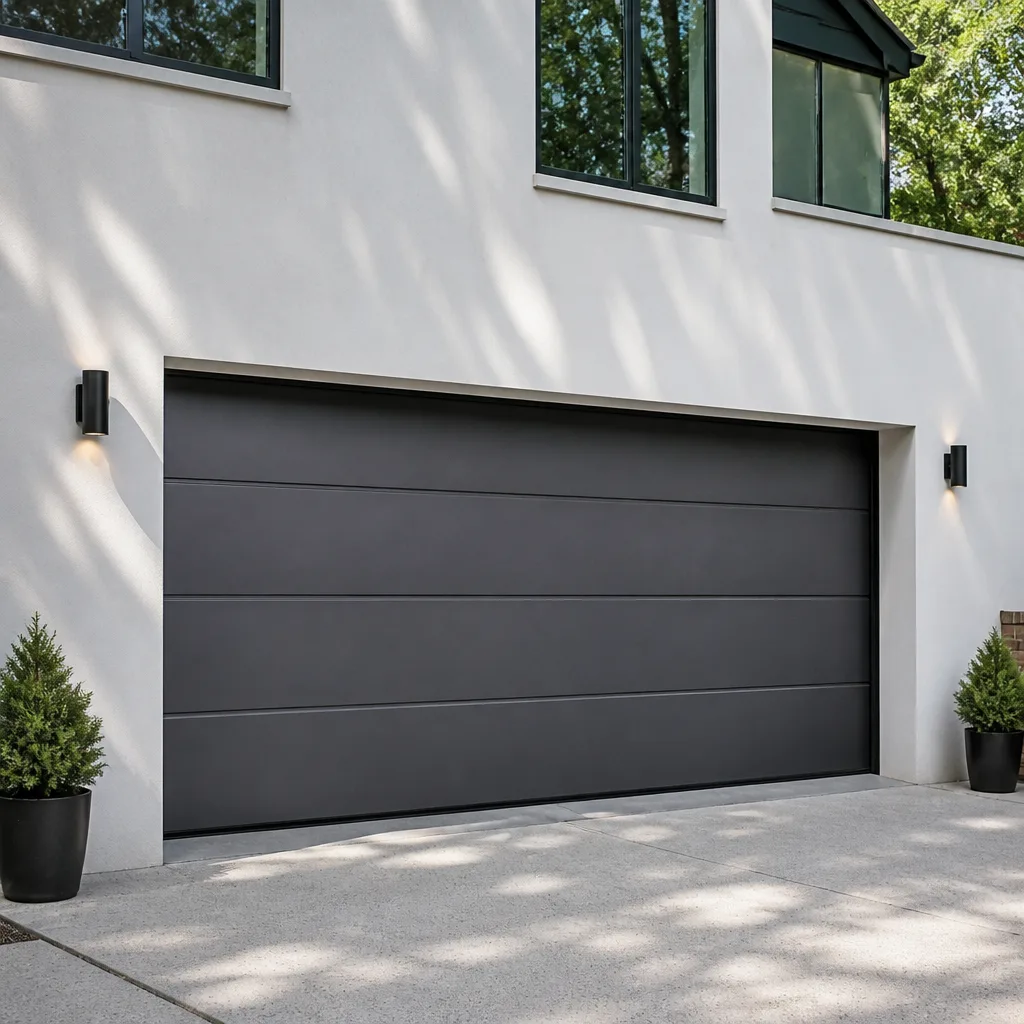 Modern flush
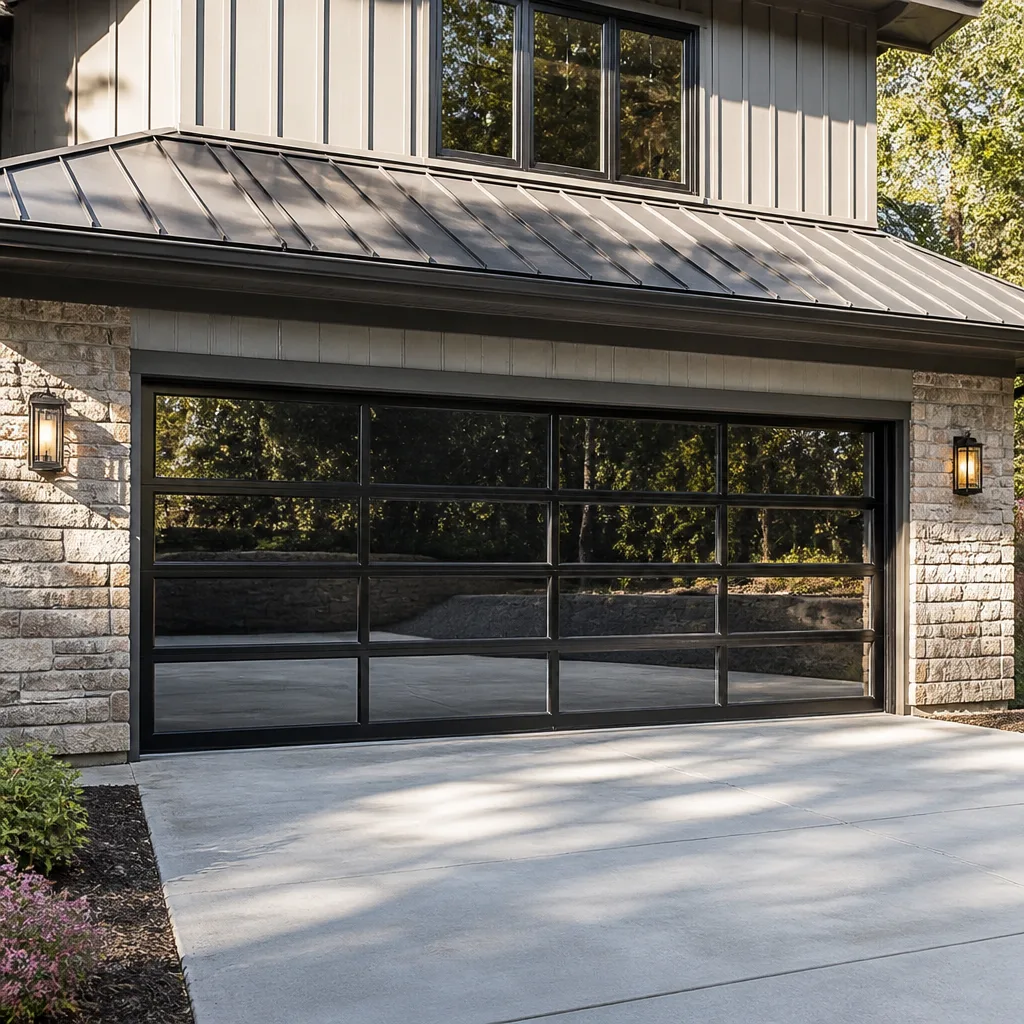 Full-view glass
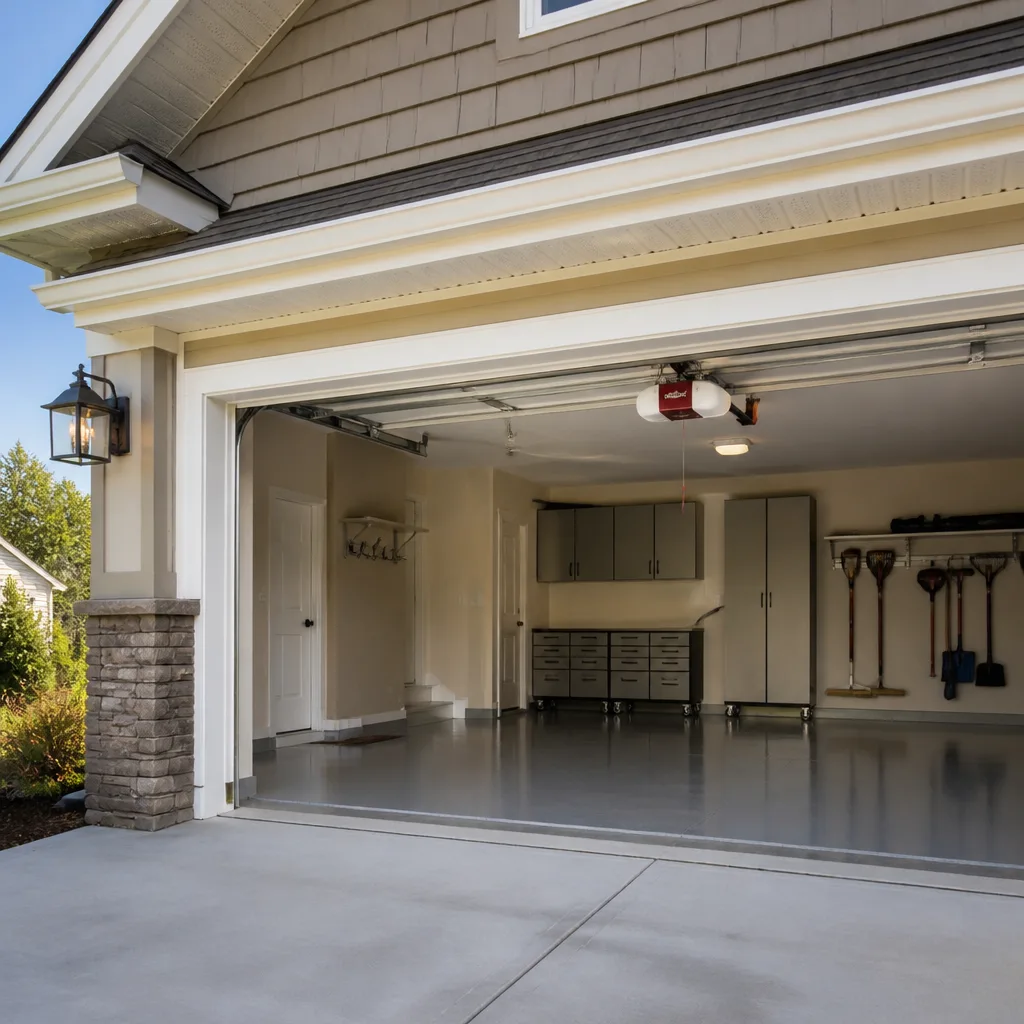 LiftMaster openers
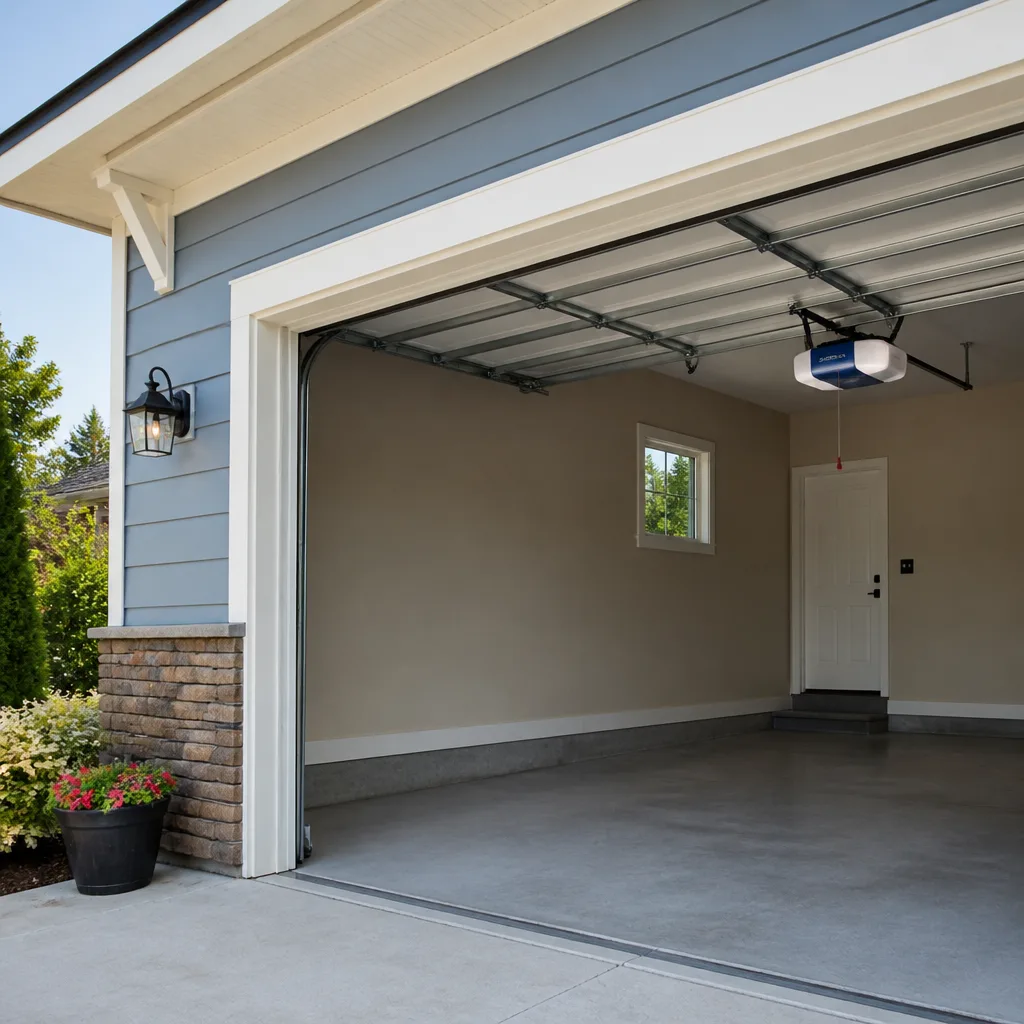 Chamberlain openers
Full 25-point door and opener safety check with every visit - springs, cables, rollers, tracks, and your LiftMaster or Chamberlain opener included
You get a price before we start. It does not change when the pro arrives.
Get your free estimateThe Complete Guide to Garage Doors in Roland Park
Most homeowners treat the garage door as a single appliance: it opens, it closes, and when it stops doing either, they call whoever answers first. That framing is the root of most bad garage door decisions. A garage door is actually two systems married together – a mechanical door assembly carrying several hundred pounds of tension, and an electronic opener that only does what that assembly allows. Fix one and misjudge the other and you’re back on the phone in a month. This guide walks through how both systems work, what Roland Park’s climate and housing stock ask of them, what repairs actually cost, when to repair versus replace, and the mistakes that turn a small fix into a large one. We work on garage doors in Roland Park every week, and this is the reference we wish more homeowners had before they called anyone.
Quick Answer
A garage door in Roland Park is a spring-balanced panel system driven by an opener, and maintaining it means checking the balance, hardware, and safety reverse twice a year while replacing worn springs before they break. Most repairs are straightforward and same-day; a full replacement is a scheduled job with a free measure and a written price. If your door won’t move, won’t stay closed, or a spring has snapped, that’s a call-now problem, not a next-month one.
Styles & brands we work with
- Raised-panel steel
- Carriage house
- Modern flush
- Full-view glass
- LiftMaster openers
- Chamberlain openers
Table of Contents
- How a Garage Door System Actually Works
- What’s Different About Garage Doors in Roland Park
- Springs: The Part That Fails Most and Matters Most
- Openers, Smart Drive, and Remote Failures
- What Garage Door Repairs Cost
- Repair or Replace? How to Decide
- The Replacement Process, Start to Finish
- A Simple Maintenance Routine
- When It’s an Emergency
How a Garage Door System Actually Works
Understanding the parts changes how you diagnose problems, and it keeps you from paying for the wrong repair. A sectional garage door has five working subsystems, and a failure in any one shows up as “the door doesn’t work.”
The panels and hinges form the door itself. Each hinge connects panels and carries a roller that rides in the track. Panels crack, hinges wear, and rollers seize.
The track guides the door’s travel. It’s a shaped piece of steel, not a structural beam, and it bends when struck. A door off track is usually a bent track, not a broken door.
The springs do the lifting. These are high-tension components under serious load, and they’re the part that fails most. A torsion spring (a coil mounted on a shaft above the door) or a pair of extension springs (stretched along the sides) counterbalances the door’s weight so a person or an opener can move it.
The cables and drums transfer spring force to the door’s bottom corners. Cables are under the same tension as springs.
The opener is the motor-driven system – a chain, belt, or screw drive in older units, or a direct or jackshaft drive in newer ones – that pushes and pulls the door. It also carries the safety reverse sensors near the floor, and if you use a smart opener, the logic that connects it to your phone.
These parts are interdependent. A worn roller strains a hinge, a worn hinge shifts a panel, a shifted panel drags on a track, and a dragging door overloads the opener. When we diagnose a door, we look at the whole chain. If you want a sense of what we cover, our garage door repair Roland Park page lays out the scope: door, track, springs, and opener – the complete system, not just the part that’s obviously broken.
What’s Different About Garage Doors in Roland Park
Garage doors in Roland Park live in a specific environment, and it shapes what fails and when. This is an older, established neighborhood with mature tree canopy, varied architecture, and a mix of detached garages, attached garages, and carriage-style doors. That combination produces a distinct set of issues.
Tree debris and track fouling. Roland Park’s tree canopy is one of its best features and one of the worst things for a garage door. Leaves, twigs, seeds, and sap collect on the door’s top section and in the top track. Debris in the track causes rollers to jump and lift cables to slacken at the worst moment. The fix is simple: clear the track and the top of the door seasonally, and if you see significant leaf accumulation after a windstorm, don’t cycle the door until you’ve cleared it.
Humidity and temperature swings. Maryland’s summers are humid and the shoulder seasons swing hard between cool nights and warm days. Those cycles expand and contract steel tracks, wood frames, and the hardware that ties everything together. Loose lag bolts, minor track misalignment, and squeaking hinges are common. So is spring fatigue: a spring that’s been cycled through a wide temperature range wears faster than one in a stable climate.
Older housing stock with non-standard openings. Roland Park’s housing is varied, and that means garage openings vary too – widths, headroom above the door, and side clearance aren’t always what a big-box replacement assumes. A door that fits needs measuring, not assuming. We measure every job before ordering, which matters here more than in a subdivision where every house started identical.
Carriage-style and wood-look doors. This neighborhood has its share of carriage-house doors and wood-grain finishes. Those need the door’s finish maintained, not just its mechanics: painted or stained surfaces want attention before they weather, and hardware on decorative doors wears differently than on standard steel.
Alley and driveway access. Some Roland Park garages sit behind the house with narrow driveway approaches. That affects how a replacement door gets delivered and installed, and it’s worth mentioning when you book a job.
Springs: The Part That Fails Most and Matters Most
Springs are where most garage door failures begin, and they’re also the most dangerous part of the door to touch. A torsion spring is wound to carry the door’s full weight; the energy stored in a wound spring can release instantly. For that reason, our spring repair is a dedicated specialty with proper winding tools and safety protocols. This is not a DIY fix, and we’d rather turn down a repair than see a homeowner hurt.
Why springs break
Every cycle of the door works the spring through one full flex-and-release. Springs are rated for a cycle count, and most residential doors see several cycles a day. When a spring reaches the end of its rated life, it breaks – often with a loud bang that sounds like a gunshot, and always with the door suddenly unable to lift itself. A heavy door that feels like it weighs three times what it did last week is a sign the spring has gone.
The difference between one spring and a pair
Here’s a detail that matters for pricing: many doors use a matched pair of torsion springs rather than one. A pair shares the load, and when one breaks, replacing just the broken one leaves a mismatched pair that fails again quickly. We replace springs as a pair when the door has a pair, because a single new spring against a worn partner is a short-lived fix.
That’s why spring pricing has to be read carefully. A price for one spring is not a price for the job. On a two-spring door, expect the cost of the pair to be roughly double the single-spring figure, plus a matching replacement if only one side is damaged.
What spring replacement involves
- Confirm the failure: test the door by hand and inspect both springs, cables, and drums.
- Measure the old spring precisely – wire size, inside diameter, and length – so the replacement matches the door’s weight.
- Use winding bars to release the remaining tension safely, then remove the broken spring.
- Install and wind the new spring pair to match the door’s balance point.
- Adjust the door’s travel and balance, then test the opener’s safety reverse.
If a spring has broken, don’t use the door. The door’s weight is now entirely on the opener, and an opener is not built to lift that weight. Using it anyway can damage the opener, bend the track, and send the door down hard. Call for a same-day repair and leave the door closed until someone qualified is on site.
Openers, Smart Drive, and Remote Failures
The opener is the part people notice, and it’s the part people most often misdiagnose. A door that won’t respond to the remote isn’t always a dead opener, and a door that reverses or stops halfway isn’t always a bad motor. We work on the brands installed in most Roland Park homes – LiftMaster, Chamberlain, Genie, Craftsman, and others – which matters because each brand’s logic, sensors, and safety features behave differently. Knowing the brand you have shortens the diagnosis.
The remote doesn’t work: what it usually is
- Dead battery or lost pairing. The simplest explanation is usually right. A new battery and a re-pair solves a surprising share of calls.
- Safety sensors misaligned or blocked. The two small sensors near the floor must “see” each other. A bumped sensor, a cobweb, or a leaf between them stops the door instantly.
- Logic board or receiver fault. If the wall button works but the remote doesn’t, the remote receiver is the suspect.
- Antenna or wiring issue. On older systems, the antenna wire can be damaged or shorted, which shortens range to nothing.
The door starts and reverses: what it usually is
A door that goes up an inch and comes back down is a safety-reverse problem or a bind. The opener is doing its job; it’s sensing resistance and stopping. Common causes are a misaligned sensor, a track obstruction, worn rollers, or a door out of balance because the spring is weakening. This is why we test the door by hand first – if it doesn’t balance, the opener isn’t the problem.
Smart openers and app control
Newer LiftMaster and Chamberlain units connect to the home network and to app control. When these fail, the cause is usually Wi-Fi or pairing rather than the door hardware. We handle both legacy and current smart-connected systems, so a door that works by button but not by app gets diagnosed as the electronics problem it is.
If you suspect the door, not the opener, our team can check both on one visit rather than sending you to a separate opener contractor. That’s the advantage of a garage-door-only focus: one call covers door, track, springs, and opener.
What Garage Door Repairs Cost
Garage door repair prices in the Roland Park area depend on the part, the door’s weight and configuration, and whether the problem is isolated or part of a chain. The figures below are typical ranges for the area – not exact prices. Your written estimate sets the final price, and the numbers below are for planning, not quoting.
| Repair | Typical range (Roland Park area) | Notes |
|---|---|---|
| Spring replacement (one spring) | $180 – $340 | Per spring. A matched pair is usually replaced together, so a pair costs about twice a single-spring figure. |
| Extension spring replacement (pair) | $180 – $320 | Side-mounted springs, often sold as a pair. |
| Off-track repair (labor + hardware) | $150 – $300 | Depends on track damage and whether a panel is bent. |
| Cable replacement (each side) | $150 – $280 | Cables are under the same tension as springs. |
| Roller replacement (full set) | $120 – $220 | Worn rollers are a common source of noise and binding. |
| Hinge and hardware replacement | $90 – $180 | Often bundled with a tune-up. |
| Opener repair (labor) | $120 – $280 | Plus parts if a board, sensor pair, or drive assembly is needed. |
| Opener replacement (installed) | $350 – $650 | Depends on drive type and smart features. |
| New door installation | $900 – $3,500+ | Depends on size, style, material, and hardware. Written estimate required. |
Two pricing facts we want you to hold onto. First, the price is quoted and agreed before any work starts – the written estimate is the number you pay, not a starting point. Second, the estimate itself is free. When you call, you’ll get a real number, not “somewhere between X and Y” over the phone. Our team works with the door and opener brands most common in Roland Park, including LiftMaster and Chamberlain on the opener side, so the estimate can reflect the actual unit.
If you’d rather see pricing by neighborhood or compare repair against replacement, our city pages are the place to start: garage door repair in Roland Park breaks down what’s typical here.
Repair or Replace? How to Decide
Repair if the door’s structure, track, and panels are sound and only components have failed. Replace if the door’s body is failing structurally, repeatedly, or the door no longer makes sense for the home. Most Roland Park garage doors we see are repair cases – the spring broke on a door that has years left – not replacement cases. The harder calls are the ones where age catches up with several parts at once.
Work through these questions in order:
- Is the door’s frame and track straight? If yes, repairs are likely economical. If the track has been bent repeatedly or panels are cracked across, replacement starts to make sense.
- How many parts have failed, and how recently? One failed spring is a repair. A door that has needed three repairs in a short span is telling you something.
- Is the door safe and functional in its current state? A door with a broken spring, a slack cable, or a warped panel that catches is a safety problem, not a scheduling problem.
- Do you plan to keep the home? If you’re staying, a door and opener that work reliably for the years ahead is the better value. If you’re moving, a repair that makes the door safe and functional is rarely worth upgrading into a full replacement.
- Does the door still match the house? A weathered or mismatched door on an otherwise well-kept Roland Park home is a candidate for replacement when it also needs mechanical work.
If you’re on the fence, get the door looked at first. A free estimate will tell you whether you’re looking at a component repair or a full replacement, and you can decide with a number in hand.
The Replacement Process, Start to Finish
A replacement is a measured, ordered, scheduled job. That’s not a downside – it’s why the door fits and the price is right. Here’s how it should go when you work with us on a new door in Roland Park.
- The measure. We measure the opening – width, height, headroom, side clearance, and where the opener will mount. On an older home with a non-standard opening, this step prevents the wrong-size door from being ordered.
- The selection. We walk through panel style, material, insulation, and window options, matching the door to how you use the garage and to the house’s look. On a garage in Roland Park, carriage-style doors and wood-grain finishes are often the right call.
- The written price. You get a written estimate before anything is ordered. The number is the number.
- Ordering and scheduling. The door is ordered to spec and a fitting date is set.
- Removal and installation. Old door out, new hardware and track fitted, door hung and balanced, then tested. Springs are wound and cables set.
- Opener integration. The opener is mounted and connected, travel limits are set, and safety reverse is tested. If you’re getting a new smart opener such as a LiftMaster or Chamberlain, it’s paired and tested with the app before we leave.
- The walkthrough. You test the door and the opener yourself, and we answer questions before we go.
Replacement is not a same-day repair call; it’s a project with a measure, an order, and a fitting date. If you’re comparing repair against replacement, our garage door installation in Roland Park page covers the selection and installation side in more detail.
A Simple Maintenance Routine
A twice-a-year routine catches most failures before they strand you. Homeowners who do these checks consistently spend less on repairs, and their doors run quieter.
- Test the balance. With the door closed, disconnect the opener (usually a pull cord), lift the door halfway, and let go. A balanced door stays put. A door that falls means the spring is losing tension.
- Test the safety reverse. Put a small object in the door’s path and close it with the opener. The door should reverse on contact. Test the photo-eye sensors too by blocking them.
- Clear the track and door top. Especially in Roland Park, where tree debris collects. Wipe the track with a damp rag, check the rollers, and clear the top section.
- Check the hardware. Look for loose lag bolts in the door and track brackets, and tighten what’s accessible. Don’t touch the springs or cables.
- Lubricate. A garage-door-rated lubricant on the hinges, rollers, and springs (spray on the coil surface only) reduces squeal and slows wear. Don’t overdo it.
- Look at the paint and finish. On wood or wood-look doors, touch up chips and weather spots before they spread. This matters most for the carriage-style doors common in Roland Park.
What you should not do yourself: adjust a torsion spring, loosen a cable, or “help” a door that’s lost balance. Those are the parts that hurt people. More on that in a moment.
When It’s an Emergency
Not every garage door problem can wait until next week. Here’s how to tell which is which.
Call now, don’t use the door: a snapped spring (the door won’t lift and shouldn’t be forced), a door off its track (it can fall), a vehicle trapped by a door that won’t open, a door stuck open on a home you’re leaving, a cable that’s come loose, or a door hanging unevenly with one side down.
Schedule a visit: a door that’s noisy but works, a remote that needs re-pairing, a sensor that’s misaligned, a door that runs slowly but reliably, or a cosmetic issue.
When the door won’t open and the car is stuck inside, that’s not a tomorrow problem. Our emergency service is genuine rapid response, not a contact form. Call us at (833) 549-0245. We answer 24/7, with fast dispatch from 7am to 7pm, Sunday through Friday. A call outside dispatch hours is booked into the next opening.
Common Mistakes to Avoid
- Forcing a door with a broken spring. The opener is now lifting the entire weight of the door alone. You’ll burn out the opener, bend the track, and possibly drop the door. Leave it closed and call.
- Treating a spring as a DIY job. High-tension springs and cables store enough energy to cause serious injury. The right tools and the right training are not optional. We won’t cut this corner, and neither should anyone you hire.
- Replacing one spring when the door has a pair. A new spring against a worn partner fails quickly. On a pair door, replace the pair – the pricing differences between “one spring” and “the job” exist for a reason.
- Buying a replacement door without measuring. Roland Park’s older homes have non-standard openings. An off-the-shelf door that doesn’t fit is a return and a redo. Measure, then order.
- Ignoring tree debris in the track. Under Roland Park’s canopy, leaves and twigs in the top track are a common cause of jammed doors. Clear the track seasonally, especially after wind.
- Calling a generalist for a garage door problem. A handyman can tighten a bolt. A garage-door specialist diagnoses springs, cables, tracks, and the opener’s logic as one system. That’s the difference between a repair and a return visit.
- Waiting until a small issue becomes a large one. A squeak that’s ignored becomes a worn hinge, a binding roller, and a strained opener. A small repair now costs less than the chain reaction later.
See the difference
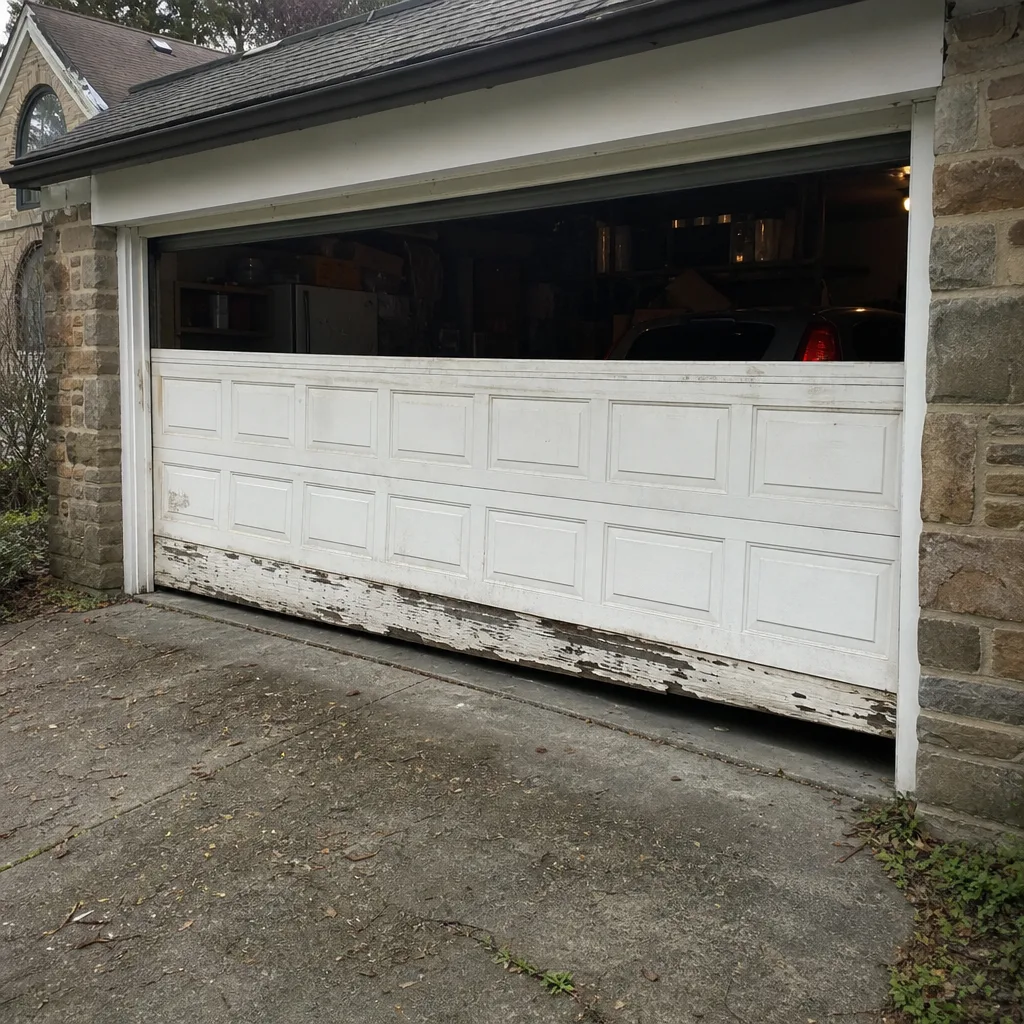 Before
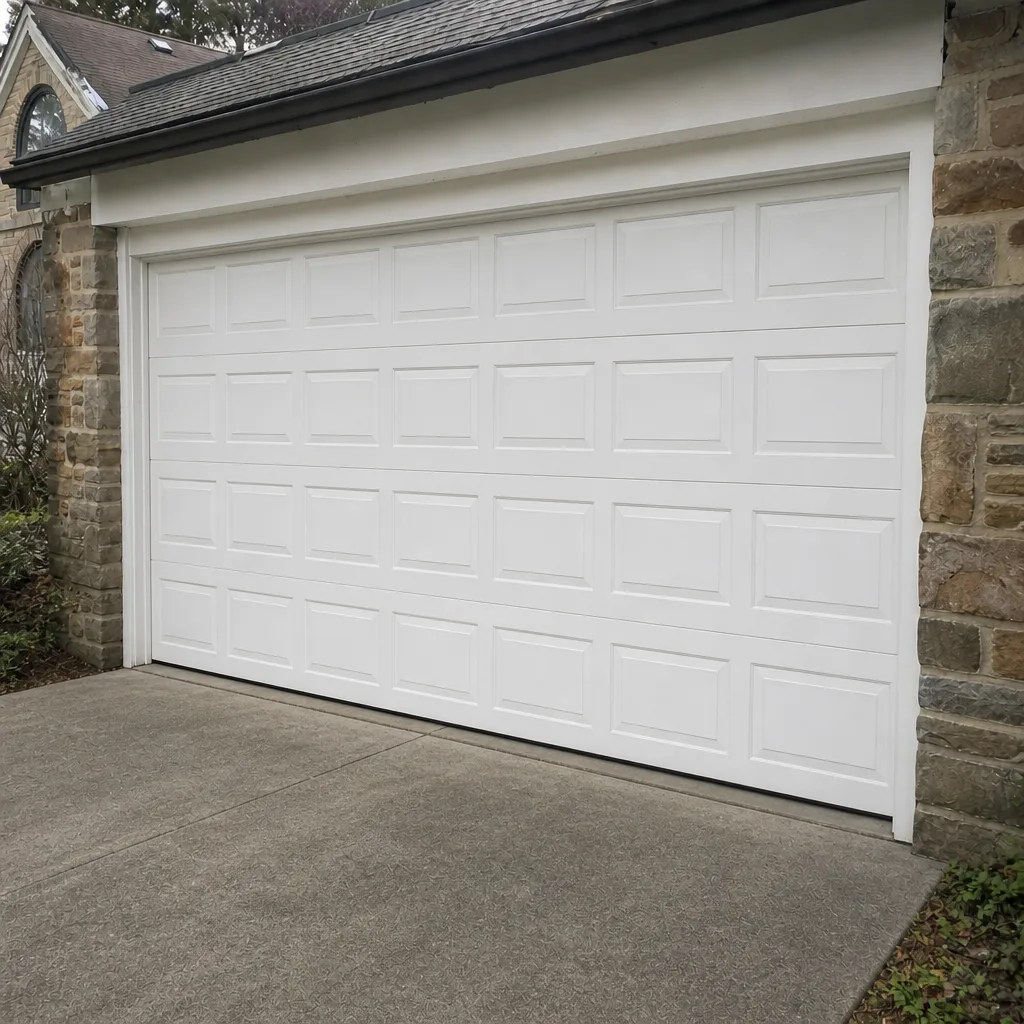 After
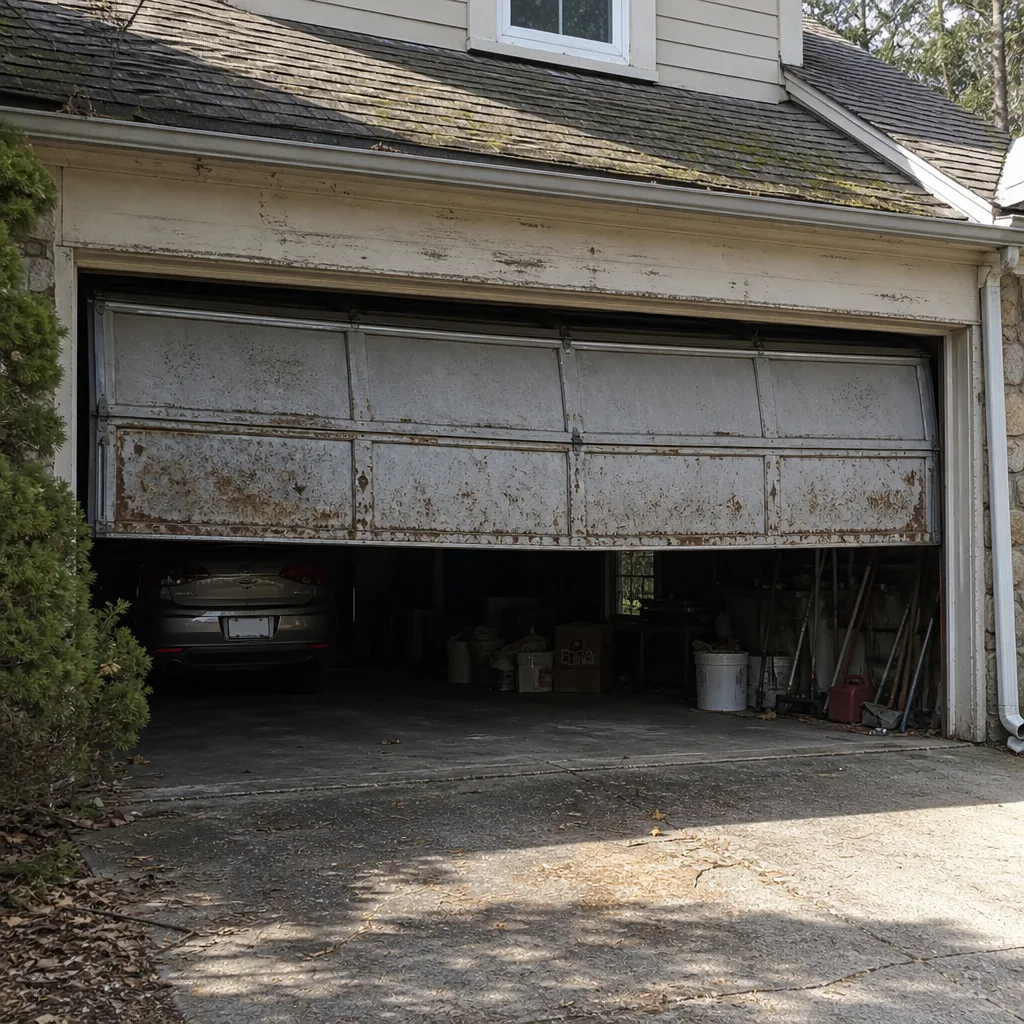 Before
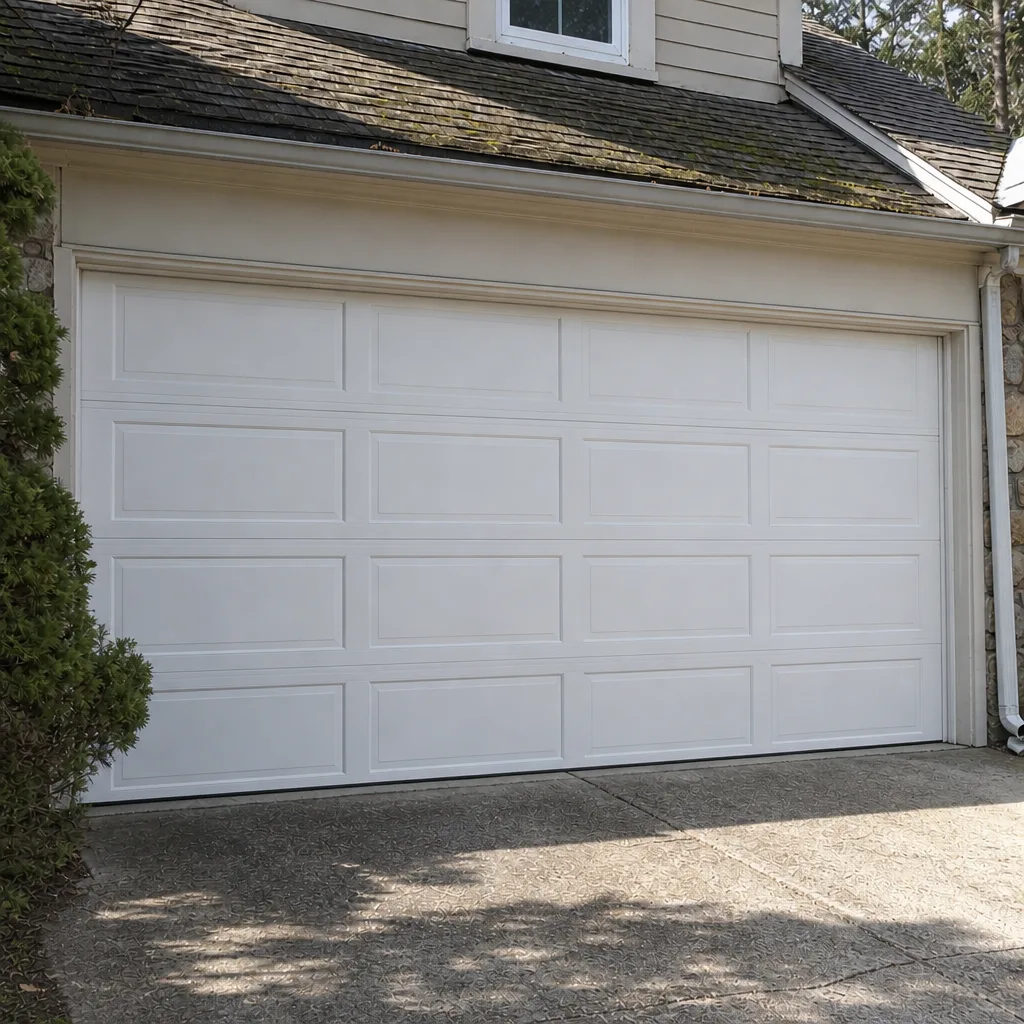 After
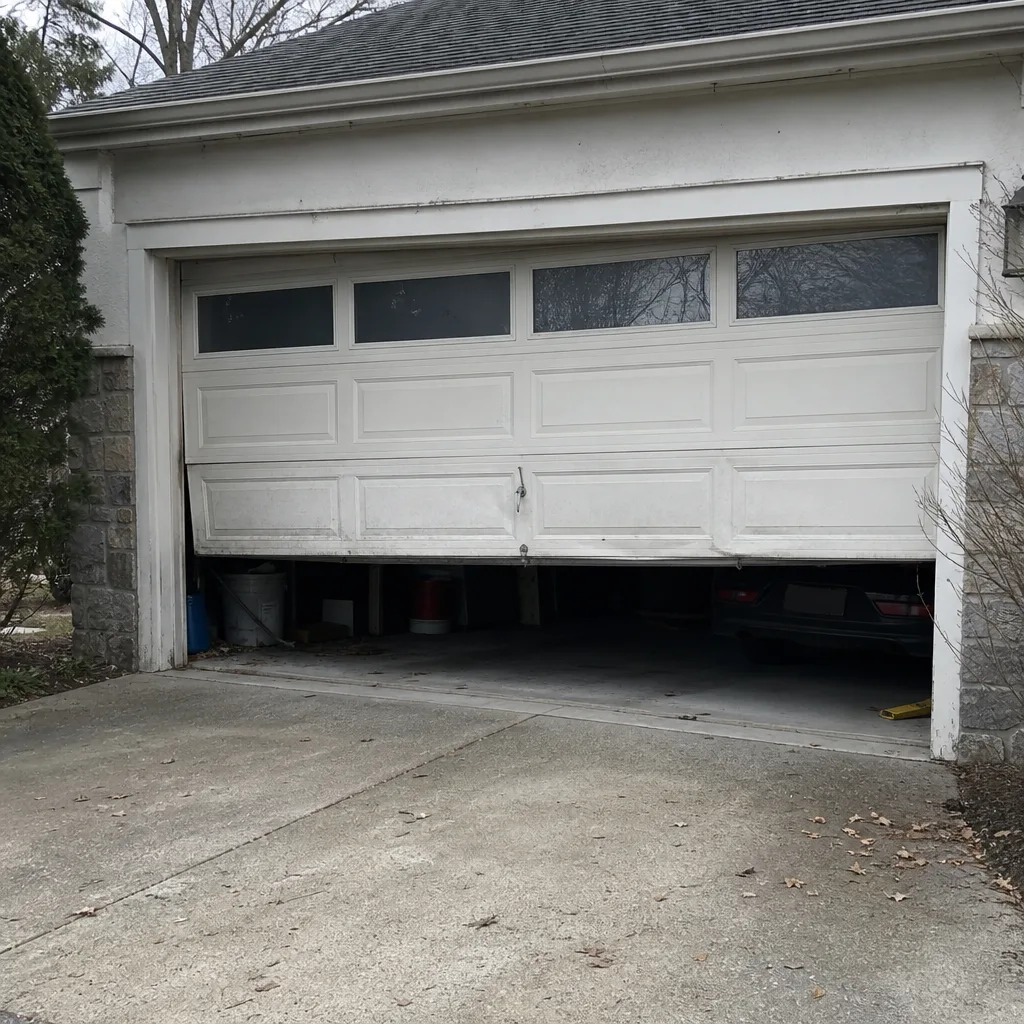 Before
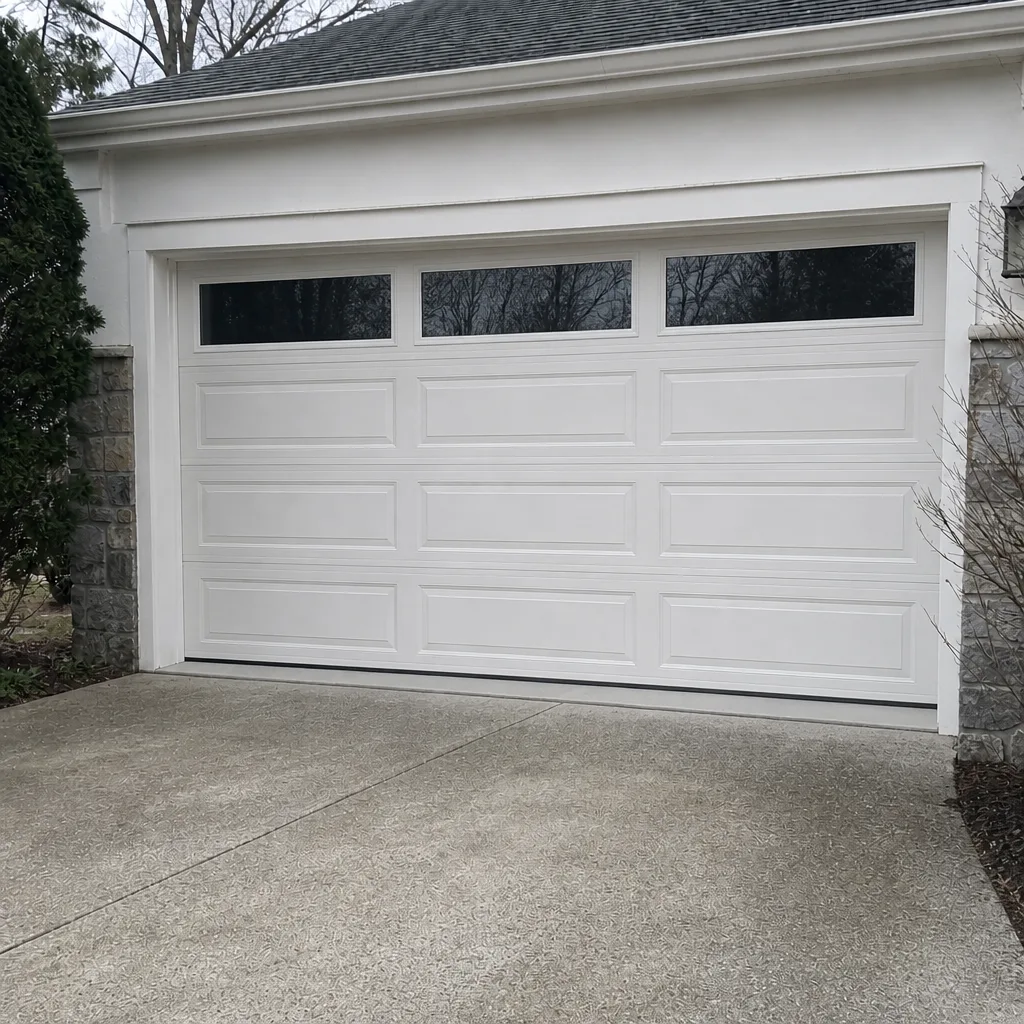 After
When to Call a Professional
Call a professional when the problem involves anything under tension – springs, cables, or drums – or when the door has gone off track, won’t balance, or won’t reverse on the safety test. Also call when the opener works but the door doesn’t, because that’s a door problem masquerading as an opener problem. And call when you’re considering a full replacement, so the door is measured and priced before it’s ordered. Garage Door Repair Roland Park offers free estimates in Roland Park – call (833) 549-0245. Our technicians have up to 10 years of experience, we work on the brands most common here, and we quote the job before we start it.
Frequently Asked Questions
Most Roland Park garage door repairs fall in the $120 to $340 range, depending on the part. A single spring replacement typically runs $180 – $340, an off-track repair $150 – $300, and an opener repair $120 – $280 in labor. A matched spring pair costs about twice a single-spring figure. The written estimate sets the final price, and the estimate is free – call (833) 549-0245 for an exact quote.
A single spring replacement in the Roland Park area typically runs $180 – $340. If your door has a matched pair of torsion springs, replacing the pair usually costs about twice a single-spring figure. Springs carry the door’s full weight, so the work needs the right tools and training. Call (833) 549-0245 – estimates are free and the price is agreed before work starts.
Yes, same-day service is often available for repairs, including broken springs, doors off track, and opener failures. Call (833) 549-0245 – we answer 24/7, with fast dispatch from 7am to 7pm, Sunday through Friday. If you call outside dispatch hours, we’ll book you into the next opening. Replacement jobs are scheduled after a measure and a written price.
No. The price is quoted and agreed before any work starts, and the written estimate is the number you pay. If we find a related issue once the door is open, we’ll show it to you and quote it separately – you decide whether to proceed. Call (833) 549-0245 for a free estimate.
The local professionals we connect you with are licensed and insured as Maryland requires. Our technicians have up to 10 years of experience, and we work on LiftMaster, Chamberlain, Genie, Craftsman, Clopay, Amarr, Wayne Dalton, and Raynor systems. Call (833) 549-0245 with any credential questions before booking.
Permit rules depend on the city and the scope of work, so the reliable answer is to ask the city’s building department directly before scheduling. A replacement that changes the opening or structure is more likely to need one than a straight swap of the same size. We can tell you what the installation involves, but the building department gives the official answer. Call (833) 549-0245 if you want to talk through the job scope first.
The Bottom Line
Garage doors in Roland Park fail in predictable ways: springs wear out, tracks collect tree debris, and older openings punish anyone who orders a door without measuring. Treat the door as a system – springs, cables, track, panels, and opener – and most problems are repairs, not replacements. Keep the price conversation clear: the written estimate is the price, the estimate is free, and no work starts before you’ve agreed to it. Check the balance and safety reverse twice a year, never force a door with a broken spring, and call when anything under tension is involved. That covers almost everything.
If you have a question we haven’t answered here, or a door that needs looking at now, call us at (833) 549-0245. We answer 24/7, with fast dispatch from 7am to 7pm, Sunday through Friday, and we’re happy to talk through what you’re seeing before anyone comes out.
Written by the team at Garage Door Repair Roland Park.