
Last updated November 20, 2026
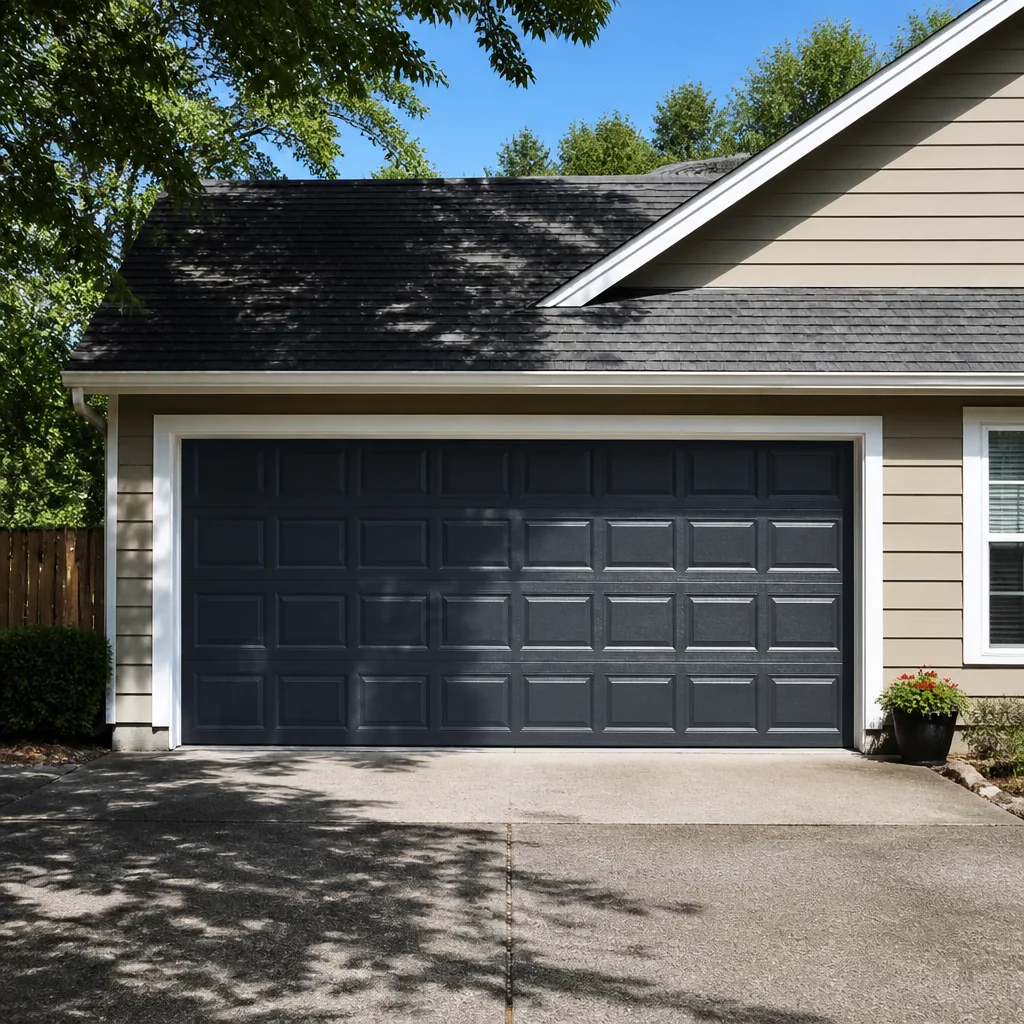 Raised-panel steel
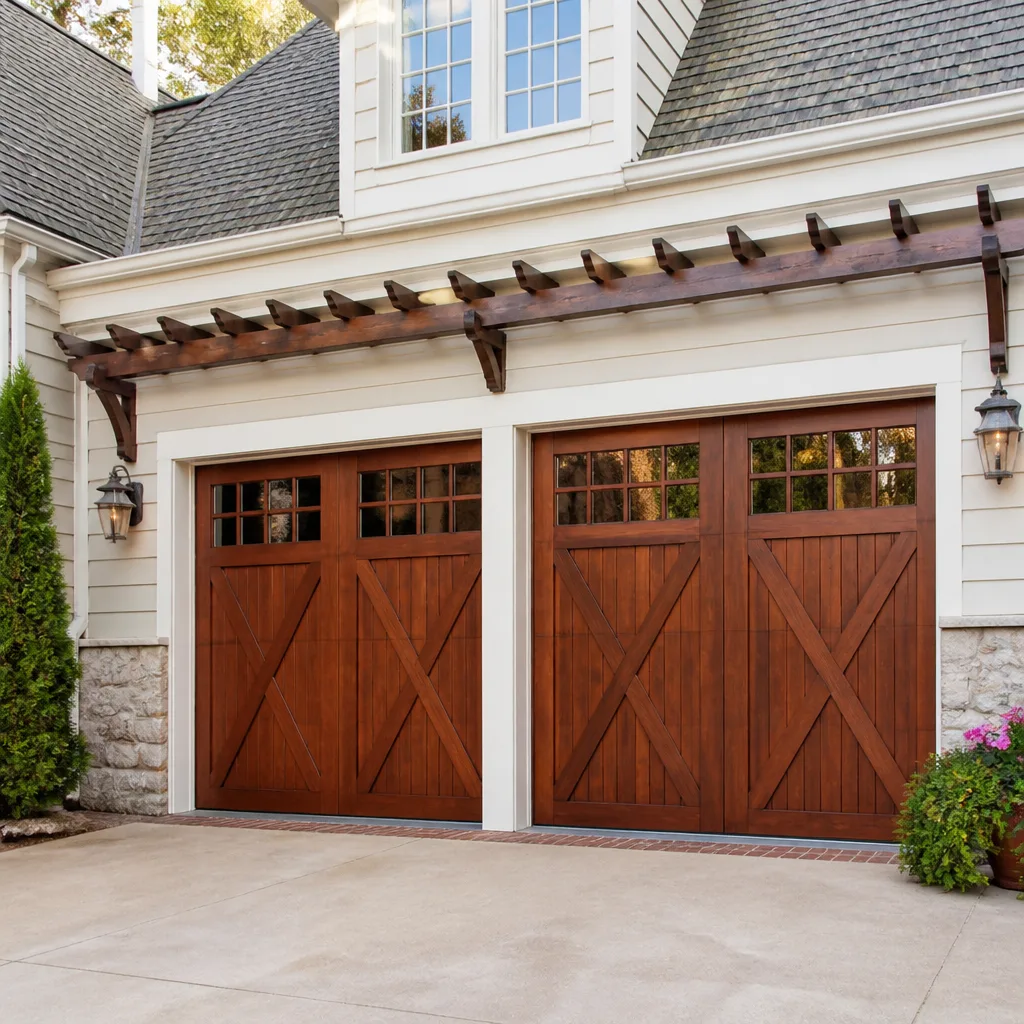 Carriage house
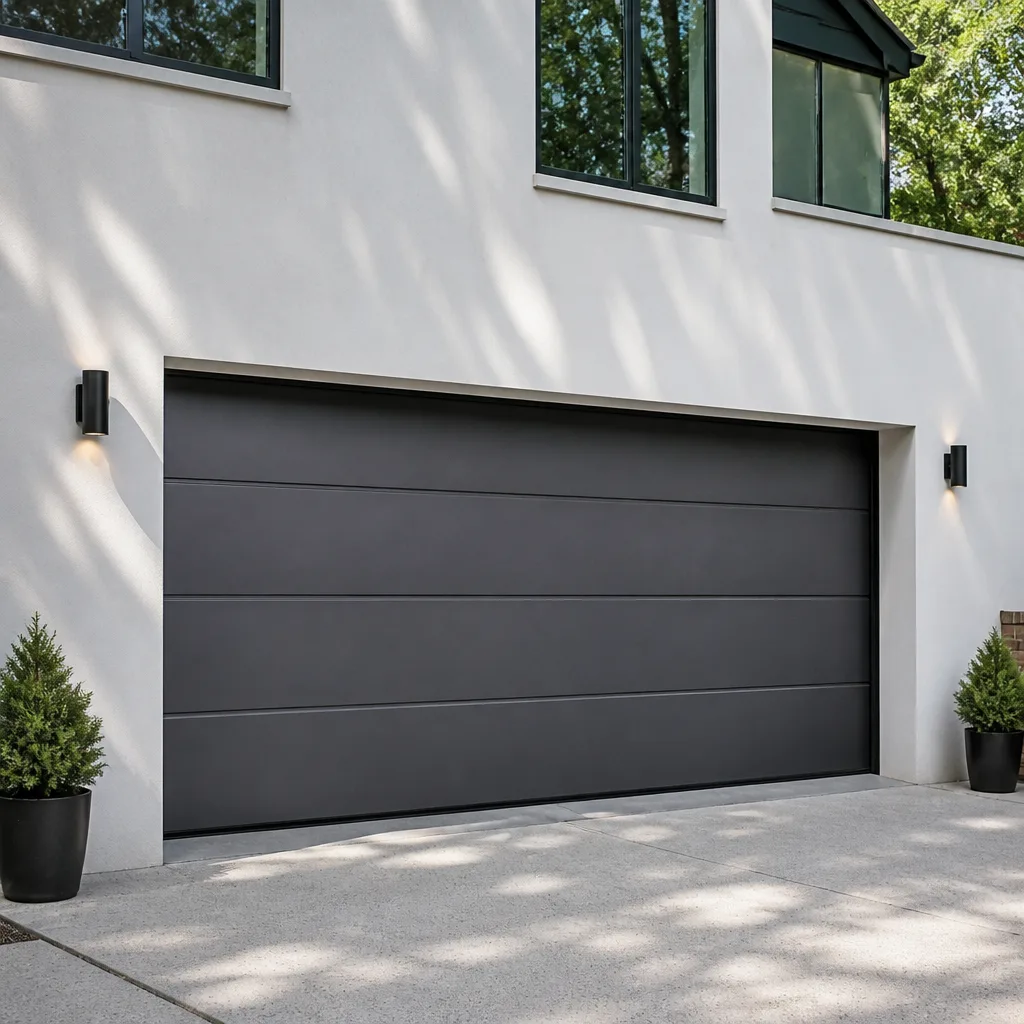 Modern flush
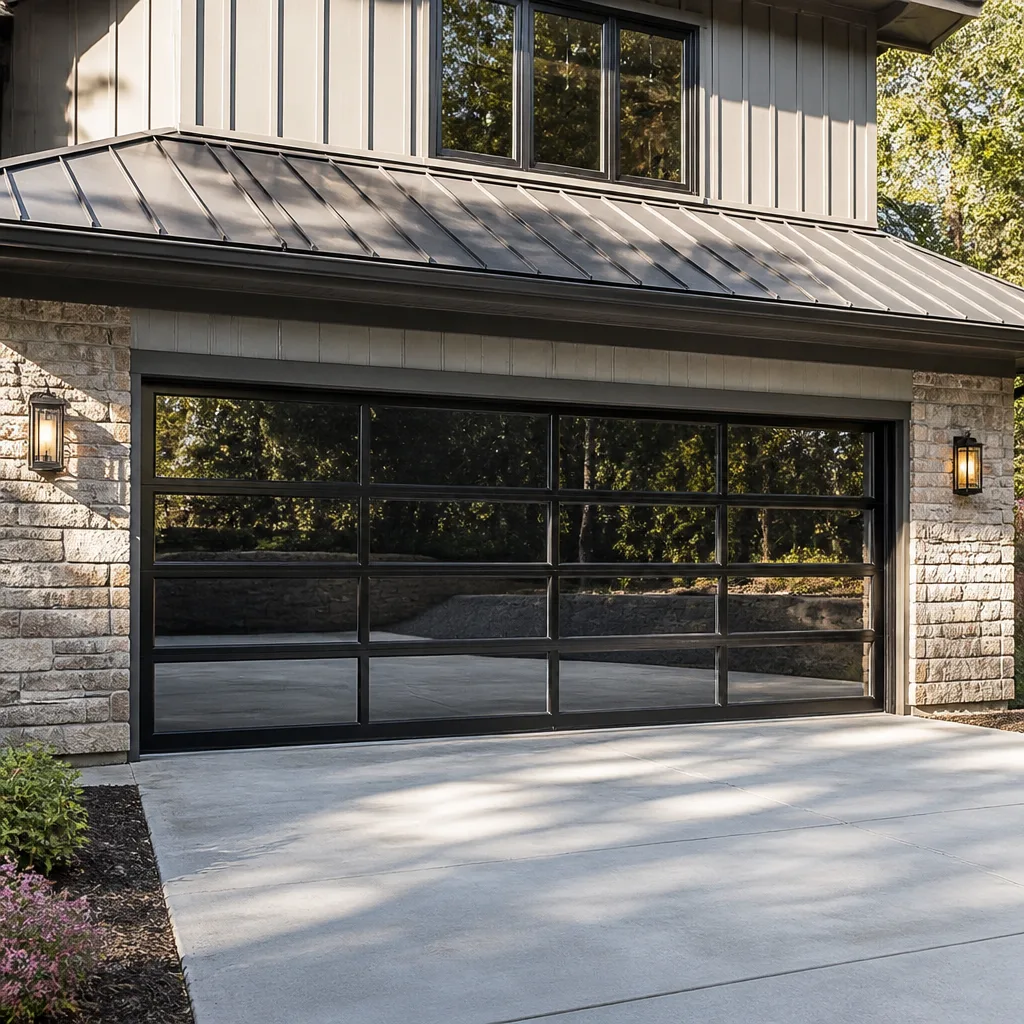 Full-view glass
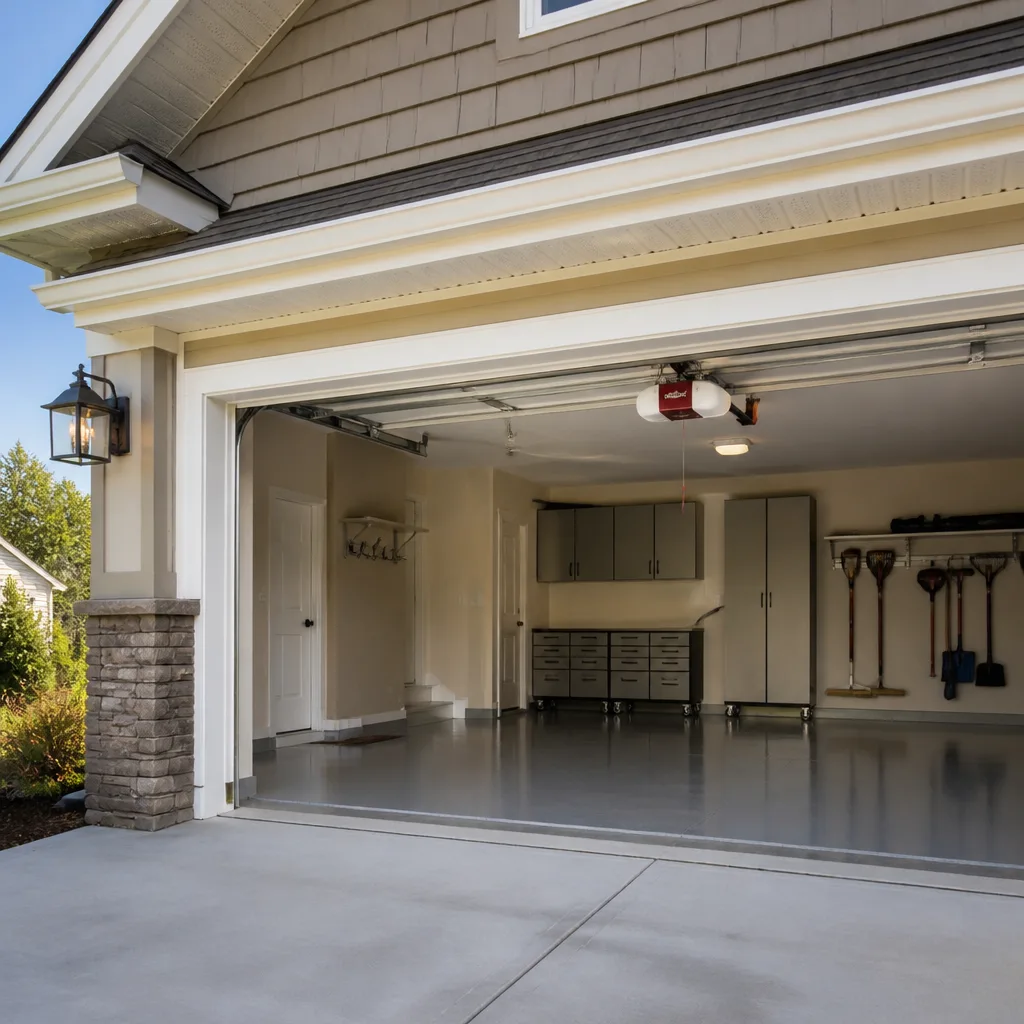 LiftMaster openers
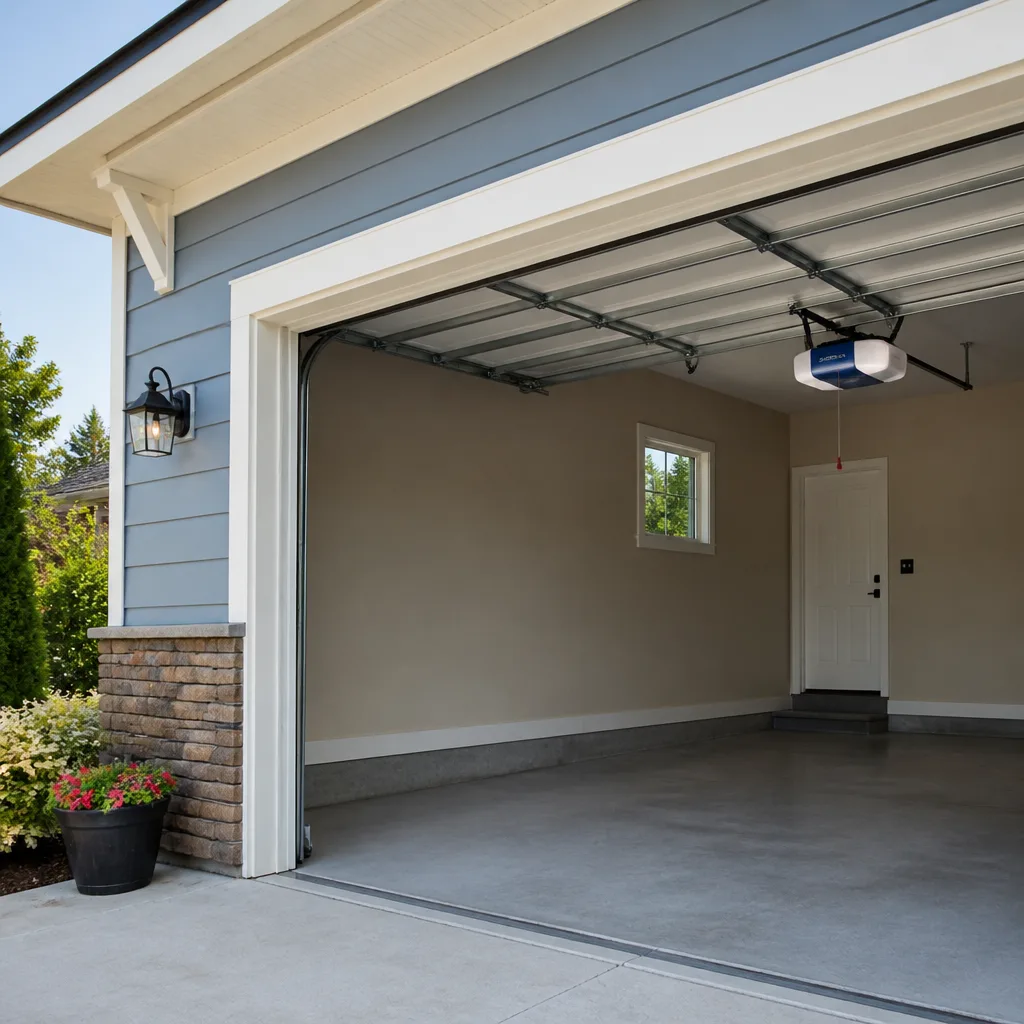 Chamberlain openers
Full 25-point door and opener safety check with every visit - springs, cables, rollers, tracks, and your LiftMaster or Chamberlain opener included
You get a price before we start. It does not change when the pro arrives.
Get your free estimateGarage Door Warning Signs: A Roland Park Homeowner’s Reference Guide
Most garage doors don’t fail without warning. They fail after weeks or months of small complaints the homeowner couldn’t quite name – a little stutter on the way up, an extra click when it stops, a rattle that wasn’t there last spring. The counterintuitive part is that the loudest doors are often the safest to ignore, while the quietest symptoms signal real danger. A snapped spring makes a noise like a gunshot. A loosening cable makes almost no sound at all until it lets go. This guide walks through what to listen for, what to look at, and when to stop using the door entirely, with notes specific to Roland Park homes and the way our weather stresses a garage system here.
Quick Answer
The first warning signs of a failing garage door are a door that reverses before hitting the floor, uneven travel, a slow or grinding opener, visible gaps in the closing line, frayed cables, or a torsion spring with an obvious gap in its coil. Any of these means stop pressing the button and get the door assessed. If the door is off its track, hanging crooked, or the opener strains to lift it, do not cycle it again – that’s a call-us-now situation, not a weekend project.
Styles & brands we work with
- Raised-panel steel
- Carriage house
- Modern flush
- Full-view glass
- LiftMaster openers
- Chamberlain openers
Table of Contents
- Why Garage Door Warnings Matter More Than You Think
- What the Noises Are Telling You
- The Six Visual Checks You Can Do in Five Minutes
- Springs and Cables: The Two Systems That Hurt People
- Opener Warning Signs: LiftMaster, Chamberlain, Genie, and the Rest
- Roland Park Conditions That Age a Garage Door Faster
- Warn, Repair, or Replace: A Simple Decision Framework
- A Seasonal Inspection Routine for Roland Park Homeowners
Why Garage Door Warnings Matter More Than You Think
A residential garage door is the heaviest moving object in the house. A single-car door can weigh well over a hundred pounds; a double door with insulation and steel skins can run considerably more. That weight hangs on springs, cables, and a track assembly, and it moves every day – often several times a day in a busy Roland Park household. When one component starts to weaken, the others pick up the load and wear faster. This is why a “small” symptom rarely stays small; a loose cable doesn’t just get looser, it eats the drum, then the spring, then the opener.
There’s a second reason warnings matter: maintenance cost versus replacement cost. A door that gets caught early – a roller swapped, a cable replaced, a hinge snugged – usually needs one visit. A door that runs for months on worn parts often needs the whole torsion assembly, a set of rollers, new bearings, and sometimes opener gears. Catching the warning signs in Roland Park homes is the difference between a modest fix and a full rebuild.
Here’s a quick way to think about the stakes:
- Minor wear signs (squeaks, wobble, slow start) – usually an easy service, best handled soon.
- Mechanical warning signs (cable fray, spring gap, track bend) – stop using the door, get it assessed the same day.
- Safety failures (reversal test failure, hang-up mid-travel, opener force override) – do not run the door unattended, ever.
We’ve seen every variety of this failure in our work, and the pattern repeats: the doors that fail totally are the same doors that were complaining for weeks. The homeowner who listens wins.
What the Noises Are Telling You
Audio is the earliest and cheapest diagnostic you have. Stand in the garage, close the door behind you, and listen for the whole cycle – both directions. A healthy door makes one continuous, even sound. A door with a problem makes several different ones, and each one points to a different component.
Match the sound to the likely cause:
- A sharp metallic squeal – usually dry rollers or hinges; the fix is lubrication and, if rollers are worn, replacement. Cheap and quick.
- A low grinding growl from the opener head – often worn opener gears. Common on older chain-drive units, and it’s the sound that tells you to stop pushing the door and get the opener checked.
- A popping or snapping from the springs – a torsion spring that’s slipping on its shaft or has cracked. This one is a stop-and-call.
- A rattle you can hear from inside the house – loose track hardware, worn bearings, or a door that’s lost its alignment.
- A repeated click-click-click at the end of travel – the opener’s limit switch is mis-set, or a travel stop has moved. Easy fix, but left alone it wears the opener gear.
One point about cylinder and torsion springs in particular: a spring can lose a lot of its power before it ever breaks audibly, and a door that sounds fine on the way up can slam down hard on failure. Loud isn’t always dangerous and quiet isn’t always safe. If you can’t place the sound, that alone is a reason to get an assessment. Our technicians have up to 10 years of experience matching sound to component, and it’s often a five-minute diagnosis.
If the noise has crossed into failure – the door won’t move at all, or hangs crooked – don’t keep cycling it hoping it settles. Ask for the sort of fast dispatch a full emergency service exists for. Call (833) 549-0245. We answer 24/7. Fast dispatch from 7am to 7pm, Sunday through Friday.
The Six Visual Checks You Can Do in Five Minutes
These are the checks a homeowner can safely do with no tools and no risk. Run them on a bright day, with the door closed first and then fully open. Anything out of the ordinary is worth a call – the check itself tells you what’s wrong, not how to fix it.
- The balance test. Disconnect the opener (pull the red release cord), lift the door by hand about halfway, and let go. It should sit exactly where you left it. If it drifts down or shoots up, the springs are out of balance.
- The photo-eye test. With the door traveling down, pass a hand or a stick through the safety beam at floor level. The door must reverse immediately. If it doesn’t, the eyes are misaligned, blocked, or dead, and that’s a serious safety issue.
- The two-by-four test. Place a flat piece of scrap wood under the door as it closes. It should reverse on contact. If it squashes the wood, the opener’s force setting is too high or the safety reverse isn’t working.
- The cable look. With the door closed, look along each side at the vertical cables. They should be taut, straight, and free of frayed strands or kinks. A cable with broken strands is a stop-use.
- The spring look. On torsion spring setups, look at the coil across the top of the door. A visible gap in the coil – even a quarter-inch – means the spring is cracked.
- The track look. Sight down each vertical track. It should be straight and parallel. Any bend, dent, or gap between the roller and the track is a warning sign.
Do these checks periodically, ideally once a season. They’re what a full inspection covers first, and they’ll catch the majority of what goes wrong in a Roland Park garage before the door’s behavior gets dramatic.
Springs and Cables: The Two Systems That Hurt People
We need to say this plainly: springs and cables are the two garage door components that seriously injure people every year, and they are not a DIY category. A torsion spring is under considerable tension even when the door is up, and a tensioned cable under load can whip with almost no warning. We treat spring repair as a dedicated specialty using the right winding bars, the right training, and the right protocols – because the wrong tool in the wrong hands is a genuine hospital risk.
Here is how to recognize a spring or cable problem without touching either one:
- Spring warning signs: a door that suddenly feels twice as heavy to lift (or won’t lift at all by hand), a visible gap in the torsion coil, a snapped extension spring hanging loose, or a loud bang you heard from another room that you’re now attributing to “something in the garage.”
- Cable warning signs: frayed wire along the vertical run, a kink or curl, slack in the cable, or a drum at the top of the track that’s stopped rotating evenly with the door. Any of these is a stop-use.
What to do if you suspect either problem? Stop operating the door. Close it if it’s safe to close without forcing it, or leave it open if it’s stuck. Don’t try to wind a spring back, don’t cut a cable free, and don’t run the opener to “see if it makes it.” Then call for assessment. Springs on a two-door setup are often replaced as a matched pair because the two springs have shared the load for the same number of cycles – and one spring on a fresh set against one spring near failure is a quick way to a second breakdown. Our team handles this as its own dedicated job, not a checklist item tacked onto a tune-up.
For anything that’s already failed – door stuck down, car trapped, home unsecured – this is exactly the situation an emergency service call covers. Call (833) 549-0245. We answer 24/7. Fast dispatch from 7am to 7pm, Sunday through Friday.
Opener Warning Signs: LiftMaster, Chamberlain, Genie, and the Rest
The opener is the brain of the system, and its warning signs are often easier to spot than mechanical failures because they show up as behavior: the door decides on its own to reverse, the opener ignores the remote, or the light flashes in a pattern that isn’t normal. We work on garage door repair in Roland Park every week where the opener was the actual culprit, not the door.
Common opener symptoms worth taking seriously:
- Reverses halfway up or down. Usually a safety-sensor issue, a force-setting drift, or a binding door that’s tripping the force override.
- Opens only partway, then stops. Often a travel-limit problem or a straining motor that’s hitting its limit switch too early.
- Grinding or whining from the head unit. Worn gears, a common failure on aging chain drives.
- A light that flashes and the door does nothing. Many openers – LiftMaster and Chamberlain units in particular – use blink codes to signal sensor or travel faults. It’s a diagnostic, not a mystery.
- The remote or keypad stops working. Often a battery, but on older Genie and Craftsman systems it’s frequently the logic board or an RF interference issue.
- The opener strains audibly to lift. This is usually a door problem, not an opener problem – a binding door. Swap the opener and you’ll break the new one too.
Modern smart-home-connected openers have also added a category: an app that reports “obstruction” when the real issue is a worn roller, or a home Wi-Fi drop that looks like an opener failure. If an opener’s behavior changed after a firmware update or a router replacement, mention that when you call. Our technicians are factory-familiar with LiftMaster, Chamberlain, Genie, Clopay, Amarr, Wayne Dalton, Craftsman, and Raynor systems, and we diagnose the opener you actually have rather than a generic stand-in.
Roland Park Conditions That Age a Garage Door Faster
Roland Park’s housing stock and climate put specific pressures on garage doors that you won’t find in a newer subdivision. The neighborhood’s many early-20th-century homes were built with garages that were sized for the cars of their era – and modern vehicles, with their wider bodies and taller rooflines, sit tighter against track and door. That means Roland Park doors take more nicks from car doors, more strain on panel edges, and more wear on roller hardware than the same door in a roomier modern garage.
Our weather is the other factor. Maryland’s swings between humid summers and freezing winters work on wood panels, steel skins, and rubber seals. A wood door that was fine in June can cup, split, or swell by January, and the paint film is what holds it together. A steel door with a small paint chip at the bottom can start to rust in the wet season before the chip gets noticed. The weatherstripping along the bottom seal is the first to go – it goes brittle, flattens, and stops sealing, which lets rain and cold air in and eventually rots the bottom panel.
Some Roland Park specifics we look at first:
- Wood panel doors common on the older homes – check every fall for moisture damage along the bottom section and paint failures at the joints.
- Deep driveway grades on some streets mean a door that closes tight against a sloped apron; small track misalignments show up as a gap at one corner.
- Mature tree canopy – leaves and small twigs in the track are a common cause of roller binding. A quick sweep with a broom handle clears them out.
- Temperature swings at the door head – the opener motor in a cold garage on a January morning is under more strain than the same motor in July, and that’s when weak openers show their faults.
None of these need to be dramatic. But a Roland Park door is worked harder than a door in a climate-controlled modern build, and the inspections should be done with that in mind.
Warn, Repair, or Replace: A Simple Decision Framework
The most common question we get from a homeowner who’s noticed warning signs is whether the door is worth fixing. Here’s the framework we use, and it’s honest about when the answer is “replace.”
Ask three questions:
- Is the problem mechanical or structural? Springs, cables, rollers, hinges, and openers are mechanical and almost always worth repairing. Panel damage, structural rust, and track that’s bent past straightening fall into the “assess for replacement” category depending on age and cost.
- How many repairs is the door accumulating? If one roller breaks, that’s a fix. If five separate components have failed in the last year, the door’s overall life is telling you something.
- Does the door still fit the house? Original wood panels on a Roland Park home are worth preserving where possible for character reasons. A steel door that’s been repaired twice and still leaks air, on the other hand, may be better replaced.
For the in-between case – a serviceable door that has been neglected – a tune-up with a proper lubrication, roller replacement where worn, and a balance check buys years. Our team handles the complete system: panels, springs, tracks, and hardware, plus the opener on top. One specialist, not two separate contractors.
A Seasonal Inspection Routine for Roland Park Homeowners
Ten minutes, twice a year, catches most of what goes wrong. Here’s the routine we suggest. Anything you can’t verify safely – springs, cables, opener internals – is where we come in.
Spring and fall, in order:
- Cycle the door fully up and down twice and listen for anything new.
- Run the photo-eye reversal test and the scrap-wood close test.
- Look along the springs and cables for cracks, gaps, fraying, or slack.
- Sweep the tracks with a broom handle to clear leaves and grit.
- Look at the bottom weather seal for tears, flat spots, and gaps.
- Lubricate hinges, rollers, and the track with a proper garage door lubricant (not WD-40 spray).
- Look at paint and caulk at the door’s bottom section – especially on wood panels.
Write down anything odd, and mention it when you call – the symptoms you noticed are exactly what we need for a fast, accurate diagnosis. Warning signs are cumulative in this neighborhood’s climate, and small catches save real money.
Common Mistakes to Avoid
- Running the opener “just to see.” If the door is already complaining, cycling it is how small problems become snapped springs. Stop and call.
- Trying to fix a torsion spring yourself. The tension is high, the proper winding bars cost more than you’d think, and the injury risk is real. This is the one maintenance task to leave alone.
- Lubricating with the wrong product. WD-40 spray dries out and attracts dust; a purpose-made garage door lubricant or a light grease on hinges is what keeps rollers and pivots moving. The wrong spray on a track can attract grit that wears the rollers.
- Replacing the opener when the door is the problem. A binding door will break the strongest new opener you can buy. Diagnose the door first.
- Ignoring a small gap at the bottom of the door. In Roland Park’s climate, a leaking bottom seal lets water in and rots the bottom panel over one or two winters.
- Nudging the door off its track back into place by hand. Off-track doors can drop suddenly, and the track can be loaded the wrong way. Leave this one to a technician with the right tools.
- Setting the openers’ force high to “get it to close.” That turns off the very safety feature that protects a child or a pet. If the door won’t close properly, the setting is a symptom, not the solution.
See the difference
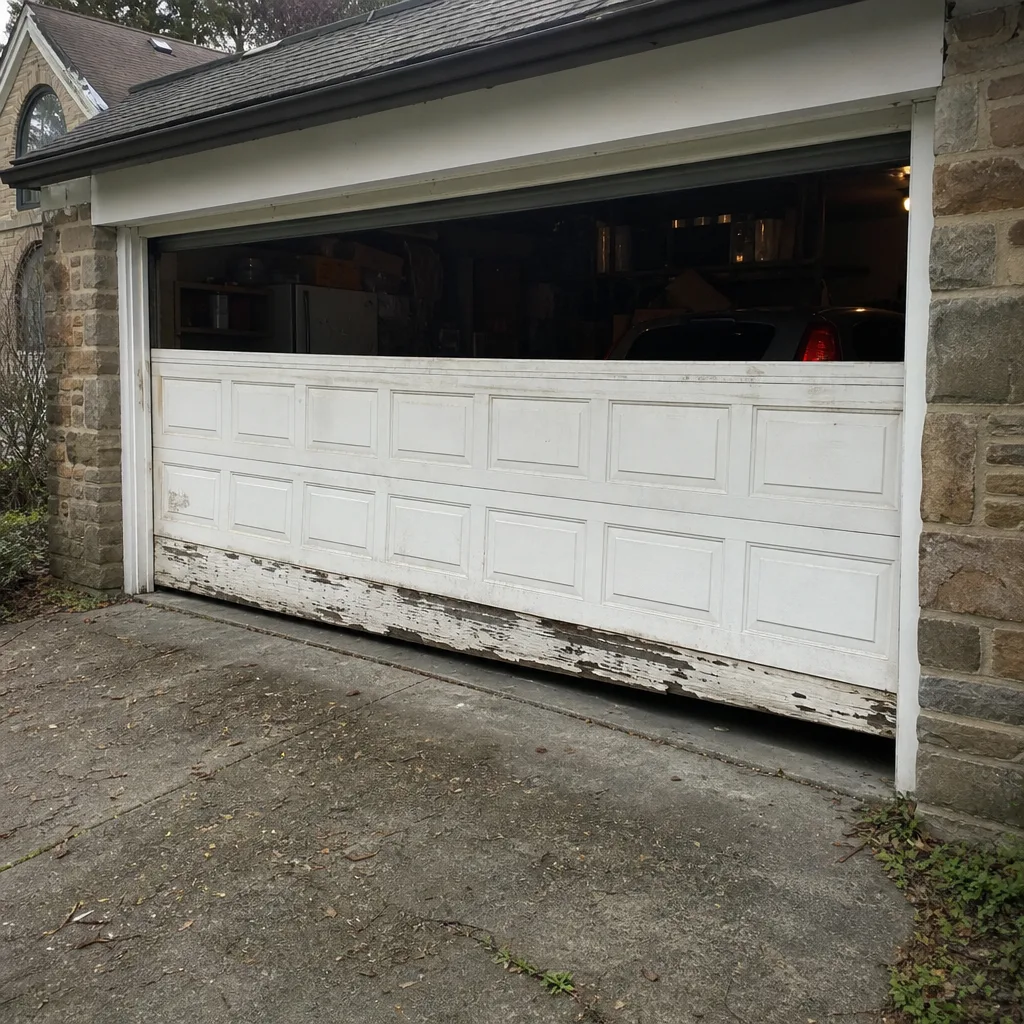 Before
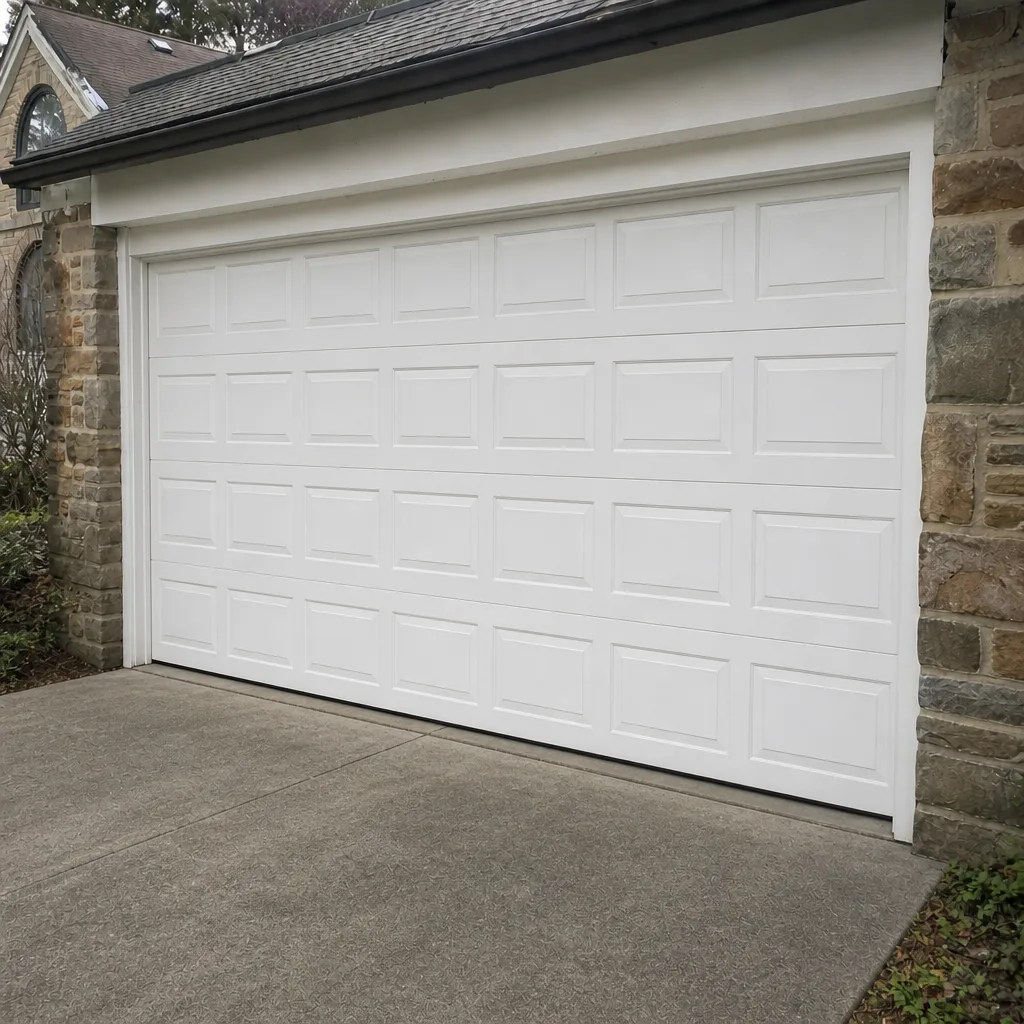 After
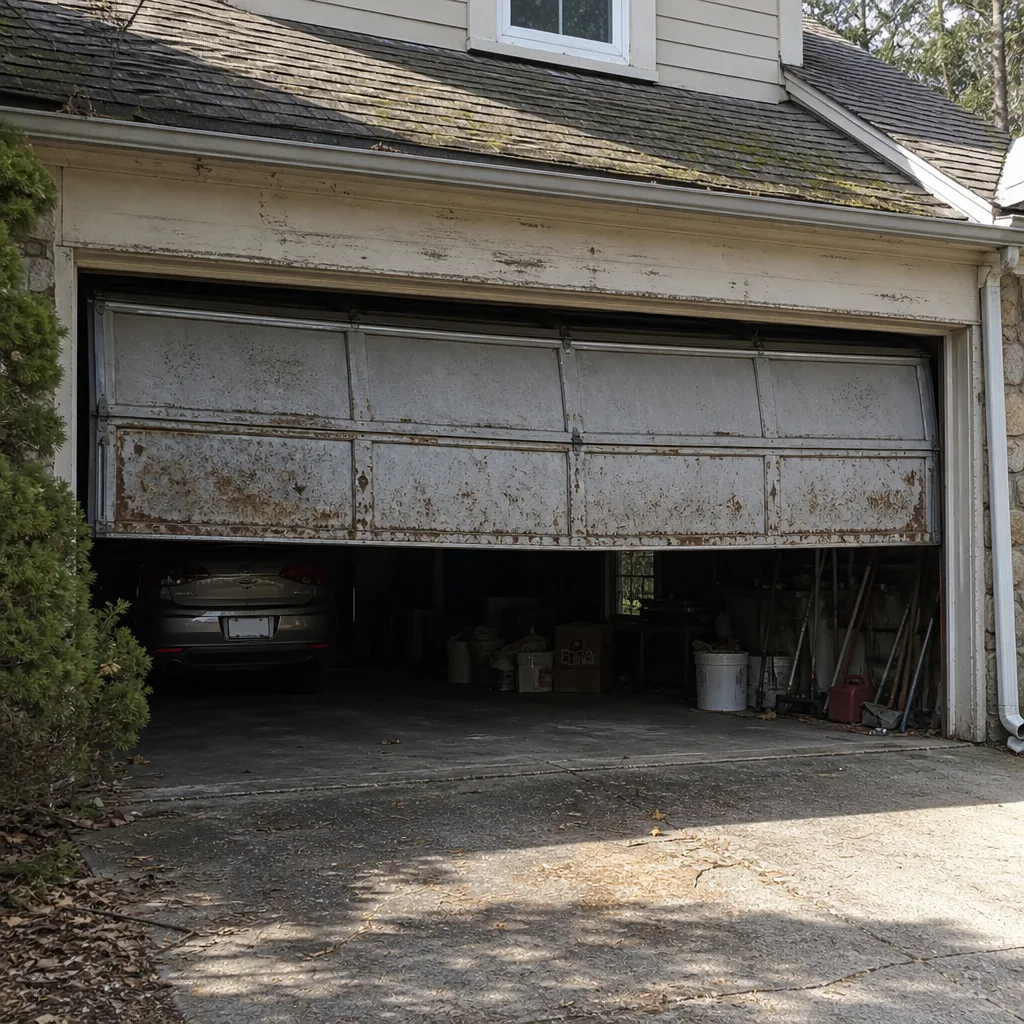 Before
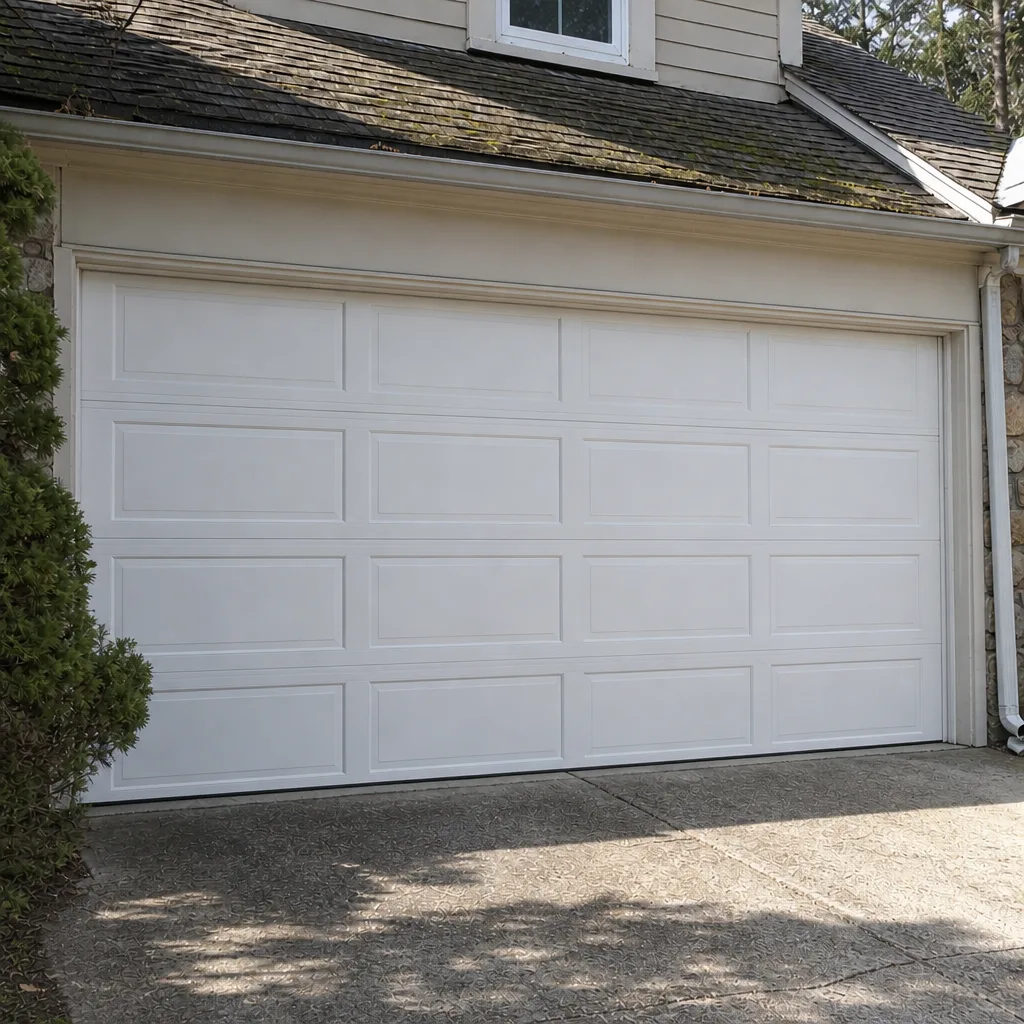 After
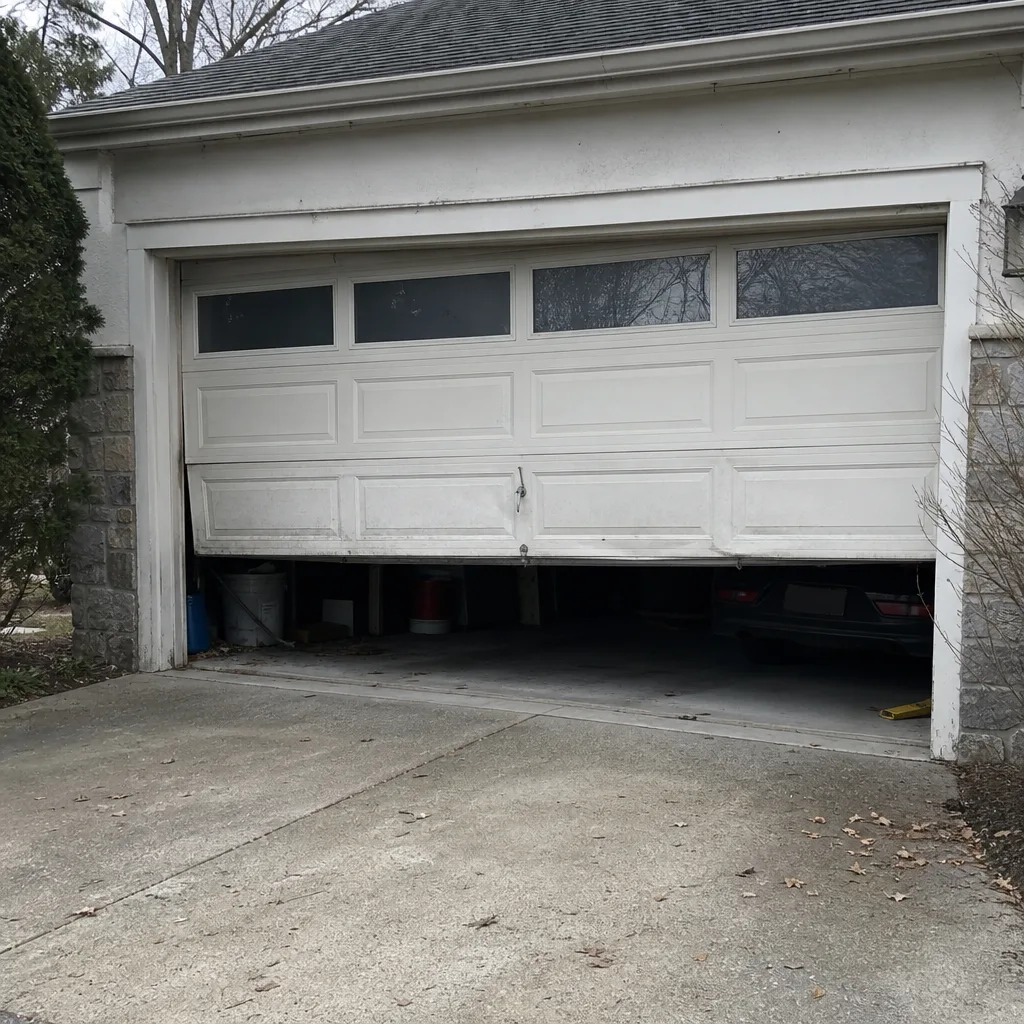 Before
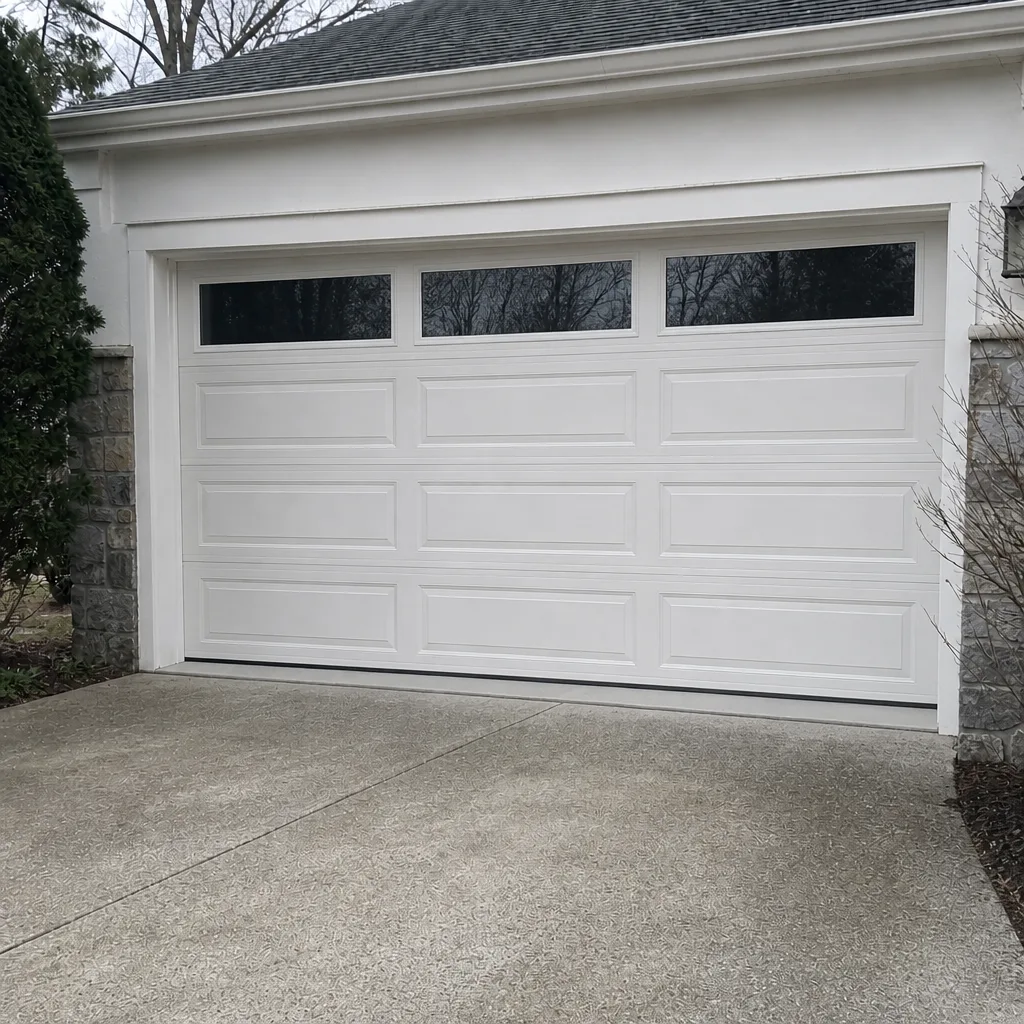 After
When to Call a Professional
Call for a professional assessment if you see a frayed or slack cable, a visible gap in a torsion spring, a door that reverses without meeting an obstacle, a door that hangs unevenly or is off its track, an opener that strains or grinds, or repeated limit and force problems you can’t trace. Call immediately if the door is stuck in a position that blocks a car or leaves the house open – that’s exactly what our emergency service is for, and it’s why we keep the phone answered 24/7. Garage Door Repair Roland Park offers free estimates in Roland Park – call (833) 549-0245. Our technicians have up to 10 years of experience, and we work on the whole system, not just the part that’s obviously broken. Fast dispatch from 7am to 7pm, Sunday through Friday.
Frequently Asked Questions
An imbalanced door is the earliest reliable warning sign. Disconnect the opener, lift the door halfway, and let go – it should stay exactly where you leave it. If it drifts or races, the springs are going and the door should be looked at before it fails fully. Call (833) 549-0245 for an assessment – estimates are free.
No. A torsion spring is under considerable tension and the winding process requires the right bars and training; a slipped winding bar is a serious injury risk. Spring repair is a job for a trained technician with proper tools and safety protocols. We’ve made it one of our core offerings for that reason, and we’d be glad to schedule a same-day assessment. Call (833) 549-0245.
The quick test is to disconnect the opener and lift the door by hand. If the door feels heavy, binds, or won’t stay up, the problem is the door – springs, rollers, or track – and replacing the opener won’t fix it. If the door glides fine by hand and the opener still misbehaves, the opener is the lead suspect. Either way, call (833) 549-0245 – we diagnose both sides of the system in one visit.
Not necessarily, but a change in the noise is. A door that has always clicked once at the end of travel is probably fine; a door that suddenly grinds or pops is telling you a component has changed. In our experience with Roland Park homes, popping from the spring area and grinding from the opener head are the two most common “stop and call” sounds. Call (833) 549-0245 if the noise is new.
Twice a year is the practical answer, and more often if the door is a heavy wood panel on an older home or has been through a recent storm. The photo-eye test, balance test, and visual check of springs and cables are the ones that catch real danger early. If you’d rather have it done properly, our team can run a full inspection and give you a written assessment. Call (833) 549-0245.
Not from a safety standpoint. A door that cycles smoothly, balances, reverses correctly, and stays on its tracks is doing its job. Worn paint, a faded finish, or a dented panel can be repaired or painted, and on many Roland Park wood-panel doors it’s worth preserving the original character. Call (833) 549-0245 for a free look and a straight answer on repair versus replacement.
The Bottom Line
Most garage door failures are visible and audible well before they happen. Listen for changed sounds, run the five-minute visual checks, and never touch a tensioned spring or cable yourself. In Roland Park, the extra work comes from the area’s older homes, tight garages, and humid-to-freezing seasonal swings – and the payoff from catching problems early is real. If you’re seeing any of the warning signs in this guide, stop using the door and get it assessed. We work on LiftMaster, Chamberlain, Genie, Clopay, Amarr, Wayne Dalton, Craftsman, and Raynor systems, and we treat spring work as the specialist repair it is. Call (833) 549-0245 for a free estimate. We answer 24/7. Fast dispatch from 7am to 7pm, Sunday through Friday.
Written by the team at Garage Door Repair Roland Park.